
Within the confines of green-lit walls, prominent streamer, Adin Ross, reviews a notification on his phone and announces it to his audience. The message is from his long-time friend—practically a mentor.

Adin Ross on stream (Source: AdinLive YouTube Channel)
The friend informs him that he plans to leave his home in Romania with no intentions of returning. But the streamer is welcome to perform a week’s worth of content. However, he must be fast in his decision because it is “now or never”.
The following Monday, Romanian authorities arrested the well-known male supremacist Andrew Tate and his brother, Tristian Tate, under the allegations of rape and sexual assault stemming from a U.K. arrest warrant.
It was later revealed by a U.K. law firm representing the four victims of the Tate brothers, that Adin Ross, the streamer Tate reached out to days prior, alerted them and U.K. authorities, prompting the issuance of a warrant.
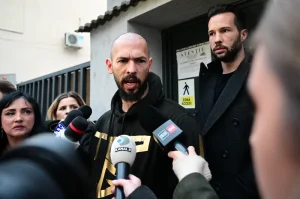
Andrew Tate arrested (Source: NPR)
What’s more troubling is that the Tate brothers were under house arrest and scheduled to stand trial in Romania, facing similar charges of rape and human trafficking. Throughout that time, both pleaded not guilty, and their attorney denied any evidence that the brothers had plans to flee Romania.
However, upon hearing about the initial arrest, the online community was in disarray. Supporters of Andrew Tate, a group who calls themselves the “Manosphere” were irate and accused the victims of lying. Online, they berated the women, claiming that they were free to leave Tate’s estate if they felt unsafe.

Hosts of the Fresh & Fit Podcast interviewing Andrew Tate (Source: Fresh & Fit)
As they shared old videos of the victims, they pointed out how they were smiling, sometimes even dancing. How could trafficking victims express joy? The arguments made by the Manosphere were untenable, of course.
Not all victims express overt signs of distress or captivity. This is due to many traffickers employing psychological methods to ensure that their victims remain dependent – such as feigning a caring relationship with the victim in order to gain their trust.
Despite many explaining this, the influence of the Manosphere remains.
Misogynistic content is still being produced and people are continuously being indoctrinated into such hateful rhetoric. What’s worse? The movements created to bring equality amongst the sexes are being painted as male-hating.
This is all while the physical and emotional abuse of women continues to run rampant around the world. Women are still met with skepticism in the face of sexual assault and in 2023, the United States Supreme Court ruled to strip away bodily autonomy by outlawing abortions.
Evidently, the recent years have been tumultuous for women. However, it can be said that there isn’t much new under the sun because for centuries women have shown resilience in the face of oppression.
Women through the Ages
The tale of resilience could begin with politics as seen in the legacy of Cleopatra or through the wartime legends of Queen Nzinga of Angola. It could start with the ink of a pen etching
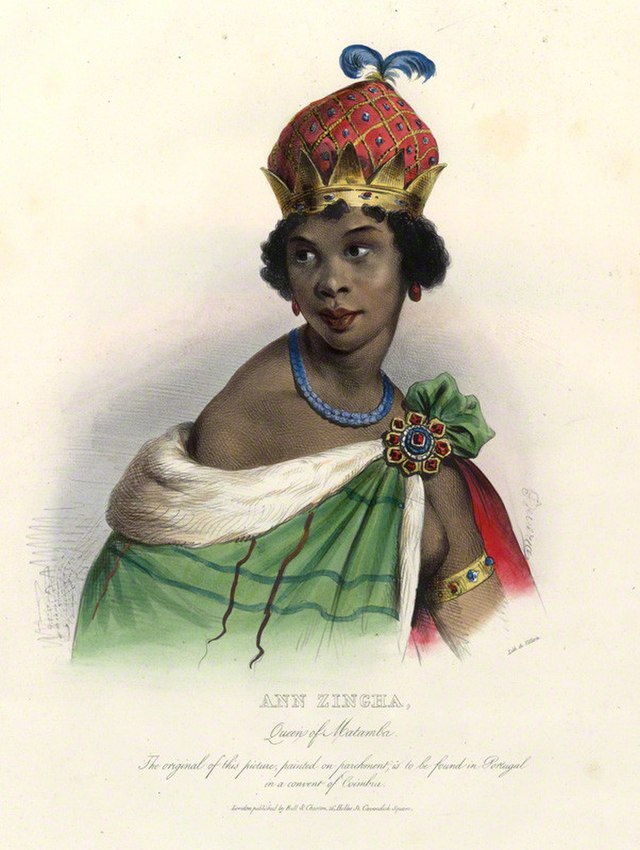
Queen Nzinga of Angola (Source: Wikimedia Commons)
Olympe’s thoughts or even the daring escape of Harriet Tubman.
Throughout history, women have made significant contributions. They have helped societies flourish, enhanced the political sphere, and even fought wars. Yet their rights are constantly challenged.
The Declaration of the Rights of Women is often viewed in history as the precursor to modern Western Feminism. It challenged the original Declaration of Rights of the Citizens both with its sarcastic undertones and its bold addition of gender equality.

Olympe de Gouges (Source: Wikimedia Commons)
However, due to her growing publicity, Olympe de Gouges faced more than backlash. She was accused of treason and eventually executed by way of guillotine. It was her work that inspired that of Mary Wollstonecraft whose own work went on to inspire more literary strides in modern feminism.
While the threat of public execution isn’t as prevalent today, in most countries, there are still many obstacles women must face. With the already longstanding presence of gender-based violence and the increasing regulation of reproductive rights, the current rise of male supremacists further exhausts the efforts made toward gender equality. But this did not happen in a vacuum.
According to the Southern Poverty Law Center, there is a distinct connection between the current male supremacist movement and the much older incel community.
Incel, an abbreviated nickname for the term “involuntarily celibate”, was ironically a community initiated by a Canadian woman who went by the name Alana. She considered herself a late bloomer, having started dating in her late twenties and wanted to create a community for those with similar experiences. However, she didn’t anticipate the incel community to eventually be co-opted by disdainful men. These are the same men who have gone on to hail Elliot Roger and Alek Minassian as their heroes.
Both male supremacists and the incel community are known for shaming women for having sexual relationships yet at the same time believe that women owe them sexual favours.
This hypocrisy rings loud and crafts the various masks donned by male supremacist movements. What is currently referred to as the “Manosphere” was at one point known as the “Red Pill Community”. And even before then, there were Men Going Their Own Way (MGTOW), Male Rights Activists (MRAs), and even pick-up artists.
These groups tend to believe that they are the victims of feminism. A movement that they claim promotes the hatred of men. Hence why much of their content depicts feminism as a societal detriment — even going as far as to devalue college-educated women.
Much of these misogynist movements dominate online platforms, and their real-world effects are witnessed through the 2023 mass shooting in Allen, Texas, and the 2018 van massacre in Toronto.
This may only grow worse as the internet’s role in socializing the general populace gradually solidifies itself. The same dangerous rhetoric will also spread from its crevices, infecting lonely men in search of solace. This has led many to inquire which methods would best counteract the rise of extremism.
For women, residing in a world that is gradually volatile towards their existence only demands a pivot from the conventional forms of activism. Faded are the years of protests and upfront demonstrations.
Women’s empowerment has entered a new avenue — or a lifestyle, if you will.
The 4 No’s
In South Korea, society is arguably far more conservative than what is experienced in the West. Korean women are pressured to conform to the male gaze, often going to lengths to perfect their appearance. Hence why the country rates high in cosmetic surgeries.
In marriages, domestic abuse is almost normalized. It’s a crime that seldom results in the punishment of the perpetrators. Additionally, Korean women make 30% less than their male counterparts, further pushing them to rely on men for a stable income. Then at the crux of it all, South Korea’s birth rate has declined tremendously. More pressure was handed down to none other than those expected to produce children: women.
The movement against South Korea’s societal pressures began with Escape the Corset, a demonstration against the male gaze. Women shaved their heads and refused to undergo invasive beauty procedures, showcasing that they no longer desired to support an oppressive system. That later blossomed into what many consider to be the complete abandonment of the patriarchy, the 4B Movement.
Biton. No marriage.
Bichulsan. No childbirth.
Biyeonae. No dating.
Bisekseu. No sex.
These four Korean words define the lifestyle adopted by the women partaking in the 4B Movement. Rather than engaging in a system that doesn’t consider their well-being or safety, they’ve chosen to break away from it.
They’ve chosen to center their own livelihood.
By abstaining from heterosexual relationships, these women insist it protects them from being abused in a system that doesn’t hold the same abusers accountable. Similarly, abstaining from childbirth consequently frees them of the unpaid labour that comes with being a caretaker of a family — an added burden to women who must also work full-time.
While the movement is said to have been around as early as 2018, the mere concept of 4B continues as a buzz on the internet. There is an evident longing to dissect, understand and examine the impact of 4B.
There are those who attribute it to the continuing decline of South Korea’s birth rate. Others attest that the movement is too small to have such an effect.
Nevertheless, the 4B Movement is real. It’s a response to societal pressures and an indication that a hierarchy must be toppled.
Furthermore, the movement acts as a catalyst for a similar lifestyle emerging in the West.
Steps Towards Decentralization
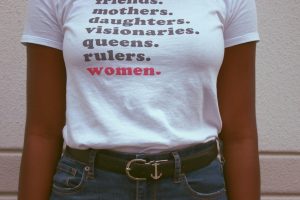
Woman wearing a T-shirt and blue denim (Source: Pexels)
How often have women opted out of being the main character in their lives?
It was a question posed by Charlie, researcher and blogger of Charlie’s Toolbox. Charlie’s Toolbox is a platform where she consistently provides content focused on improving women’s lives.
Charlie, along with many other women, has adopted the lifestyle of “Decentering Men” and has made it her duty to educate women on how to become the main character in their lives. In her 2021 video, currently sitting at nearly thirty thousand views, she explains just how to do that.
Society has taught women that their life starts when they’re in a relationship, leading many to anticipate having one in order to gain fulfillment. The concept of the “Prince Charming,” which has often been introduced to young girls, has only reinforced this expectation.
Think about it. Jasmine, a princess who has been confined all her life in the walls of Agrabah is promised freedom — a whole new world — by her Prince Charming, Ali.
Ariel, the little mermaid, is often depicted as an adolescent who exchanges her renowned talent (her voice) to be with her Prince Charming, Eric.
Cinderella escapes familial abuse thanks to a misplaced shoe for which her Prince Charming is eager to find the perfect fit.
Rapunzel is freed from a kidnapping because Prince Charming decided to ascend a tower with the help of her hair.
In each of these fairytales—and many more—the happy end many girls obtain comes with the caveat of first securing a Prince Charming. Or their love interest.
While many of these old fairytales are wonderful and carry additional lessons within them, the repetitive message of Prince Charming has instilled this societal expectation of finding “The One” within many women today.
Women have been taught that their lives can’t start without a Prince Charming— that a Happy Ending begins with a man.
This is what the decentralization of men aims to dismantle.
“It’s a personal experience,” Charlie explains. Decentering men is a lifestyle in which you will have to focus on your own needs and desires. It doesn’t mean pushing men out of your lives completely. However, it requires women to acknowledge that their own fulfillment comes first, and it shouldn’t take a man to achieve that.
Furthermore, the decentralization of men calls for a reality check. Research has revealed that women tend to take on more emotional labour than men, resulting in an imbalance in their relationships. This burden, paired with what is already expected of women when it comes to childrearing and household chores, all exposes the inequalities within heterosexual relationships.
Inequalities that the Decenter Men movement aims to eliminate.
In a sense, this movement has both a likeness and dissimilarity from the feminist movements of the ages and the current 4B movement in Korea. For one, historical women’s empowerment was an active demonstration. Women protested for suffrage, equality, and bodily autonomy but you won’t find many women marching to decenter men.
Meanwhile, the 4B movement calls for a complete abstention from heterosexual relationships, decentralization asserts that these relationships are possible so long as women aren’t over-reliant on them for their happiness.
The decentralization of men is women empowerment’s adaptation to the changing environment we see today, particularly what has been brewing online.
The hostilities towards the feminist ideology brought on by male extremists have only encouraged this sort of lifestyle. Women are aware of the Manosphere’s and Red Pill’s content, and rather than outwardly opposing the viewpoints as their foremothers might have, they’re deciding to detach from the male-centrism arising today.
As women empowerment gradually takes a lifestyle and self-preservation approach, we may begin to see society shifting towards healthier expectations in heterosexual relationships. The rise in standards will shape what a healthy couple looks like in this new generation. Women will no longer rely on men to give them the lives seen in fairytales. Likewise, men should no longer expect women to do all of the emotional and domestic labour in the relationship.

Two children reading a book (Source: Pexels)
As women continue to seize the pen of their stories, society may eventually yield to their expectations. While there is still much more to do in terms of bodily autonomy and domestic abuse, the decentralization movement certainly feels like a step in the right direction.
Featured Image Source: Pexels