Growing old is a privilege—one not everyone will experience. In Canada, universal healthcare and strong public health systems give us some of the longest life expectancies in the world, according to Statistics Canada. This should mean more time to learn from our parents, grandparents, and great-grandparents—time to strengthen family bonds and internalize their wisdom.
Yet aging is often treated as a burden. Policy debates reduce it to a logistical problem measured in costs, bed shortages, and efficiency targets, rather than a rich stage of life deserving of respect and dignity. Too many elders spend their final years isolated in crowded hospitals or long-term care homes, where visits from loved ones are rare. In prioritizing efficiency over humanity, we not only diminish the lives of older adults but also weaken the intergenerational memory that binds us together.
In light of these concerns, a pressing question emerges: Is there a better way? Many cultures, including First Nations, Métis, and Inuit communities here in Canada, offer a different model—one rooted in community-based care and deep respect for elders. Learning from these approaches could help us reimagine healthcare and policy in ways that honour older adults and, in turn, reframe aging not as a burden to be managed, but as a gift to be cherished.
The Push Toward Facilities

Image Source: Pixabay (Pexels.com)
In Canada, approximately 94 percent of elders would prefer to age at home, yet healthcare policies consistently focus on expanding institutional care. For example, Ontario Premier Doug Ford has publicly stated his intention to add 58,000 new beds to long-term care (LTC) facilities by 2028 and has committed billions of dollars in funding towards that goal since 2019. Other provinces seem to have similar priorities: Quebec currently meets only about 10 percent of home-support needs, while in British Columbia, steep home-care costs push seniors into facilities at rates 34 percent higher than the national average.
For families, the consequences are painful: loved ones are often placed in understaffed facilities where neglect and even abuse are widespread. In fact, a 2020 CBC investigation revealed that 85 percent of Ontario’s LTC homes had repeatedly violated health and safety standards, with reports ranging from inadequate hygiene to physical assault.
The Cost of Social Exclusion
When elders are cut off from family life, younger generations lose access to stories, traditions and wisdom that can’t be found in textbooks. Elders are living repositories of resilience and perspective—voices that can cut through today’s noise with lessons grounded in lived experience.

Bernard Marks speaking with Thomas Homan, acting director of U.S. Immigration and Customs Enforcement (ICE). Photographed by Stephen Lam. (Image Source: TIME).
For example, 87-year-old Holocaust survivor Bernard Marks spoke at a 2017 forum on immigration to condemn mass deportations by U.S. Immigration and Customs Enforcement (ICE), drawing direct parallels to his childhood in Nazi Germany.
Similarly, Arnold Schwarzenegger, now 78, addressed self-identified neo-Nazis and white supremacists in a widely shared video, reflecting on his upbringing in post-war Austria with a Nazi-supporting father.
“I’ve seen enough people throw away their futures for hateful beliefs … You will not find success at the end of that road,” Schwarzenegger said.
Both voices show how lived experience can enrich social and political discourse and remind us that history is not behind us—on the contrary, it is a guide for the choices we make today.
At the same time, creating spaces where elders are heard and valued strengthens the bonds that hold families and communities together. A powerful example comes from the Nak’azdli Whut’en First Nation in northern British Columbia, where a series of digital storytelling workshops invited Elders to share personal experiences and traditional knowledge with elementary school students. The results were profound: participants of all ages reported feeling more connected to one another and their cultural histories. By honouring the contributions of older generations, communities not only reinforce a sense of belonging but also ensure that the wisdom of the past continues to guide the future.
Alternative Ways to Age
There are alternatives to the institutional model that has taken over Canadian healthcare. In particular, Indigenous communities across the country offer models rooted in respect, inclusion, and community-based care. For example, in British Columbia, five Nlaka’pamux First Nations have partnered with the Canadian Frailty Network to support elders in staying at home. The program combines social gatherings, cultural activities, and wellness programs with practical home safety upgrades. By keeping older adults connected to family, culture, and community, it preserves dignity and belonging—outcomes that Canada’s institution-heavy system often overlooks.
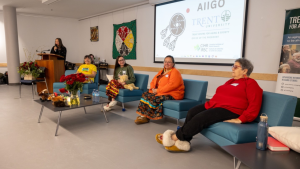
Speakers at the Anishinaabe Indigenous Intergenerational Growing Old/Aging (AIIGO) Gathering. Image Source: Trent University
In a conference hosted by Trent University earlier this year, members of Curve Lake First Nation, Hiawatha First Nation, and the First Nations of Williams Treaties shared perspectives on aging as a “process woven with knowledge, purpose, and intergenerational connection.” Within this worldview, older adults are deeply valued for their contributions through language, storytelling, and knowledge-sharing. Rather than being feared or stigmatized, aging is embraced as “a desired experience.”
As we reimagine elder care, these perspectives show us a way forward—one that treats aging not as a problem to be managed, but as a stage of life to be valued and supported.
Looking Forward
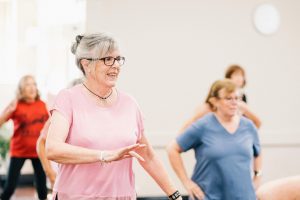
Image Source: Wellness Gallery Catalyst Foundation (Pexels.com)
Aging does not have to be synonymous with decline or disconnection. Across cultures and communities, we see that when older adults are given space to participate fully in family and public life, everyone benefits. Their knowledge becomes a living resource, their presence fosters belonging and their stories offer both wisdom and hope for the future.
If Canada is serious about rethinking elder care, we must move beyond policies that treat aging as a problem to be contained and instead embrace models that honour dignity, continuity and connection. That means investing in community-based supports, making home care accessible and creating more opportunities for elders to share their voices in both family and public life.
Ultimately, how we treat older generations is a reflection of the society we want to be. Do we see aging as a burden to be managed, or as a stage of life that enriches us all? The answer will determine not only the quality of life for today’s elders, but also the future that awaits each of us as we grow older.