As “Save the Bees” becomes many environmental activists’ favourite battle cry, you might have heard mixed remarks about honey consumption and its effects on the environment. When it comes to bee endangerment, people will likely point the finger toward pesticides, climate change, and habitat loss. Those are all true causes of bee endangerment, but could beekeeping also play a detrimental part in the decline of both wild and honey bee populations?
Many people may be under the impression that conventional beekeeping has nothing to do with bees’ threatened extinction and that it actually helps to save the bees by offering them a safe environment to live in. Others say that the honey industry is exploitative to bees because they are used for profit and gain, and therefore is unethical toward the bee population. So, which perspective is true?
The Truth About Conventional Beekeeping
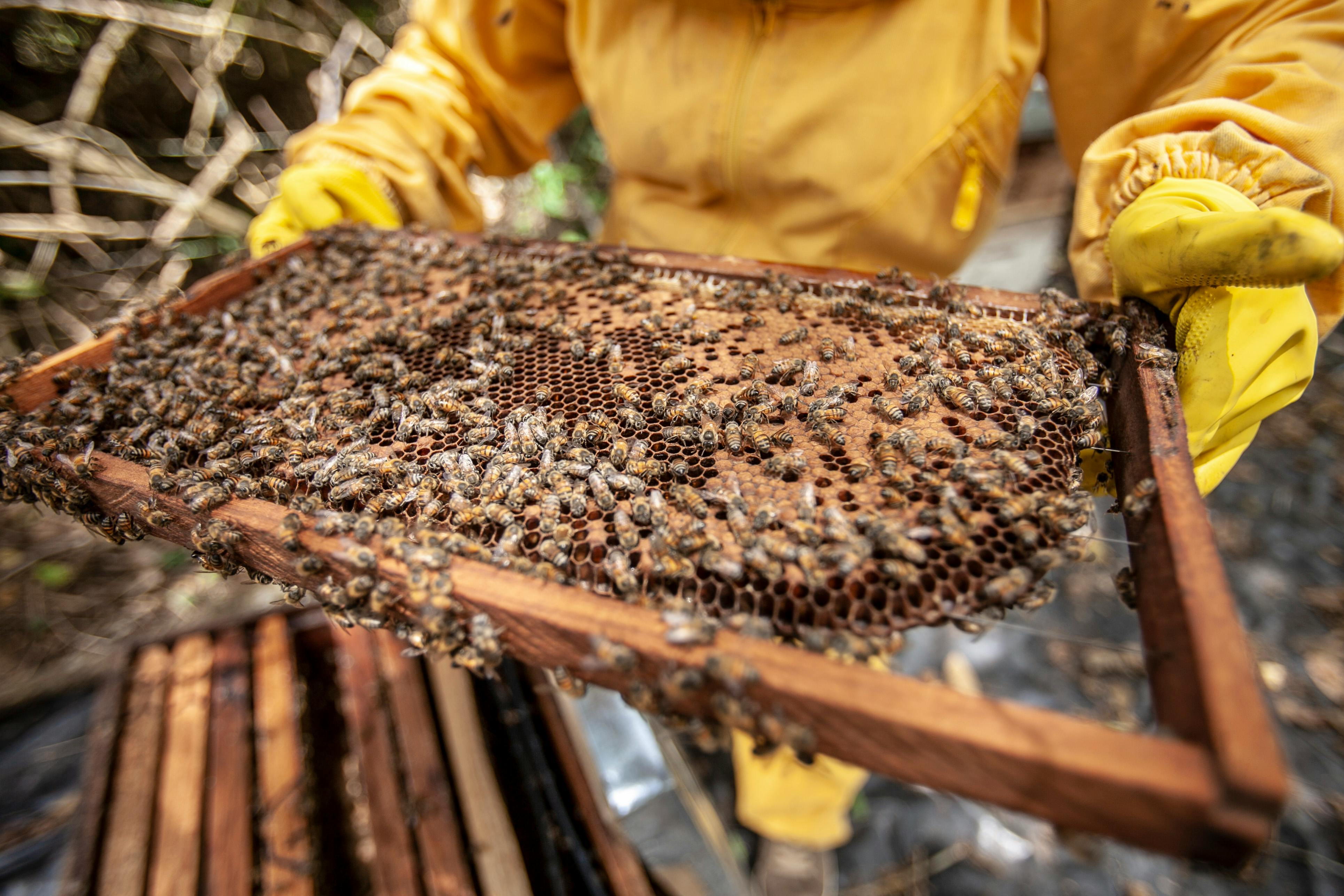
Image Source: Pexels
When you think of beekeeping, you might think of a farm surrounded by rolling hills and green shrubbery, and a beekeeper who treats their bees like their own family. While that may be true for many local honey harvesters, unfortunately when it comes to the mass-produced honey that is found on the shelves of chain grocery stores, vast differences exist in terms of the ethical treatment and well-being of bees.
Before honey is made, a honeybee will fly to various flowering plants and suck up nectar — a sugary syrup full of carbohydrates, which is a bee’s main source of energy. In fact, according to the Bee Health CoP, one worker bee will consume about 1000mL of 50% sugar syrup per day. As they scavenge for nectar, the carbohydrates keep honey bees alive and healthy by providing necessary hydration and nourishment until they return to the hive. After the honey bees return, the nectar that they have collected is then converted into honey by special “receiver” bees who deposit the syrup into cells to be stored for the winter months. In the winter, foraging is impossible without flowering plants, therefore honey bees must rely solely on their stored honey for energy. For these reasons, when bees are farmed for honey, they are being stripped of the resources that help them thrive.
According to PETA, the majority of honey nowadays is produced on factory farms, where bees are never allowed to benefit from their own hard labor. This is because beekeepers take all their honey for profit and either substitute it with a substandard syrup simply to keep them alive or just end up exterminating up to 80,000 bees to avoid feeding them through the winter, when the bees cannot forage for nectar and continue providing profit. Not only is this unethical, but it is a danger to the bee population.
Moreover, in prevention of the queen bee taking some of the hive members to create a new colony as they would in the wild when a new queen is about to be born, queen bees on factory farms must have their wings clipped or likely even confined or killed. She may then be replaced, living out a lifespan of one or two years despite the fact that her natural lifespan would have been seven years. Otherwise, honey production would decrease from the division of the hive, which would negatively impact revenue.
Not only are conventional bee farms unethical to bees from the way they are treated and fed an artificial substance as replacement to the nutrient-dense nectar they would receive naturally in the wild, they also bear negative effects on the environment, therefore deeming it an unsustainable practice.
Effects on the Environment
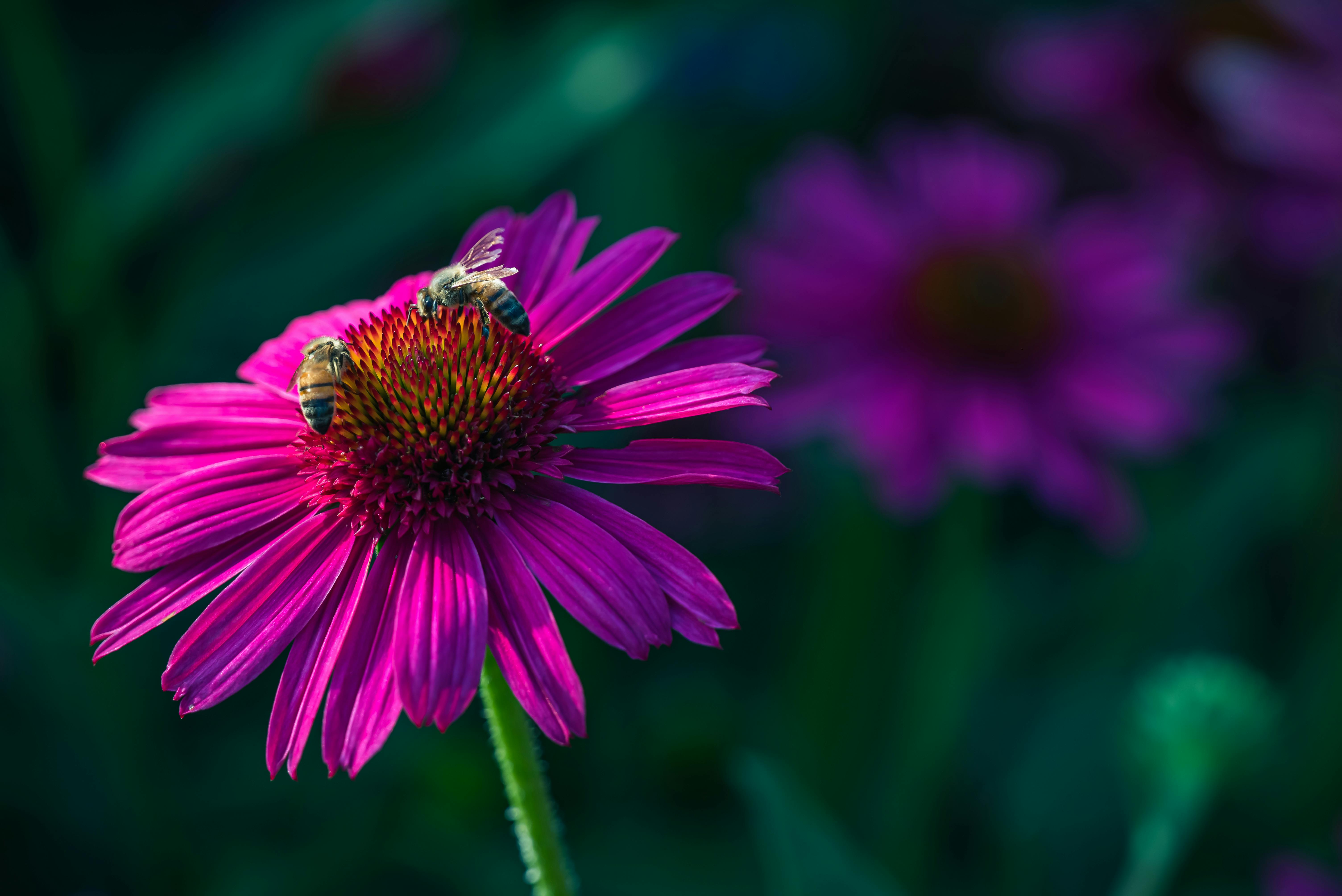
Image Source: Pexels
According to the National Post, Canada alone holds eight species of wild bees under the “at-risk” category, and species like the rusty-patched bumble bee, gypsy cuckoo bumble bee, and the macropis cuckoo bee are all classified as endangered. Although the Canadian federal government protects honeybees, many studies report that wild bee species are also being threatened by conventional beekeeping.
As reported by a study published in the Annual Review of Entomology, bumble bee populations have declined due to the increasing quantities of farmed honey bees because they now need to compete with each other for nectar. This is detrimental to the delicate balance of natural ecosystems as wild bees are responsible for pollinating plants and helping fruits and vegetables grow. Without them, the world’s food supply would take a terrible turn.
Our pollinators are also at risk of several health threats including parasites, viruses and bacterial diseases spread among bee workers in the hive. Many of these issues can severely weaken or even kill an entire colony. In turn, laboring honeybees are given antibiotics, thus disturbing their gut microbiome and becoming a factor that may contribute to the decline and collapse of the colony.
Another impact that the honey industry has on the environment is its carbon footprint. In the UK, 95% of honey is imported. Similarly, 75% of honey in America was produced outside the U.S in 2018. In order to get one kilogram of honey from a factory farm to a table in the USA, up to 1.06 kilograms of carbon is emitted. Carbon is harmful to the environment as it contributes to climate change, shrinking water supplies and drastic geographical changes. Considering the perspective which argues that beekeeping provides a safe environment for bees to live in, such facts would argue otherwise since climate change is a threat to bees’ overall ability to thrive in nature.
What Can We Do to Help the Bees?

Image Source: Pexels
- Look for other yummy alternatives to honey like maple syrup, agave nectar, brown rice syrup and more. These are all plant-based options that do not involve the exploitation of bees. You might even consider making your very own vegan dandelion honey which uses dandelions, sugar, lemon and water to create a sweet honey-like syrup!
Use cruelty-free beauty products such as lip balms and other make-up that contain beeswax and opt for plant-based derivatives like soy wax and hemp wax. Such brands include Eco Lips, featuring their Bee-Free vegan lip balms, and Elf’s line of cruelty-free and vegan beauty products. Let’s allow bees to keep the products of their hard-working labour for themselves, especially when we don’t need these products to survive.
Plant bee-friendly flowers and herbs in your garden and backyard such as mint, dill, lavender and rosemary. You can even grow some flowers in small recycled containers and pots and place them on outdoor window sills. Luckily, you don’t need a lot of space to make things grow! At the moment, Cheerios even has a campaign called “Bring Back the Bees” where you can sign up to receive a free pack of wildflower seeds to plant in your garden in support of attracting honey bees. Get yourself a pack!
As the honeybee and other wild bee species suffer, so do ecosystems, agriculture and our global food and water supplies. The vast majority of flowering plants and animals all rely on both wild and honey bees to maintain the cycle of photosynthesis to provide us with nourishing food to eat. Fortunately, there is still a chance for us to change our ways and the way we look at bees — as pollinators and the backbones of our world, rather than simply the insects that give us a sweet and sticky confection.
Featured Image Source: Pexels