
To be discussed are the ties between humanity and capitalism against the backdrop of the Industrial Age.
Pre-Industrial Age
The Industrial Age brought with it a shift in human life. Starting in the 18th century, the British population witnessed a rise in factory productivity, the invention of the coal-fired steam engine, and the adoption of economies of scale by businesses and firms across the country. These trends continued upward into the 19th century.
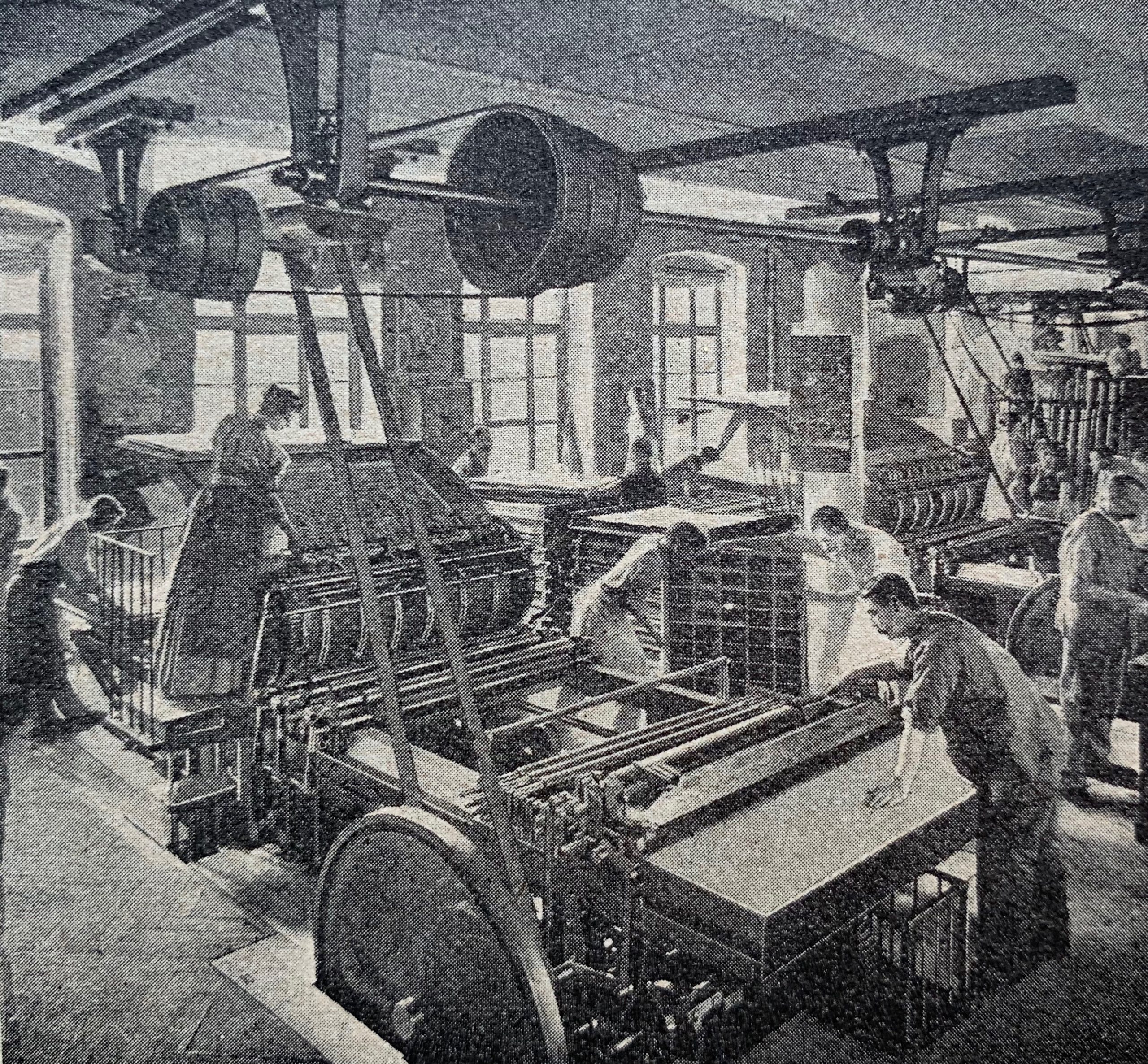
Image from 19th-century Industrial Age – The printing room in a production plant. (Image Source: Clu on iStockphoto )
In most circles, it is hard to reach a consensus on what the single biggest impact of the Industrial Age on civilization turned out to be. Yet, a popular choice for this spot is the impact the Industrial Age continues to have on the basic family unit, the role fathers and mothers now take on outside of their homes, and likewise, how society educates its young to develop the skills favourable for boosting economic output.
Though it started in Great Britain, over the next few decades and centuries, the socially transformative symptom of the Industrial Age spread to other parts of Europe and North America and eventually to the bulk of countries around the world.
Today, the Industrial Age has paved the way for humans to improve their efficiency and effectiveness in manufacturing, buying and selling goods on a global scale. Both globalization and urbanization are trending upwards.

World map showing the Logistics of an industrial Container Cargo freight ship for shipping goods worldwide. (Image Source: Thitivong on iStockPhoto)
Post-Industrial Age and a Focus on Canada
The 19th century brought with it a shift in Canada’s poli-economic scene. New reforms and tariffs were being passed to protect Canadian natural resources, manufactured goods and country-wide corporations. Eventually, a period was reached when methods of taxation for regular citizens compared to corporations were being assessed and then re-assessed. The bone of contention seemed to be how to tax the hidden value of the capitalist economy (think: private power and utility services, factories and banks).
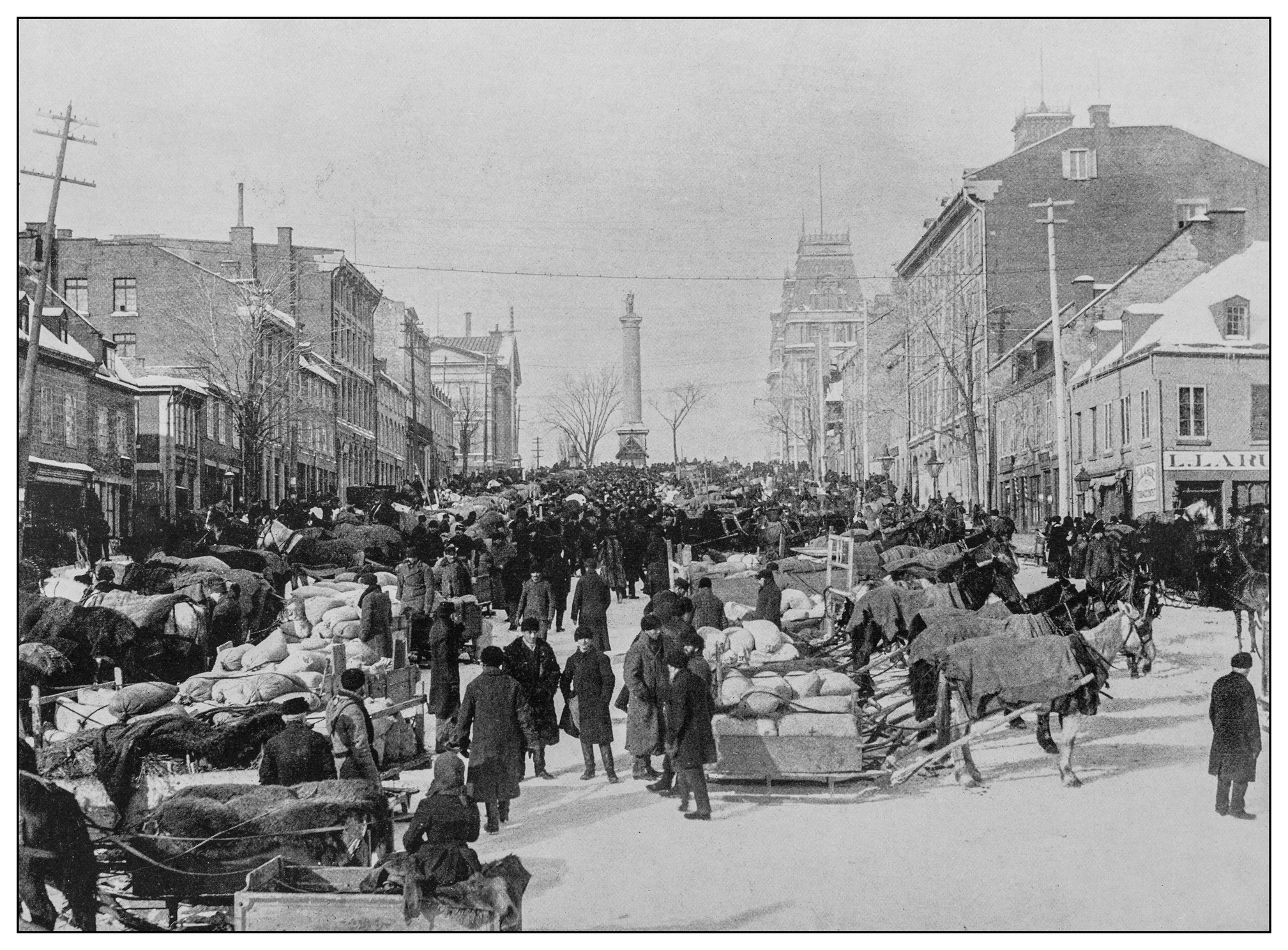
Antique black and white photo: Market Day, Jacques Cartier Square, Montreal, Canada (Image Source: ilbusca on iStockPhoto)
Elisabeth Heaman, recipient of the 2018 Governor General’s History Award for Scholarly Research, begins her essay on Capital, Morals and Taxes in Canada 1867-1917 by highlighting the use of taxes as a tool for disciplining capital activity in Canada.
One often hears that there are two major economic systems in the world — socialism and capitalism. The distinction between the two is that resources are centralized and released in an “equal” manner in the former, while in the latter, resources are controlled by the free economy.
It was a capitalist system that spread across Canada in the 19th century. This system created social tensions because Canadian citizens differed over the fairness of taxing both the rich, who gained from capital activity, the same as the poor. Eventually, these tensions gave way to a progressive income tax legislation. A divide in social classes was made more pronounced due to the advent of Industrialization in Canada. This same divide continues on today to dictate how social groups engage one another with a big incentive for maintaining social ties being the disproportionate distribution of private wealth amongst some social groups over others.

Filling out a 2012 Revenue Canada Progressive Income Tax Form. (Image Source: Jewelsy on iStockPhoto)
To Canadians, establishing a progressive income tax system was a method of moralizing their capitalist environment. The question is why moralizing was deemed necessary in a capitalist playing field in the first place. If capitalism can be traced back to the boom of the Industrial Age, are there direct ties between society’s collective view of morality and industrialization?
Conclusion
The popular economist Karl Marx holds a reputation for criticizing capitalist systems as a means by which people are alienated from their social way of being. And a system that is due to collapse in on itself if given enough time. Could this be due to the advent of capitalism re-defining the traditional ways of being (the basic family unit altered, private vs. public wealth gaps increased, tax inequality exacerbated)?
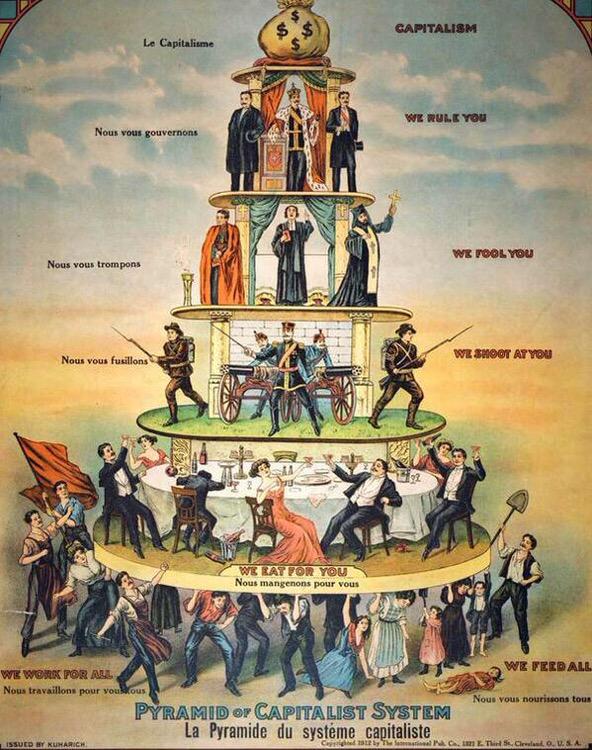
The “Pyramid of Capitalist System” poster, issued by Nedeljkovich, Brashick and Kuharich, Cleveland: The International Publishing Co., 1911. Meant to provocatively depict “capitalist rule in America. At the top of the pyramid sits the state, which serves the interests of the ruling class and functions under capitalism as the protector of private wealth and property. Below the state stand the religious leaders, clergymen, and preachers of false consciousness who encourage obedience to and acceptance of the status quo, entreating the working masses to accept their ordained fate and seek their just rewards not on earth but in that glorious hereafter.”
There are differing views on what the ideal economic system required for any society to truly thrive should look like or be called. And as is always the case, context matters. The more important consideration (as economies continue to grow and merge into a global force) is the preservation of social relations along the way.