Canada is a major influencer in clean electricity, with our electricity sector currently 82% emissions-free, but is Ontario doing its part?
After years of leading the way in phasing out coal, Ontario is now producing electricity with its highest rate of greenhouse gas emissions in over a decade. As nuclear plants undergo essential refurbishments and natural gas temporarily fills the gap, the province faces a turning point. Is this a step backward, or the beginning of something new?
According to the Government of Canada’s 2030 Emissions Reduction Plan, provinces such as Quebec, Manitoba and British Columbia have various hydroelectricity resources that provide low-cost, emissions-free electricity. Ontario on the other hand, relies heavily on nuclear energy but still depends on fossil fuels for a portion of its electricity generation.
The Independent Electricity System Operator (IESO) is an organization responsible for managing Ontario’s electricity system. The IESO recently released its 2024 year in review, indicating how much electricity was produced from different sources. The report revealed that natural gas made up 16% of Ontario’s electricity in 2024, bringing the emissions-free share down to 84%, compared to 87% in 2023. This is a significant drop from the 96% emissions-free sourced electricity Ontario had back in 2017 and marks the highest natural gas use in Ontario’s grid since the province phased out coal in 2012.
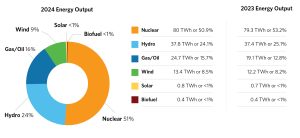
Image Source: Independent Electricity System Operator
While the use of natural gas in Ontario’s power system was at an all time high, nuclear energy still surged ahead in 2024, producing 51% of Ontario’s electricity and 24% of its hydro energy. Nuclear energy plays a fundamental role in Ontario’s electricity system, providing electricity without contributing to climate change. The province’s three nuclear stations — Bruce, Darlington and Pickering — operate 15 commercial reactors.
With plans underway to refurbish the Pickering Nuclear Generating Station, Ontario is positioning nuclear power as a key part of its long-term, affordable and emissions-free energy future. Pickering’s “B” units (Units 5-8) are still operating and will continue until the end of 2026, as authorized by the Canadian Nuclear Safety Commission. These units will then need to shut down temporarily for refurbishment, which is a major overhaul to extend their lifespan safely and efficiently. As a result, the province will increase its use of natural gas to fill the gap to ensure there is still enough electricity.
Natural gas is often the backup for electricity grids because it can be ramped up and down quickly, providing a reliable source of power. The increased use of natural gas in 2024 was because of temporary nuclear outages. With less nuclear power available than usual, Ontario had to lean more on natural gas.
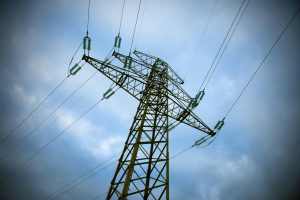
Dr. Hossam Gaber, a professor at Ontario Tech University’s Department of Energy and Nuclear Engineering explains that Ontario’s current reliance on natural gas is temporary, primarily serving residential, commercial and agricultural facilities as the province shifts towards cleaner alternatives but emphasizes that the transition must be carefully managed. “Otherwise we will be moving to an unknown or uncertain scenario that might take a longer time to implement with more costs and risks,” warns Gaber.
Similarly, Dr. Mark Winfield, a professor at York University’s Faculty of Environmental and Urban Change questions the long-term direction Ontario is taking. He agrees it’s a turning point — but not a positive one. “The province is making a massive commitment to a nuclear and gas-based pathway,” says Winfield. “This pathway will lock in high costs and high emissions over the short and long terms.”
The IESO argues that refurbishing the Pickering nuclear units will likely cost less and carry fewer risks for Ontario’s electricity customers than building new clean energy projects, such as wind, solar or hydro. The organization says the refurbishment would provide a stable source of power while the province works to expand its supply.
But Winfield raises concerns about what this means for Ontario’s long-term energy plan. “This is definitely a long-term trend,” he says. “Some IESO projections see growth in gas-fired generation out through the 2040s. The federal clean electricity regulations were modified to permit new gas plants to run beyond 2050.” While natural gas is often described as a short-term solution to meet electricity demand, Winfield points out that Ontario’s reliance on fossil fuels may not be so temporary after all.
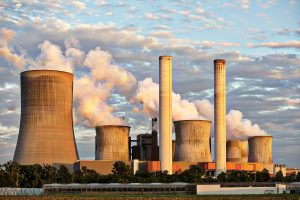
Despite these concerns, the province has laid out a long-term strategy. Ontario’s Affordable Energy Future outlines its approach to meeting rising energy demands while keeping costs and emissions in control. The refurbishment of Pickering is one part of the broader plan to expand clean, affordable and reliable nuclear energy.
Ontario says it’s already making progress on cutting emissions by expanding its clean electricity supply and shifting more parts of the economy — like transportation and industrial processes — to run on electricity. Even though gas use has slightly increased, the province states it’s still on track to meet its 2030 climate goals, unlike some other provinces and the federal government.
A 2024 IESO estimate suggests that by 2035, cleaner technologies like electric vehicles and greener industrial practices such as electric steel production could cut emissions by an amount three times larger than what’s currently produced by the electricity sector. That would be roughly equivalent to removing more than three million gas-powered cars from Ontario’s roads.
But the question of whether Ontario is truly dedicated to a low-emissions future doesn’t stop with its electricity choices. The province hit its peak of 96% emissions-free electricity in 2017 — the year before Doug Ford was elected. Since then, progress has declined. The only environmentally related issues covered in the Ford government’s 2025 budget was to cut funds toward the effects of climate change, indicating a lack of urgency on this critical issue.
The Ford government is decreasing the emergency forest fighting budget from $177 million to $135 million – even as evacuations have already taken place in a northwestern Ontario community this spring due to wildfires. On June 6 2025, Toronto also experienced some of the worst air quality in the world due to wildfire smoke, according to Environment Canada. His government is also decreasing the already limited budget of emergency preparedness and response from $70 million to $66.2 million, just after nearly one million Ontarians lost power due to a destructive ice storm. Ford’s budget mainly focused on tariff threats and highways. For a province facing pivotal decisions about its energy future, the absence of clear investment in climate technology raises questions about long-term strategy.
With Ontario leaning more on nuclear power and turning to natural gas to bridge the gaps, the province is facing a key moment in shaping its promised sustainable future. The choices made now — where to invest, what to prioritize and how to plan for the next decades – will determine whether Ontario’s energy future remains emissions-heavy or returns to its former status as a clean power leader.