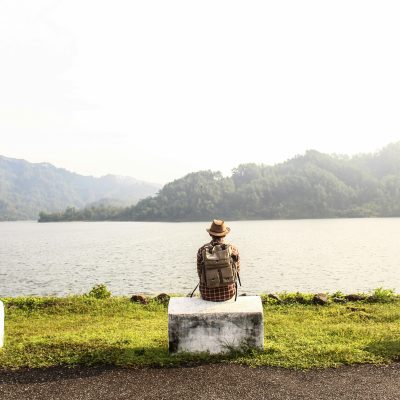
For many young people in Toronto, building a future has become less about ambition and more about endurance. Rising rents, a competitive job market and the growing cost of everyday necessities have reshaped what independence looks like, forcing difficult choices about where to live, how much to work and whether staying in the city is even possible.
Despite doing what they were told would lead to stability — earning degrees, gaining experience and entering the workforce—many young adults find themselves struggling to secure full-time employment or afford housing without sacrificing their long-term goals. The promise that effort would lead to security feels increasingly fragile.
And the consequences extend beyond individual frustration. When young workers cannot afford to stay, the city risks losing its emerging talent and shrinking its future workforce. In addition to undermining long-term economic growth, these trends also weaken the cultural vitality of the city as it becomes accessible only to the wealthy.
For some, the pressure has made leaving Toronto the only viable option.
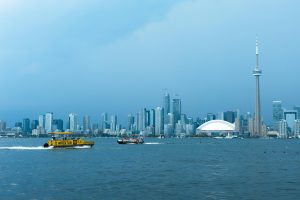
Photo by Mariah N. (Pexels.com)
Amelia Banville was born and raised in Toronto. She graduated from York University in 2024 with a dual degree in Aerospace Engineering and International Development, having already built work experience with major employers like Amazon and CIBC. She had done everything she was told would set her up for success—earning strong grades, working every summer and maintaining a professional network she could rely on. She was ready to settle into life as a young professional, equipped with the credentials and experience to earn a comfortable living.
Nearly three years later, Amelia has left the city.
Despite all the time and money she had invested in completing two degrees and multiple co-op placements, she struggled to find full-time employment in the city after graduating—and she is far from alone. In recent years, Toronto’s unemployment rate has climbed to nearly nine percent: the fourth-highest among major Canadian cities. According to a report published by TD Canada, the problem is particularly acute for young people, with one in five youth identifying as unemployed in Toronto’s labour market.
Like many others, Amelia was forced to leave the city to make a living.
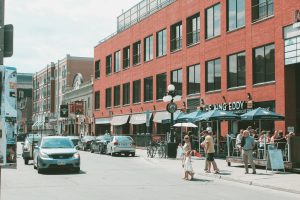
Photo by Josh Eleazar (Pexels.com)
Her frustration reflects a broader reality. According to the Toronto Regional Real Estate Board, the average home price in the Greater Toronto Area remained above $1 million through much of 2024. Even a modest condominium often requires a six-figure household income and a down payment well over $100,000. Meanwhile, the Canada Mortgage and Housing Corporation reports that average rents in Toronto have climbed more than 20 percent over the past two years alone, outpacing wage growth.
Amelia now lives in Ottawa, where she works for a prominent engineering firm. With a steady paycheque, she can afford to rent her own apartment, keep up with her monthly car payments and still go out for a nice dinner once in a while.
Still, financial stability hasn’t translated into confidence about the future.
“I want to own a home one day, because rent is such a waste of money,” Amelia says. “At least with a mortgage payment, you’re working towards owning the place. Rent money just goes into the pocket of some overseas real estate company.”
In Ottawa, the average monthly rent for a one-bedroom apartment is roughly $1,700 compared to more than $2,200 in Toronto. Amelia had hoped that the lower cost of living would allow her to save for a down payment, but even with reduced rent, home ownership still feels out of reach.
“I spend about 50 percent of my income on rent,” she explains. “Even though I’m in a better rental market than Toronto, I still couldn’t even buy a condo there.”

Photo by Vladimir Kudinov (Pexels.com)
Planning that far ahead is difficult for her anyway. Between political instability and worsening environmental damage, the idea of an idyllic future—complete with a home and a pension decades from now—feels increasingly unrealistic.
Considering the uncertainty of the future, Amelia wonders, “Why should I delay gratification if I don’t even know that the gratification is possible?”
This is a feeling shared by young people all around the world. A 2021 youth survey spanning ten countries found that 75 percent were frightened by the future, citing concerns about climate change and politics. More than half of respondents said they expected to have fewer opportunities than their parents.
For Amelia, that sense of instability makes long-term sacrifice hard to justify.
“I could save for retirement by choosing not to take a trip to Venice—and by the time I retire, Venice is underwater. I’d rather enjoy my money now.”

Photo by Karolina Grabowska (Pexels.com)
Looking ahead, Amelia can’t see herself returning to Toronto.
“I would prefer to live there,” she says, “but when I look at the jobs available, they’re willing to pay less than what I’m making now in a cheaper city. It makes no financial sense to move back—unless I lived with my parents.”
For many young people, however, that option doesn’t exist.
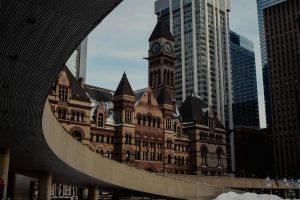
Photo by Ali Cuhadaroglu (Pexels.com)
One of those people is Fernando Bossoes, a full-time journalism student at Humber Polytechnic. He moved to Canada from Brazil in April 2022, leaving his family behind to pursue an education. Since then, he has worked multiple jobs to support himself, including shifts at fast-food restaurants, local bars and the campus gym. His days often stretch twelve hours or longer—before accounting for coursework.
Fernando rents a room in a four-bedroom house shared with roommates. For $850 a month, he has a bedroom and shared access to a kitchen, living room and bathroom, along with a coin-operated washing machine in the basement. With his family so far away, living at home to save money isn’t an option.
As he approaches graduation, Fernando dreams of having a place of his own—but worries about the cost.
“For me to even get a studio apartment, I’d have to at least double my rent,” he says. “I don’t want to live with roommates forever, but I also don’t want to live paycheque to paycheque.”
The numbers support his concern. The average rent for a studio apartment in Toronto is roughly $1,600 per month, with utilities, groceries and transportation sometimes adding hundreds more in monthly expenses.

Photo by Tima Miroshnichenko (Pexels.com)
How can young people be expected to plan for the future when simply surviving month to month is already a challenge?
“I do want to own a home in the future and start a family one day,” Fernando says. “So I’m just trying to work as hard as I can now while I’m young and healthy to build savings. I’d rather work 50 hours a week now than when I’m my dad’s age.”
Despite the rising cost of living, Fernando still wants to make Toronto his permanent home.
“The city is expensive, but it’s expensive for a reason,” he says. “It might be cheaper to live in a small town somewhere, but I want to be here. I want to be with my friends. I don’t see myself leaving the Greater Toronto Area.”
Fernando makes the best of his situation. He has embedded himself in the west-end community through school, work and volunteering—pushing through even when he’s exhausted from long shifts on his feet. To stay in Toronto, he’s playing the long game.

Photo by Luis Ruiz (Pexels.com)
Amelia’s decision to leave Toronto was pragmatic. Faced with lower wages, higher rent and limited job prospects, staying no longer made sense. In Ottawa, she found what Toronto could not offer her: stability, independence and the ability to plan—even if the future still feels uncertain.
Fernando, on the other hand, is choosing to stay. Not because it is easy or affordable, but because the city still feels like home. He accepts the long hours and shared housing as the price of belonging, believing the connections, culture and community Toronto offers are worth the sacrifice.
Together, their stories illustrate the struggle of young people living in the city. Those with the flexibility to leave often do, taking their skills and education with them. Those who remain carry the weight of making it work, even as the cost of staying continues to rise.
When educated young professionals leave, Toronto loses future homeowners and skilled workers — the very people who sustain the city. When others stay but remain financially precarious, inequality deepens. Over time, this erodes the social and economic diversity that makes a global city resilient.
Cities depend on the people who choose to stay—to study, to work, to create and to build communities. If Toronto wants to keep them, it must offer more than the promise of survival. It must make room for stability, dignity and the possibility of a future worth planning for.
Cover Photo by Nout Gons (Pexels.com)