
I was sixteen when I learned paradise was an illusion. It came about after school as I wandered through my neighbourhood library in search of my next read. I didn’t know what I wanted, having been addicted to the worlds crafted in my favourite fantasy novels and the poignant character development in literary fiction. My parents always told me I needed more reality in my reading diet—more autobiographies and nonfiction so that I could “actually learn” something. Nonfiction, in my teenage mind, was akin only to the textbooks I was forced to read for school, which were monotone, overcomplicated works that meandered around the main point and left the reader utterly lost for comprehension.

(Image Source: Pexels)
I eventually settled on a short piece, something I felt I could digest within a day or two. Its cover page angered me, stereotypical images of black babies gazing up at a tree as white babies fell from its branches. Onlooking was a small white man with a lyre, his mouth agape from the distressing sight. From this piece, I expected many things. However, what I did not expect was the scathing, anti-colonialist essay within its cover. It was A Small Place by Jamaica Kincaid, and it was my introduction to the harsh realities underlying the beauty of the Caribbean. And as someone of Caribbean heritage, it stoked my ever-growing need to absorb postcolonial narratives from the writers of my home.
A Small Place
A Small Place introduced me to the realm of creative nonfiction, an elusive genre of nonfiction recognized mostly for its narrative plot. It’s quite similar to fiction in that sense, differing only by the fact that the author tells the story of true accounts, whether they be derived from personal experience or the realities they have witnessed.
When, at the time, my understanding of nonfiction had already been limited to textbooks and peer-reviewed articles, I couldn’t have found Kincaid’s writing any sooner. She set out to tell the story of her home, the Caribbean island of Antigua. A “small place” that, in the eyes of many, is a paradisiacal escape. A tourist’s refuge from their rather mundane life. However, what rests beneath the beauty of such an island is a horrific tale of colonialism and its unshakeable chains.
You are not the main character
A Small Place starts with you, an American tourist who has just landed in Antigua and bears little knowledge about the island you’re vacationing on, other than it being a paradise. Your descent from the airport to your resort is laid out like an itinerary. But this journey that one would expect to be fixated on the beauty of the island is instead overshadowed by the inequity and corruption plaguing Antigua since its colonial past. Kincaid disrupts the otherwise beautiful imagery of warm breezes and pristine waters to reveal that the island never rebuilt its library after the ‘70s earthquake. Its roads were only paved to welcome the Queen of England. The cars its people drive are imported from Japan and incompatible with the gas they use. The largest bank on the island was founded by slaveowners. And wealthy foreigners heavily invest in the government for political favours in return. All of which would lead one to question the stability of this paradise.
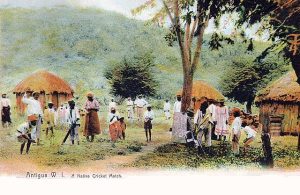
A Native Criket Match, Antigua B.W.I (Image Source: Wikimedia Commons)
Despite the succinctness of her narration, the tourist remains none the wiser. They never come face-to-face with the island’s history nor even come close to recognizing the role they have in placating its colonialist underpinnings. They continue their vacation, bearing little to no curiosity beyond their own enjoyment. They don’t question where the water goes after they bathe or if the “local” food is truly local. They don’t wonder about politics, much less the corruptions broiling beneath its outer visage. They’re more focused on pleasure, and it is in that which Kincaid ultimately reveals the harrowing truth about many tourists: They are self-centred, having little empathy regarding how their presence exacerbates the longstanding inequities in the spaces they visit.
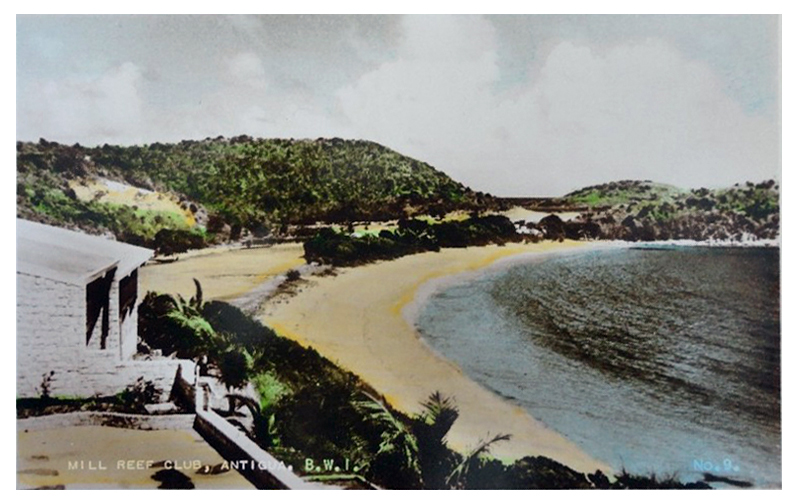
Mill Reef Club, Antigua B.W.I (Image Source: Wikimedia Commons)
However, for as much space as the tourist occupies, they are still not the main character in A Small Place: It’s Antigua. The island is dissected—split between its past and present. Many parts of it are unravelled, revealing there is more than the eye can see. Antigua’s Mill Reef Club, a private venue renowned for its beauty and access to a pristine beach, is exposed to have historically excluded black Antiguans from entry unless they were servants. Antigua’s oldest bank was founded by the Barclays brothers, prolific slave traders who entered the banking industry after amassing wealth through the commodification of humans. Racism is exposed through the professionals who came to the island as expatriates. Kincaid shares her vivid memories of white school teachers calling black Antiguan children “monkeys” and medical staff mistreating their black patients under the presumption that dark skin equated to uncleanliness.
Kincaid’s narrative style may be accused of meandering, straying further from the perspective of the tourist. However, it couldn’t be more direct without sacrificing the creative aspect of creative nonfiction. She spares no punches, telling the reader exactly the ailments Antigua faces.
Une Tempête
Aimé Césaire’s play, Une Tempête, at first may seem like a far cry from the creative nonfiction, A Small Place. However, despite the diversion in genre, Une Tempete remains deeply rooted in a Caribbean anti-colonialist narrative much like A Small Place. Césaire merely takes advantage of the fantastical and theatrical elements within plays in order to convey his message.
Césaire’s work goes beyond the reimagining of Shakespeare’s play, The Tempest. While the theme of vengeance is kept in the narrative, the theme of abolition is also carefully woven in through the alterations of the characters Caliban and Ariel. The two side characters are further fleshed out in Césaire’s work, becoming slaves who have their own desire for freedom from Prospero, their vengeful slave master. While the script itself is entirely fiction, the message Césaire aims to convey is similar to what Kincaid and other anti-colonialist Caribbean authors express in their works. Prospero’s entitlement—much like the tourist’s entitlement—is deeply enmeshed in his characterization. When he disparages Caliban, he ensures to inculcate the notion that the slave should thank the master for “civilizing them”, that they would not have culture without his colonization of the island. Yet, these affronts are quickly dispelled by Césaire’s depiction of Caliban engaging with his ancestral religion. The addition of the god Ehru is not only meant to confuse and scare Prospero, but also expose the reality that, despite slavery, many slaves like Caliban held on to their indigenous cultures. Caliban continues to evoke West African deities such as Shango throughout the play’s acts, conveying the cultural resilience of many enslaved people. An act of defiance when faced with the atrocities of colonialism.
The Colonizer Never Leaves
Césaire’s play diverges from Shakespeare’s in many aspects, from the development of Caliban and Ariel to the personification of the slave master through Prospero. All of this is done to convey Caribbean anti-colonialism and its effects. What culminates this message in Césaire’s work lies in the ending where Prospero refuses to leave the island he inhabited, believing his work of “civilizing” it isn’t truly over. This not only symbolizes the unwavering conflict between Caliban, who wants his island back, and Prospero, who had been marooned there for some time, but it also exposes the reality many post-colonial societies face: the reality that the colonizer never leaves.
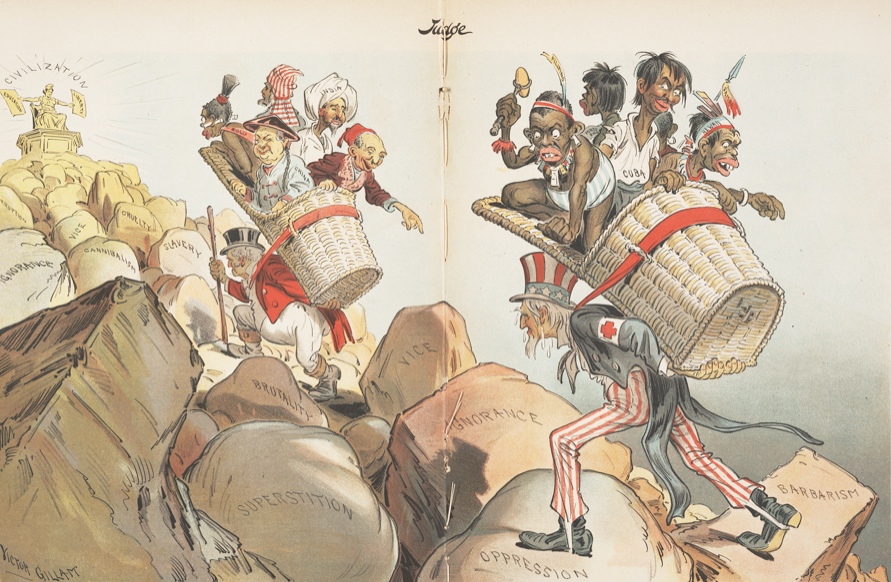
A cartoon illustrating Rudyard Kipling’s poem, “The White Man’s Burden” (1899). (Image Source: Wikimedia Commons)
Prospero’s belief that the island’s inhabitants can only be civilized by him and that the island’s resources would be better employed under his care directly reflects the history of many colonized societies. The colonizer doesn’t return to their homeland as much as the colonized wish they would. Rather, they stay under the guise of it being their “burden” or “duty” to civilize another group and, in return, they begin appropriating resources. Natural resources eventually become a commodity alongside the inhabitants of the island, who are expected to extract the resources for their “civilizers”. As capitalism rears its ugly head, these commodities—both people and resources—become the driving force of a world economy.
The Illusion of Paradise

Aimé Césaire (Image Source: Wikimedia Commons)
Both Césaire and Kincaid uncover the veil surrounding the Caribbean, often depicted as paradise. As someone of Caribbean heritage, it was no surprise to me that my home is still suffering the effects of colonialism. However, how anti-colonialist works convey the history and disseminate this message is crucial to our understanding of how we continue to exacerbate longstanding systems.
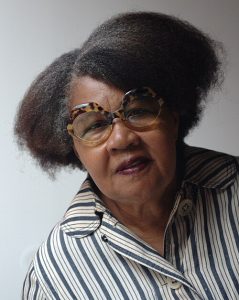
Jamaica Kincaid (Image Source: Wikimedia Commons)
Kincaid takes a direct approach, reminding the tourist that they are not the main character and the island itself has its own story to tell. Césaire adopts a symbolic approach, retelling a widely-known play through the further development of otherwise minor characters. Often, those colonized—the affected—are expected to remain in the periphery so long as they serve the colonizer. Both authors ensure that their perspectives are front and center, which strips the illusion and tells the reader that the paradise isn’t real for its inhabitants.
Featured Image Source: Zipporah Davis