I could always sense an incoming story from Ba. A muggy silence would hang in the air. My lungs would fill with anticipation. Sometimes it felt like the world needed his stories to carry on spinning. I know I did.
It would begin as soon as the memories rolled in. Ba’s words would rain down in heavy sheets, drunken and elusive, sloshing over one another as they fought for space in slippery sentences. My attempts at clarification were never successful. On occasion, the stories would be gentle, settling in like morning fog, but many were ruthless and carried on for days at a time. Those were the worst to bear.
In the aftermath, I would go out on the porch and find solace in the inky sky. The night air was always soothing after a storm. Wading through the shadows of war and hunger, I tried to salvage any scrap of truth I could find. These are the words Ba has passed down to me, pieced together from the wreckage.
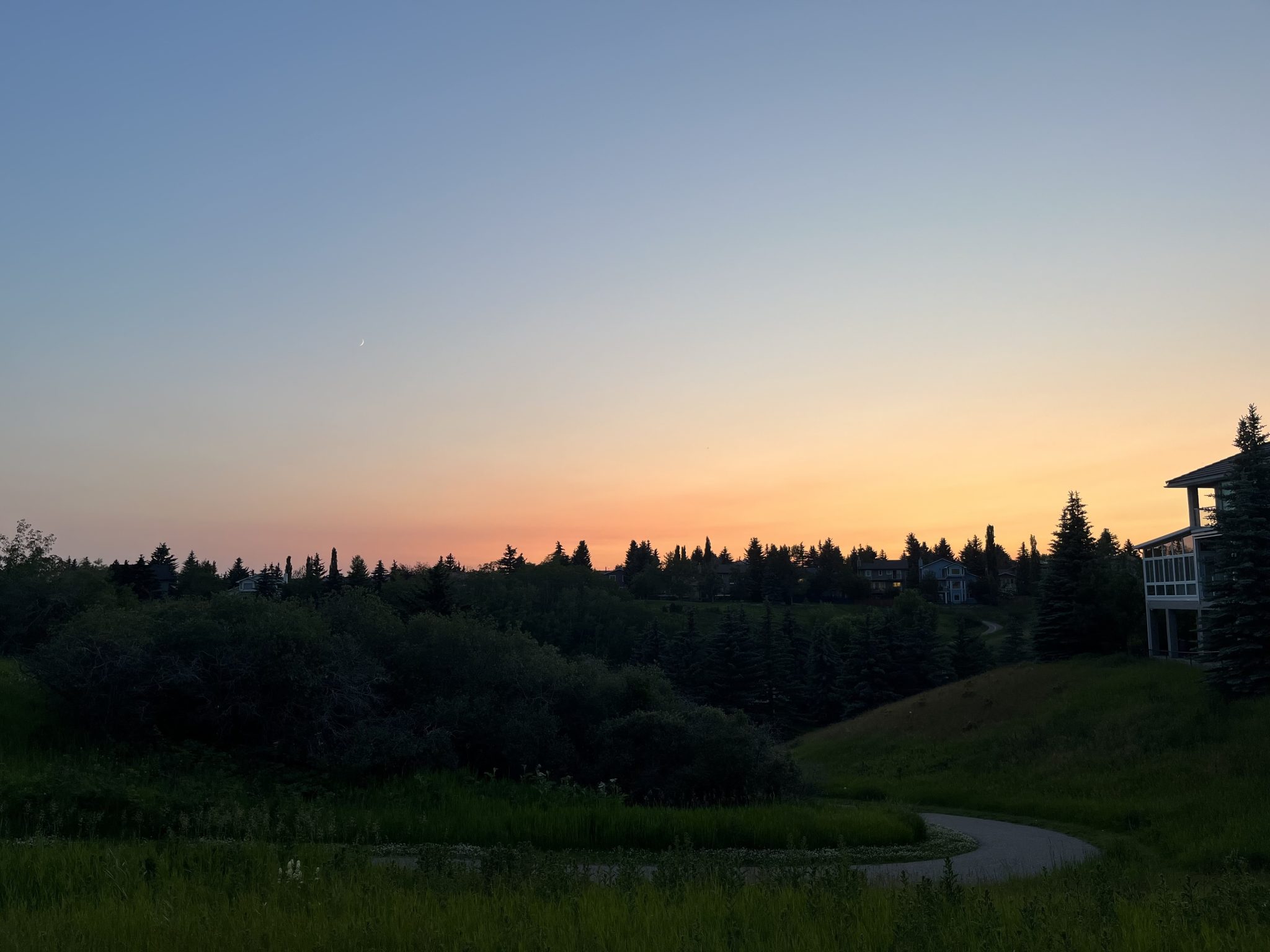
Photo Source: Sunny Chen
***
The year is 1928. The place, a village town outside the Beijing capital, although at the time of this story, Beijing would not be the capital for another twenty years. Squabbles between communists and nationalists are increasing in violence and frequency, and the stench of death lingers in the air, burning the nostrils. But news traveled slowly back then, and besides, politics didn’t matter in the countryside, especially not in this town. What mattered to the townspeople was that the fields were plowed and fertilized, ready for the busy planting season ahead.
My great-great-grandfather Yan and my great-grandfather Jing were doing exactly what they’d been doing all summer — weeding. Each man trudged through the fields, sickle in hand, cutting down tall grasses and stalks as they went. The day had been long and the heat was bothersome. Flies buzzed around their sweat-slicked faces. The sun beat down on their reddened necks. I’m sure even the most seasoned farmer would have been agitated working in such conditions, but Yan especially so.
The thing is, Yan had a temper, and a violent one at that. He was well known amongst the neighbours to swear and yell when angered, and he didn’t hesitate to give his children a thorough spanking if they caused trouble. At the village market, he was stubborn and arrogant with his purchases, ensuring he haggled the highest quality product for the lowest possible price. Vendors always avoided eye contact when Yan was nearby, and often whispered about him behind his back. “His poor wife,” they would say as they shelled peanuts over woven baskets. “His poor children,” the others would reply.
No one really knows how it happened. My great-grandmother Mei was in the kitchen, boiling water for rice. My grandfather Pei, a toddler at the time, was napping on the kàng. Yan and Jing were working in the field, sickles in hand. Maybe Jing was working too slowly. Maybe he made an untimely joke. Maybe he was thinking of his three young sons back in the house and suggested ending the day early. The specifics of the story change with each retelling, but one thing remains tried and true. Before nightfall, Jing, age 34, would be dead. Killed by a sickle to the side of the head.
***
It’s laundry day. Ba doesn’t do the laundry because he doesn’t know how. I do the laundry because I’m the girl in the family. The television is turned low, a murmured accompaniment to Ba’s sweating beer and the mountain of clothes sitting next to me.
“How was school today?” Ba asks.
“Fine,” I say.
“Did you have fun with your friends?”
“I don’t have friends.”
“It takes time.”
“I don’t want friends.”
We don’t speak after that. We listen to the bad singing coming from the television. We look at the too-wide smiles of the judges and their swivelling red chairs. We concentrate on the glowing screen and don’t dare tear our eyes away. Ba nurses his beer. I fold his underwear. The credits roll and golden confetti falls on the stage.
“Let me tell you a story,” Ba says.
***
The body was still warm when Mei was called to the scene. With Pei on her hip, she berated Yan with questions. “What the hell happened? What the hell is wrong with you?” Yan, with his back turned, continued cutting at the weeds, his sickle still sticky with blood.
For the next hour, Mei continued. Even when young Pei started wailing, she didn’t stop. How was she to care for her three sons? How was she to live with this murderer of a man in her home? For Mei, there were no tears, just white hot, unadulterated anger. She was in shock, I suppose. It would be a shock for anybody. When the tears finally came, Mei was alone. The sun had set and the fields were quiet, still half weeded. There was nothing but a sickle moon to keep her company.
***
Ba appears frequently in my dreams. In one, we are driving home from the grocery store. The store is far from our house, a 45-minute drive on the two-lane highway between our house and the nearby town, 30 if you take the shortcut by the marshes. Today, we are taking the shortcut. An old country song plays on the radio. Only one station works this far out in the middle of nowhere. We are driving as fast as our rickety van can go, barely making the speed limit. We are nearly home when a deer runs onto the road. Ba jerks the wheel, swerving, and drives us straight into the water. I am screaming, but my words make no sound. Dark water pools at my feet, yet somehow the van propels forward. We drive for an impossible length of time. We drive and drive until we see a small boat dock in the middle of the marsh. It doesn’t appear to be connected to anything. The cold water is up to our necks. “Go,” Ba tells me. Save yourself. I start to protest, but still my voice does not work. “Go,” he says again. “Hurry.” Shivering and panicked, I climb out the window and grab onto the dock. I turn, expecting to see Ba behind me. There is nothing but a sinking radio antenna.
***
Mei never spoke to Yan again. With her three sons in tow, Mei relocated to the neighbouring village and started a new life there. She went on to live a long and prosperous life — surviving the impending war, raising her sons and living well into her nineties — but she never remarried. When pursued by potential suitors, she simply refused. “I’m already married,” she would tell them.
As for Yan? Well, there were no police in the village back then, just an advisory committee comprised of volunteers from the neighbourhood. When consulted, nobody on the committee knew what to do. In the town’s history, such a thing had never happened before. “Let’s execute him,” one said. “He deserves to pay for what he did.”
“No,” said another, “let him live with the shame. Guilt is enough to kill a man.” The debate went on for months. In the end, no punishment was decided. War had reached even the most remote villages by that time, and matters of capital punishment no longer seemed all that important.
***
I only have one memory of Ba apologizing to me. It was after a dinner of beef noodle soup, the first and only time Ba made noodles from scratch. The aroma of stewed beef was intoxicating, and I had spent the entire afternoon in the kitchen, waiting in anticipation as Ba prepared the meal. The first bite was an assault on the tongue. The chunks of beef were tender and the noodles were perfectly chewy, but the broth was so saturated with salt it felt like my mouth had been burned. Of course, neither of us said anything. Ba had taught me from a young age to never waste food, so we licked our bowls clean, in spite of the pain.
“I’m sorry,” Ba says, breaking the silence.
“The noodles were fine,” I say.
“No,” he says. “I mean, for all this.”
“It’s fine,” I say again.
Only later would I realize what Ba really meant. It was strange that the two of us were connected in this way, with words slitting our throats and soup burning our stomachs.
***
By the time I was brought into the world, Mei was long dead. Ba, however, would often tell me stories of her life before bed each night. I was enraptured by Mei as a child. Her stories felt surreal, as though I were watching a film rather than learning of the woman who’d been my great-grandmother. There was one story in particular that I would request frequently, more than any other.
***
Like many women of the time, Mei had lotus feet. From age five her feet had been wrapped and bound with cloth, repeated daily until the bones were broken and folded over, contained to a size of no more than three cùn. This resulted in beautiful, doll-like feet, but such a practice did not allow for very good mobility. Some years into the war, the Japanese invaded Mei’s village. Invasions had become a regular occurrence over the years, especially now with the Japanese occupation of Northeast China. As such, an absurd sort of protocol had been established amongst the villagers. Someone, usually a shepherd herding sheep at the north end of the village, would see the dust of the approaching army. The shepherd would run back to the village and sound the alarm. “The Japanese are coming! The Japanese are coming!” Then, no matter the time or place, everyone in the village would run for their lives.
This particular day, the alarm came in the dead of night. Mei was home alone. Her oldest son had enlisted in the army, and her other two sons were, according to their latest letters, working as traveling salesmen in the Húnán province. Mei had suffered chronic insomnia ever since the start of the war, but tonight she slept soundly. Somewhere amongst her dreamy recollections of Jing and their prewar life, Mei heard the panicked shouts outside. “The Japanese are coming! The Japanese are coming!”
By the time Mei was properly awake, the first soldiers were already entering the village gates. With her feet pristinely preserved in their childlike state, Mei could hardly walk on a good day, much less run for her life in the black of night. The other women in the village were carried by their husbands or sons, but Mei had no one. She could already hear the Japanese barging through the houses a couple doors down. With nowhere to go, Mei decided to climb out the bedroom window. She squeezed through the wooden frame just as the soldiers broke down the front door. Fingers gripping the ledge, Mei did not hesitate before letting go.
***
EXT. NOSE HILL PARK
The park is full of lush green grasses and small shrubbery. A few deer graze leisurely, ignorant of the crouching coyote in the shadows. A chilly breeze hints at the beginnings of the coming fall, but remnants of sweltering August heat remain. It’s a confusing concoction, one that elicits a diverse showing of outfits from the visitors of the park. We see two bikers, resting their legs at the top of the hill.
FATHER
Will you remember this?
DAUGHTER
What’s this?
FATHER
When you get older and you have your own children, tell them about this. Tell them about how you used to go biking with your father in the summertime, even though you didn’t really want to, and when you made it to the top of the hill, sweaty and tired, out of nowhere he conjures two cups of canned mandarins, and somehow that made everything worth it.
DAUGHTER
I will, Ba. I will remember.
***
At exactly five feet tall, Mei had anticipated the fall to hurt. What she did not anticipate was the brick under her left foot. Unable to sustain the impact of her body, her foot bent with a sickening crack, and Mei fell to the ground in a heap. White spots blurred her vision. A feeble attempt to stand assured Mei that her foot was, in fact, broken. Blinking through tears, Mei eyed the thick clump of bushes growing by the wall of the house. Most of the leaves had fallen, but the branches were dense enough to shield her. She could hear the soldiers raiding her home through the window above. Mei took several deep breaths, adjusted the pins in her hair, and crawled.
Huddled amongst the branches, clutching her broken foot, Mei again saw the moon above. It was exactly two weeks before the Mid-Autumn Festival, so the moon was nothing but a sliver in the sky. Mei lay dead still and pleaded with the moon, praying the darkness would keep her shielded. Shouts and gunfire could be heard in the distance.
***
“And then what?” I would ask Ba. “What happened?”
“It’s getting late,” he would always say. “You have school tomorrow.” Then he would tuck me in and turn off the light. To this day, I don’t know how the story ends. I don’t know how long Mei lay in the bushes, or how she ever made it to safety. Did the villagers come back? Did she crawl to the neighbours when the Japanese left? Did the soldiers ever see her? All I know is that Mei survived, though from that day on she always walked with a slight limp on her left side.
For whatever reason, this story has stuck with me. Maybe it’s the sheer adrenaline of Mei’s escape, her near brush with the Reaper’s blade. Or maybe it’s her bravery and staunch independence that appeals to me. Or maybe still it’s her resilience in the face of so much fear, uncertainty, and loss. But what intrigues me most is her pleading with the moon. After all that’s happened, why the moon? Does she not remember that day in the field, Pei crying in her arms, Yan hacking at the grass, Jing dead at her feet?
I often ask Ba about that day in the field, hoping to glean any detail he may have missed in previous retellings. Was there a funeral? What did they do with Jing’s body? Was there a lot of blood? “No,” Ba would say. “Just a small trickle by the temple, along the hairline.” But how could that be? How could such a deadly blow to the head yield so little evidence? How could so much pain and hurt and devastation be summed up with a single line? Ba could never give me a straight answer. “I need another beer,” he would say, and would send me out to the garage for a fresh bottle. One time, I brought back two instead of one and he laughed. “What, are you trying to get me drunk tonight?” “N-no,” I stammered. “I just wanted to save you another trip.”
***
Ba didn’t have answers to a lot of my questions as a child, but sometimes I could sense his response, instinctively, the same way the sheep fled with their shepherd at the call of the alarm: “The Japanese are coming! The Japanese are coming!” But sometimes my instincts were not quick enough, and my feet were too unsteady to bear my weight. In those moments, I felt the full weight of that sickle. Afterwards, I would go out to the porch and look at the moon, a mere sliver in the sky. I think about he who threw it. I think about those it struck. I think about how it hangs over all of us, outliving all of us.