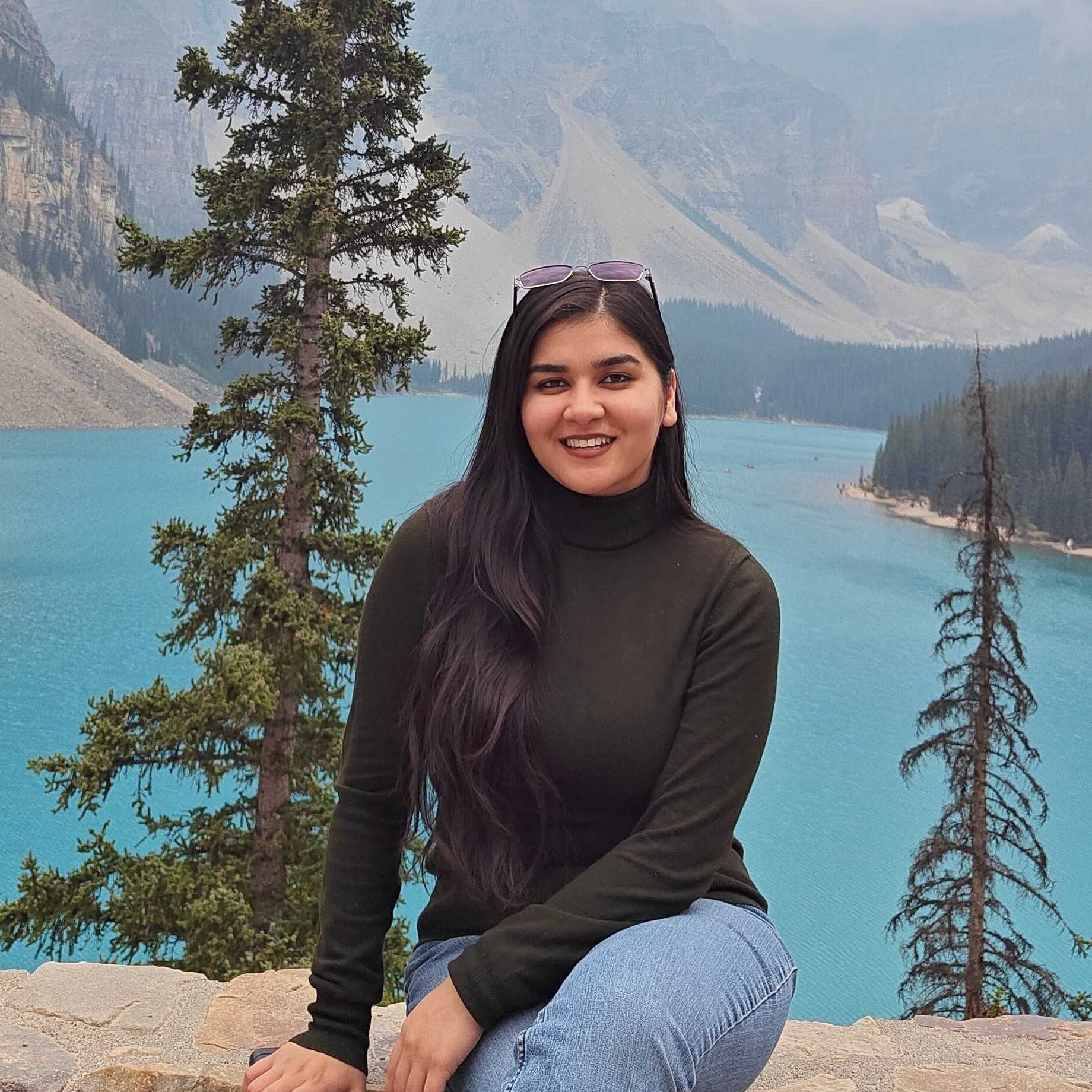
Ahmad Shahir, a Tabla player from Canada, opens up about his journey as a musician with dwarfism. As a 24-year-old recent graduate from the field of Information technology, Shahir has had many accomplishments in his personal and professional life, Shahir has had many accomplishments in his personal and professional life. Born in Afghanistan and raised in Canada, Shahir overcame personal struggles to find solace and strength in music. In this interview, he shares his passion for Tabla, the challenges he faces as a musician, and how he hopes to inspire others through his art.
When did you start to feel like the Tabla is the instrument for you? How did you first begin the process?
I remember first hearing the Tabla when I was about 7 years old in Afghanistan and it sparked an immense interest in me. Sadly, back then in Afghanistan, the art of Tabla and music in general was not regarded as a prestigious profession. Therefore, although my family was really encouraging, we felt the occasional fear of judgement from the community. After moving to Canada, the judgement aspect was no longer a concern. However, we were not able to afford Tabla lessons as we were new immigrants and it wasn’t always the easiest to make ends meet. Sadly I was bullied in school and I had also missed the much simpler life I had in Afghanistan with my loved ones. This led me to fall into a deep depression. Depression was with me for most of my young life. It was around Grade 9 when the depression had gotten worse. When my mother talked to my doctors, they suggested that we should keep me occupied with something I am interested in to ease my mind and better the state of my mental health. Since my mom had witnessed my keen interest in Tabla, she decided to take me to Tabla classes. When I stepped into the Tabla class, I knew this was for me before even touching the Tabla. It was the beginning of a better life.
How is your experience with being a dwarf and a musician? What are some of the advantages? What are some of the challenges?
My experience with being a dwarf and playing an instrument as physically demanding as the Tabla, has definitely had its ups and downs. Sometimes I feel that since I don’t have big hands, and the muscles on my arms are not average sized, it impacts my playing. I get tired quite easily when playing complex phrases. The fact that my fingers are smaller than other tabla players, I feel that it is harder for me to produce a bright and clear sound. My teachers, however, have opposed this view of mine and have said that all Tabla players must practice long hours and work extra hard, and that I shouldn’t let these far fetched thoughts get into my head. The advantage of being a dwarf musician is that I can hopefully inspire others. This is very important to me because I always want to promote the “with hard work and dedication, anything is possible” mentality to others. Another advantage I have as a dwarf is that people can easily recognize me from my videos on social media, so my music reaches more people.
Please tell us a little about the art of the Tabla, some of the basic, but technical stuff?
Tabla is a North Indian classical procession instrument founded by Amir Khusru (18th century) who cut the pakhawaj (also an Indian percussion instrument) in half. Teaching the Tabla began as an oral tradition by musicians and it was passed on to later generations orally. Prior to Tabla becoming an instrument that could in itself shine as a solo instrument, the Tabla was used for vocal accompaniment, mainly in the Khyal genre of music. Khyal is also a part of North Indian classical vocal music, through which Tabla became a very popular musical instrument in Indian classical music. With this, Tabla gharanas or lineages began to form based in different regions in India. The six tabla gharanas (schools of music) were formed: Delhi gharana, Lucknow gharana, Farukhabad gharana, Ajrara gharana, Punjab gharana, and Benares gharana. Although all of the above schools of music share the same basic Tabla principals, each has its own versatile style it follows.
How often and for how long do you have to practice and play on a regular basis?
The masters explain that in their time, they used to practice more than 12 hours every day and this really still shows in their hands. However, a student is expected to practice eight hours daily. This is to make sure the students grow to be physically and mentally sharp and well versed in their instrument.
There are different modes of practicing a Table student puts their time towards. A Tabla teacher always recommends and usually starts the first years of lessons by going through exercises (kaida’s) with students. Kaidas are patterns and compositions and their main goal is to develop the students’ fingering techniques so that the sound is precise, clean, and vibrant. Practicing kaidas also helps Tabla players get used to as many different combinations as possible and it makes it easier for them to grasp more advanced lessons.
We also practice and perform fixed compositions which are compositions based thoroughly on mathematical rhythmic and sequences composed by great masters and passed on to students. It is crucial for students to be able to play fixed compositions from great masters correctly and confidently in order to honor them. The practice sessions are a mix of reciting the poetry or the words of the composition aloud, practicing with metronome, practicing by clapping, listening to masters play, getting inspiration from your environment and surroundings, and much more. The great masters always say “if I am not playing the Tabla, I am thinking about the Tabla the entire day”.
Who are some of the musical role models in your life?
Some of my musical role models include Ustad Zakir Hussain, Pandit Anindo Chatterji, and Nayan Gosh Ji. These are some of the best tabla players alive. I am amazed by their level of knowledge and playing. I follow Ustad Zakir Hussain’s teaching school, through the teachings of my mentor Salar Nader.
What are some of the pieces you have played and which one is your favourite?
One of the pieces I have played which is my favorite is a Rela composition, a theme-and-variation based composition that is more smooth and flowing. The composition is in Teentaal (16 beats) in Tisra Jati (three syllables in one beat) by Ustad Alla Rakha Khan. This is my favorite because it is a very beautiful composition and yet very difficult. I remember practicing this composition for almost one year, and even then, I was not satisfied with the result and required more practice. This Rela composition is very demanding on the hands and body. One has to be extremely mindful of their breathing, their tendency not to flex the arm muscles, and to pace themselves so as to not get tired easily. This is my favorite piece because after overcoming all these challenges, one can see the beauty of the composition which makes it even more enjoyable for the musician and the audience.
Are there any famous celebrities in the dwarf community? Any musicians? How involved are you in the community?
As we all know, Peter Dinklage is a famous actor with dwarfism who has worked in many famous Film/ TV series. I appreciate the tribe and turbulence he had to overcome even to this day in order to become a successful actor.
Evan Eckenrode or better known as Dwarf Mamba is a social media influencer who seeks to portray the everyday challenges and difficulties dwarves face in a comedic manner. He has 1.5 million followers on Instagram and is working to become an actor.
I admire both Dinklage and Eckenrode for the fact that they decided to turn down roles portraying dwarves only as mythical creatures and elves. People with dwarfism deserve to be taken seriously and should be portrayed in positions and roles similar to that of an average person.
Please tell us about some of your achievements. What are you most proud of?
I am proud of the fact that I was able to receive Tabla scholarships four years in a row from my mentor Salar Nader. Salar Nader is a very accomplished tabla player based in Los Angeles who follows North Indian classical tabla under Ustad Zakir Hussain (3 time Grammy Award Winner). Salar plays different styles of music including Western classical music, jazz, Indian classical, and Afghan music.
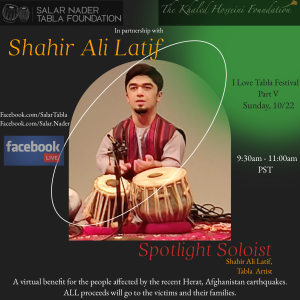
I have also been part of a fundraising initiative made by the Salar Nader Tabla Foundation (SNTF) in partnership with The Khaled Hosseini Foundation to help the victims of the Herat Earthquake in 2023. For this initiative, we held a virtual concert, where each student (including myself) from SNTF performed a piece, to raise funds for those affected by the earthquake.
_
Shahir Ali Latif’s journey with the Tabla is an inspiring testament to resilience and passion. Despite facing early challenges, from a lack of resources to struggles with depression and societal judgment, Shahir found solace and purpose in his music. His dedication to mastering the Tabla and his ability to overcome the physical limitations of being a dwarf have not only shaped his artistry but also serve as a powerful example for others. Through his hard work, mentorship under world-renowned figures, and engagement in philanthropic initiatives, Shahir continues to push boundaries, both musically and personally. His story proves that with perseverance, talent, and a deep connection to one’s passion, anything is possible.
You can access Ahmad Shahir’s music through:
YouTube: Shahir Ali Latif | Instagram: @shahir_lalajan | Facebook: Shahir A. Latif