Canada is one of the wealthiest countries in the world, sharing the Great Lakes with the United States which contain 18% of the world’s fresh surface water. Clean and safe drinking water is achievable for most Canadians, but this is not the case for many First Nations communities across the country.
Neskantaga is an Indigenous community in Canada, with a population of 374 individuals who live on reserve. Children in Neskantaga grow up learning that the water coming from their taps isn’t safe to drink. Families rely on bottled water, boiling, rationing and living under a boil water advisory (BWA) that has lasted for decades. Safe drinking water remains out of reach for this community, decades after promises were made to fix the problem.
Drinking water advisories (DWAs) are public health precautions issued to warn people that water might be unsafe to drink or use. Approximately 98% of DWAs are BWAs, making them the most common type of DWA. BWAs are issued when there are problems with the water treatment system that, for example, do not treat viruses, bacteria or parasites. When a BWA is issued, the community must boil tap water for at least one minute before use, such as for drinking, cooking, washing and more.
An update from August 29, 2025 revealed that there are currently 39 long-term DWAs in 37 Indigenous communities. Neskantaga’s public water system has suffered from a BWA since February 1995, affecting 76 households and 6 community buildings. 2025 marks the 30th year Neskantaga has gone without safe drinking water. Access to clean water is fundamental to everyone, as all people are entitled to clean water without discrimination, yet many First Nations communities have been denied this right for decades.
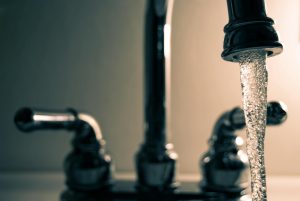
Image Source: Pexels
Colonization’s Lingering Effect
Colonization and its lingering effects have left many Indigenous communities in Canada without reliable access to fundamental needs and rights. In 1876, the federal government introduced the Indian Act. Under the act, the government is held responsible for the creation and maintenance of infrastructure on First Nation reserves, including water treatment plants and pipes.
When the Canadian government initially forced Indigenous peoples to relocate onto reserves, they often chose remote places where non-Indigenous people would not choose to settle. Since then, other governments have also established environmentally harmful facilities on or close to reserves. This includes landfills, processing plants, or even infrastructure for natural resource extraction. Extracting natural resources such as natural gas can lead to environmental disasters and these tragedies have worsened due to government inaction on pollution and industrial accidents caused by corporations.
Since then, federal governments have repeatedly underfunded First Nation reserves, including water infrastructure needs. Meanwhile, communities rely on bottled water and boiling tap water daily, facing health risks and financial strains.
Image Source: Ava Tsarynnyk
Putting It Into Perspective: A Timeline
For decades, Indigenous communities have heard promise after promise of change. Federal governments have pledged action, but progress has often fallen short of what was needed. Efforts to fix the crisis have come in waves — funding, announcements, new programs — yet the reality on many reserves remains the same.
In May of 2003, the federal government committed $1.6 billion over five years to address the water crisis in First Nations communities. The money was intended to upgrade water and wastewater facilities, and create a stronger system for monitoring water quality.
Between 1995 and 2007, a total of 162 DWAs were in effect for more than one year. Most were issued because the water wasn’t properly treated to remove bacteria and other harmful germs. Other frequent causes included unsafe levels of bacteria and equipment problems.
By 2008, Canada introduced the First Nations Water and Wastewater Action Plan, providing $330 million over two years to fund on-reserve water and wastewater infrastructure, operation, maintenance and operator training. The following year, Indian and Northern Affairs Canada started an engagement process. The ultimate goal was to collaborate with First Nations to establish a legislative framework for drinking water and wastewater management. The federal government committed another $330 million over two years in 2010 to continue building and renovating on-reserve systems.
In 2011, the National Assessment of First Nations Water and Wastewater Systems report was published, concluding more than one-third of First Nations believed their main water supply at home was not safe for drinking year-around. Out of the 807 water systems inspected, 317 water systems were ranked as high-risk. The report made one thing clear: Canada was far from solving the crisis.
In September 2015, Canada committed to achieving the United Nations’ 2030 Agenda for Sustainable Development. This means ensuring “the availability and sustainable management of water and sanitation for all” by the year 2030. The next month, Justin Trudeau recognized the severity of this issue, promising long-term advisories to come to an end by March 2021. It was the first significant promise on the Indigenous reconciliation file. The government distributed over $2 billion to improve water systems and provide additional operational funding.
Image Source: Pexels
The First Nations began to take legal action against Canada in 2019 in a proposed class-action lawsuit. This was on behalf of all First Nations on reserves that experienced DWAs for at least one year since 1995. The lawsuit addressed Canada’s failure to take the necessary steps to ensure proper access to safe drinking water on First Nations reserves
In December 2020, Indigenous Service Minister Marc Miller admitted that the government would miss its March 2021 deadline to end all BWAs. To date, the federal government has invested over $3.5 billion to provide clean drinking water to all reserves, but many challenges persist.
By the March 2021 mark, Trudeau’s government indeed failed to end all long-term advisories. In response, the Office of the Auditor General released a report, accusing the federal government of not doing enough. “Indigenous Services Canada did not provide the support necessary to ensure that First Nations communities have ongoing access to safe drinking water,” wrote Auditor General Hogan. “Drinking water advisories remained a constant for many communities, with almost half of the existing advisories in place for more than a decade.”
The class-action lawsuit was later settled with $1.5 billion in compensation for individuals deprived of clean water.
Despite years of funding and renewed commitments, the underlying issues are still unresolved. The numbers may change, but the outcome has not. The government’s inability to fulfill its promises isn’t just a government failure — it’s a reflection of whose voices are prioritized, and whose are ignored.
When Clean Water Depends on Who You Are
The water crisis in Indigenous communities exposes a deeper problem: environmental racism. Environmental racism is a form of systemic racism that results in racialized communities being more exposed to environmental hazards than predominantly white communities. Environmental racism severely impacts Indigenous communities as it affects many aspects of work for Indigenous peoples. Simple things like having clean clothes, washing dishes and showering are extremely challenging without access to safe water. A lot of Indigenous households must spend their hard-earned wages on bottled water for drinking, washing dishes, etc.
The effects of environmental racism are not only systemic but deeply personal. Indigenous communities that have faced environmental racism for generations can face long-term health concerns, such as increased rates of autoimmune diseases or cancers. Patricia Hania, a professor specializing in environmental law, said that illnesses from contaminated water can affect the eyes, skin and gastrointestinal system. “All these kinds of issues result in a heavier health burden,” she explained. “If you’re not healthy, how can you work? How can you participate?”
Environmental racism isn’t always loud or obvious. When a water crisis hits a non-Indigenous town, governments move faster. In 2000, the small community of Walkerton, Ont, faced a deadly E. coli contamination that killed seven people and left more than 2000 ill. Within days, the province declared a state of emergency and investigations began immediately. But when similar, or even worse, conditions happen in Indigenous communities, the response is rarely as urgent.
While Walkerton received immediate emergency measures, Indigenous communities like Neskantaga continue to wait decades for safe drinking water. Even when serious problems arise, government responses are slow and lack urgency. In 2020, the community was forced to evacuate when an oily sheen was found in the water supply. Families had to leave their homes and stay in Thunder Bay for nearly two months. Unlike Walkerton, there was no provincial inquiry, no national cry, nor any coordinated action.

Image Source: Pexels
Clean Water for All
The United Nations officially affirmed access to clean water as a fundamental human right in 2010: “The right to water entitles everyone to have access to sufficient, safe, acceptable, physically accessible and affordable water for personal and domestic use.” Everyone in Canada is entitled to safe and affordable water and sanitation, yet the federal government’s failure to guarantee these rights constitutes both discrimination and a violation of international human rights.
Decades of inaction have left many First Nations communities without access to safe water, despite repeated government promises. Solving this crisis requires more than funding; it demands enforceable regulations, ongoing operational support and oversight that centers Indigenous leadership and expertise.
The path forward is clear: Canada must act transparently to guarantee that all citizens, regardless of where they live, have access to clean drinking water and sanitation. This is not a matter of charity — it’s a legal and moral obligation. Until these steps are taken, the legacy of broken promises will continue to shape generations of Indigenous children. Every day that First Nations wait for reliable access to clean water is another day that Canada fails to live up to its own values.
Featured Image Source: Ava Tsarynnyk