Every time I purposely put on “Waiting Room” by Phoebe Bridgers, I have to will myself not to cry. If I want to feel fired up during a workout or before a big test, “Nissan Altima” by Doechii is exactly what I need. There’s a song for every moment, every feeling, good or bad. The simplest of lyrics can sometimes be the ones that resonate with us the most, while the more intricate ones leave us pondering for days on end about their meaning. More than that, music can send a message to people across the globe, and sometimes we don’t even know it.
Born in the U.S.A. by Bruce Springsteen
This 1980s hit is often mistaken for the soundtrack to the 4th of July. People from all over the country blast the song on their speakers, clad in red, white and blue outfits from Target. To many, Bruce Springsteen is an American hero, and while that might be true, his smash hit is far from patriotic. The song depicts a young American man from a small town who went to serve in the Vietnam War and came back with little to no opportunities. When the Vietnam War ended in 1975, many young men returned home shaken. About 30% of Vietnam war veterans experienced some form of Post Traumatic Stress Disorder (PTSD) during their time in battle. Because of the lack of research around the disorder, many veterans have never received treatment. Although the US government applauded veterans for their work overseas, their kindness only went so far, as hundreds of men and women who fought were left without jobs when they returned.
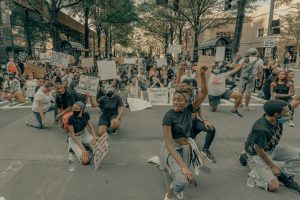
Image Source: Unsplash
In the third verse, Springsteen sings, “Come back home to the refinery/Hirin’ man says, ‘Son, if it were up to me.’” About 10% of war veterans faced unemployment when they returned home, making it higher than the national average. Younger vets, those who were shipped off when they were freshly 18, had an even harder time readjusting to civilian life, as many didn’t finish high school or develop any skills before they were deployed. So why is the song so heavily misinterpreted? It could be because the saying “Born in the U.S.A.” is repeated a handful of times, and that’s what people remember when they hear it. Or, it could be due to the way it’s sung. Springsteen shouts the lyrics rather than sings over an upbeat electric guitar. Springsteen is shouting about the “American dream,” and how so many are let down by a nation that prides itself on greatness.
When asked about the smash hit, Springsteen said the song is about the pain, shame and glory of a place that is deeply loved. Sometimes, to evoke change, there needs to be disruption, and it can be uncomfortable and scary, especially when you’re fighting against something bigger than you. But the more humans critique something and call out the leaders who are supposed to protect them, the greater the chance that change will happen. “Born in the U.S.A.” is a love letter to the hardworking American people, rather than those in charge.
Alright by Kendrick Lamar
Kendrick Lamar is no stranger to calling someone out. He performed one of his biggest hits to date, “Not Like Us,” at the Super Bowl this past February, dunking on Toronto-born rapper Drake in front of millions worldwide. But before he was penning lyrics about Drake’s alleged secret children, Lamar was widely known for his poetic rhymes and songs about social justice. In 2015, he released “Alright” as the fourth single from his album How To Pimp a Butterfly. The song wasn’t intended to be one of the soundtracks for the Black Lives Matter movement, but after a 2015 conference for the Movement for Black Lives, it became a celebration song for Black love. On that same day, while activists were celebrating a win, police were arresting a 14-year-old Black boy in Cleveland for allegedly drinking alcohol. Bystanders began pulling out their cellphones to record the arrest, and the group turned into a protest as they linked arms around the swarm of police cars. Some even began chanting “We gon’ be alright,” the chorus from Lamar’s song.
“Alright” is an upbeat rap song that tackles systemic oppression faced by the Black community. In the pre-chorus, Lamar raps, “And we hate po-po/Wanna kill us dead in the street for sure/I’m at the preacher’s door.” While half of the population who are shot and killed by the police are white, Black Americans are shot at a disproportionate rate. Most of the victims are young men aged 20 to 40 years old. The character in the song shows up with a gun at the preacher’s house after facing violence from the police. It’s unclear if the gun is pointed towards the police, the protagonist, or the preacher, but the chorus ends with Lamar saying, “But we gon’ be alright.” In an interview from 2016, Lamar said the inspiration for the song came after he visited the cell on Robben Island where Nelson Mandela was imprisoned in South Africa. Lamar thought a lot about the history of chattel slavery in America and how slaves prayed and sang joyful songs to keep their spirits up while enslaved. 400 years later, people still need music to feel hopeful and to heal from the trauma of their lives. Lamar isn’t denying that there’s a lot of work to be done regarding how Black people are treated. Instead, he’s allowing listeners to escape from the situation for a couple of minutes and remember that, eventually, everything is going to be alright.

Image Source: Unsplash
Not Ready To Make Nice by The Chicks
In 2003, the United States launched a military invasion of Iraq, resulting in the deaths of hundreds of thousands of Iraqis and thousands of US servicemembers. Many Americans, including veterans who served, looked back on the war, and 62% said it was not worth fighting. During the almost decade-long battle, countless celebrities and musicians came forward to express their disdain with the US government, specifically former president George W. Bush. Punk rock band Green Day released one of their most notable hits, “American Idiot” in response to the violence, while a public letter was sent by Artists United to Win Without War, signed by actors like Martin Sheen, Uma Thurman and Samuel L. Jackson. Some took their anger even further by calling Bush out by name. In 2003, during a London performance, The Chicks’ lead singer, Natalie Maines, spoke out against George Bush, saying they don’t want violence and they’re ashamed the then-President is from Texas. The speech came nine days before the War on Iraq was announced and a little over a year after 9/11. Patriotism was at an all-time high. Radio stations refused to play their music, and former fans burned CDs and ripped up t-shirts. The bandmates were also sent death threats for years.
Instead of backing down, in 2006 the band dropped Not Ready To Make Nice as a single from their album Taking The Long Way. The song is a direct response to how the band was treated for speaking out against war. The lyrics are powerful and angry as the women sing “They’d write me a letter, sayin’ that I better/Shut up and sing or my life will be over.” The rest of the song tells the listener that the Chicks won’t back down from their beliefs, and they won’t forget how the world treated them. The song earned them a Grammy for Song and Record of the Year, while the American Country Music Awards didn’t even bother to nominate them.
The impact of the record didn’t end there; in 2024, it had a resurgence on TikTok. Many young people began posting videos of themselves passionately lip-syncing the lyrics, some in response to the US decision to overturn Roe v. Wade, and some because they were proud to be fans of a band that stood up for what’s right. But like any piece of media, the song was misinterpreted, and people in support of President Trump made videos of their own to rebel against Kamala Harris. The trend didn’t last long as left-leaning folks ran to the comment section to fact-check them on what the song really means. Still, “Not Ready To Make Nice” is an example of how music can transcend time and how it will always find a way to matter to someone, even if they might be interpreting it wrong.
Featured Image Source: Unsplash