Introduction
We all have them — those memories that have made a quiet home deep in our hearts; the kind where the details might have blurred, but the feeling remains. Perhaps you’ve forgotten what your favourite childhood toy looked like, but you can still remember the shape of it resting in your palms. Or maybe the melody of a lullaby has long since drifted away, though the warmth of the voice that sang it still reaches you. Robert Schumann’s Kinderszenen (Scenes from Childhood), a collection of thirteen short piano pieces composed in 1838, dwells in this same fragile space between memory and feeling, as it invites listeners to experience the wonder and the ache that comes with remembering what time has carried away.
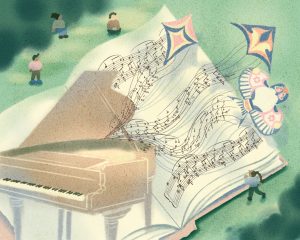
Image Source: Vivian Van
Background
Schumann composed Kinderszenen during his courtship with Clara Wieck, who would later become his wife, more well-known as Clara Schumann. In one of his letters to Clara, he wrote, “You once said to me that I often seemed like a child, and I suddenly got inspired and knocked off around 30 quaint little pieces… I selected several and titled them Kinderszenen.” What might have been a passing joke instead stirred a desire in him to capture the world through the eyes of that child she saw — the curiosity, the playfulness, the wonder — all into a set of thirteen miniature pieces. Each piece has a title as evocative as the memories themselves: Of Foreign Lands and People, At the Fireside, Knight of the Hobbyhorse, and Dreaming, among others. The title of the collection alone, Scenes from Childhood, implies fragments rather than a continuous narrative, yet all are bound together by a single thread of nostalgia.

Image Source: Pixabay
Time
I’ve listened to many recordings of Kinderszenen, and what fascinates me is how a single piece can last two minutes, or four, depending on how long each different pianist lets the harmony linger before the next phrase. I believe this has a lot to do with how we remember things; the same childhood scene may feel different when we’re twenty, forty, or eighty. This specific thought came to me while I was at an art gallery a few years ago, where I lingered at the back of a tourist crowd to eavesdrop on a tour guide as he talked about Claude Monet’s paintings. He mentioned how Monet had re-painted the same lily pond in his garden almost 300 times, yet each painting of this same location looked different because of the ever-changing sunlight.

Image Source: Pexels
As a music student, my mind naturally wandered off and formed a connection with Schumann’s Kinderszenen. Schumann’s score behaves like Monet’s canvases: each interpretation of the music changes with the widening band of time between the child who felt and the adult who remembers. One pianist might render a piece with a light and innocent touch, while with the exact same piece, another may do so with an aching reminiscence. This is particular with the pieces in Kinderszenen because Schumann deliberately withheld strict tempo markings, handing each performer the freedom to express their own unique hue of nostalgia.
Memory
The Russian writer and philosopher Leo Tolstoy wrote in his 1896 book What Is Art? that the aim of the artist is “to evoke in oneself a feeling one has once experienced […] so to transmit that feeling that others may experience the same feeling—this is the activity of art.” Only through Schumann’s Kinderszenen did I come to feel the truth of Tolstoy’s words. With the very first piece in Kinderszenen being Von fremden Ländern und Menschen (Of Foreign Lands and People), I am always immediately pulled back to my earliest childhood period, when the world was still such a mystery. I remember a curiosity so intense it was overwhelming, yet it was often stifled by the frustration of not knowing the words to articulate the torrent of questions in my mind to my mom and dad.
Tolstoy would call that moment “the transmission of feeling”: the music doesn’t tell me what foreign lands look like, but reminds me of how I felt when much of the world was still foreign to me. By leaving the melody uncluttered, with no flashing technical displays, Schumann hands me an empty suitcase, and I get to pack it with my own half-remembered memories. Schumann is practicing the very communion that Tolstoy had mentioned, using his music to pass a feeling directly from his heart into mine.
Legacy
Among all the scenes, Träumerei (Dreaming) has perhaps found a home in the most hearts. I’m sure if you search it up and listen to it right now, you’d recognize it instantly — it’s one of those “songs everyone knows, but no one knows the name of.” I love to listen to this piece when I am stressed or can’t fall asleep because the gentle melody carries such a deep sense of consolation. Träumerei is special to me because listening to the piece makes me feel content simply to be a human capable of dreaming, and for a moment be able to exist as simply as a child, for whom the world was not a source of worry, but a place to be.
I feel so much wonder upon realizing that the same melody that warms my heart today has been doing the same for others for nearly two hundred years. Clara Schumann would often offer Träumerei as an encore, preserving this piece long after her husband was gone. When Germany surrendered in 1945 after World War II, Träumerei was broadcasted on Soviet radio during a moment of silence in memory of war victims, transforming this musical piece into a symbol of peace and healing. By 1971, the tune had reached the moon, beamed all the way from Houston to wake the Apollo 14 crew. Of all the pieces, it is Träumerei that remains the closest to me; a melody I often find myself humming out loud as though it lives and breathes inside me. I think the reason this piece in particular feels so special among the twelve other pieces is that its melody is so consoling that it transforms it from a simple composition into a timeless companion for the human soul.
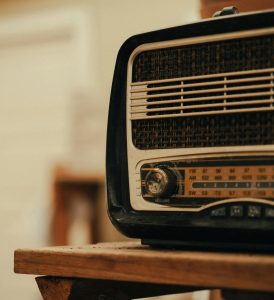
Image Source: Pexels
Conclusion
Der Dichter spricht (The Poet Speaks) is the final piece in Kinderszenen. Unlike the other childhood scenes, this is the piece where Schumann removes himself from the childhood reverie; his voice returning as an adult’s to reflect gently on the memories that have passed. The poet, Schumann himself, seems to concede that everything he remembered was only ever on loan from time, and must now be returned. I have always interpreted this piece in this way because this is how I feel. Whenever I listen to Kinderszenen, I listen to all thirteen pieces in order, all at once, and arriving at this final piece always reminds me of my own bittersweet departure from my childhood. In a beautiful way, Schumann had composed my memories before I ever lived them, and I feel as though his melodies had waited patiently for me to grow old enough to remember.
My favourite performance of Kinderszenen is from Russian pianist Vladimir Horowitz in his 1987 performance in Vienna. As the entire collection of pieces comes to an end, he looks directly into the camera with eyes wistful and brimming with tears. I may not be as old as he was then, to feel such a profound longing for my own childhood. Yet in the same way, the piece makes me realize that my own childhood is now a memory to be visited with both happiness and sorrow. Seeing that same feeling reflected in Horowitz’s eyes, I realized that Schumann not only composed a musical piece, but also a universal message: though time may sweep the details away, the memory of the feelings stays alive, and this timeless truth is why Schumann’s Kinderszenen continues to resonate with listeners generations later.
Featured Image Source: Vivian Van