The age of social media is a wonderful thing. It brings us closer together, helps us stay in touch, and can give us a slice of life. Like everything in life, social media does have its negatives. Issues of low self-esteem, body image issues, and higher rates of depression just to name a few.
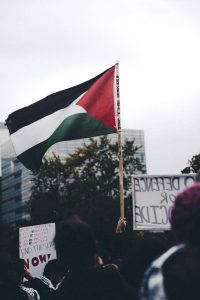
Social media tech giants are under fire for shadow banning and limiting information. With a lot of political and social issues running rampant around the world, it is easy for voices to be silenced or feel left out. In this article, tech giants misusing their power for shadow banning will be discussed. Shadow banning is when social media platforms limit others from seeing your posts that are deemed against their community guidelines. I had the honour of interviewing Ambika (@ambikamona) a local Toronto artist who is aware of the current situation in Palestine and her experience with shadow banning.
Tell me about yourself. My name is Ambika. I am a 26-year-old South Asian woman (she/her) born and raised in Toronto. I have a singular, lifelong goal of leaving this world in a better state than how I found it. I believe that we heal the world and each other as a collective, rather than in an individualistic vacuum. In my activism, I engage a group of open-minded, growth-oriented, multi-cultural, mindful people who share my values of empathy, equity, inclusion, and love in every endeavor. We provide each other with safety, compassion, friendship, and solidarity insofar as we can during moments of need. I believe incorporating community care into our lives is an essential aspect of wellness in masse, especially during the current era of late-stage capitalism.
I understand you’re an artist, what art forms do you like to the most to express yourself? I am highly engaged with the creative process when immersed in my music, dance, and visual arts.
Do feel social media and other platforms elevate your voice? I feel social media has elevated my voice by expanding my reach to people I wouldn’t have had the opportunity to reach without it. However, I do believe there are certain pitfalls to social media platforms that diminish the impact my voice could have, relative to its impact in a different context. As a former undergraduate student of Psychology (BA), I am keenly aware that face-to-face engagement is the most legitimate and effective form of communication we can employ to convey/digest information. Bite-size content also limits my ability to meaningfully connect with others, and it seems that much is lost in translation, leading to varying degrees of dismissal by my followers.
Have you ever done controversial pieces? I frequently perform on stage in the city of Tkaronto at various venues while wearing a keffiyeh, which is considered a ‘controversial’ garment that ‘makes a bold statement’. In my eyes, however, I am expressing solidarity for a movement that resonates with me deeply. I believe in the Landback movement as a whole and meaningful reparations for indigenous peoples now and forever. My heart aches for the innocent population of Palestine every day. An additional ‘controversy’ is an inflammatory song I include in my setlist that I wrote titled ‘Letter to Wadea’ – an ode to Wadea Al-Fayoume. In this song, I reference the disillusionment I feel with modern society and toward those who remain silent/complicit in the face of oppression.
What do feel would help to raise awareness? There are many ways to raise awareness. First and foremost, I always recommend becoming as educated as possible: using multiple reliable primary sources to ascertain the context of any movement with which you engage. At that point, starting to participate in meaningful dialogue with loved ones in your own community is key. Ongoing re-education and re-adjustment while committing inevitable errors in your allyship/activism is an integral part of your journey to grow into a true asset to your movement. Stay humble, engage in community care, and keep having those tough conversations.
Do you feel censored at some points? I have been censored on Instagram and TikTok when (re)posting political content or using ‘inflammatory language’ (i.e. ‘Gaza’ or ‘Palestine’): community guideline violations, delisted posts, content demonetization, and flags/threats for account suspension.
What can I do to help Palestine? I want to preface this response with the following statement: it is Palestinians who can provide this information. I can only speak on what’s worked in an allyship context given my own limited experience as an outside party. Palestinians are the ones to answer this question properly. That being said, learn your own rights in your country regarding protest, arrest, free speech, and online political engagement. Follow the recommendations of established activist groups as they explain how to remain safe in certain/relevant spaces. Become educated about the movement in a holistic sense, using multiple primary sources like I’d said earlier. Participate in active listening and listen to Palestinians in their profound wisdom and grief. Start engaging with your loved ones in open dialogue, discussing what you’ve learned to further solidify your base of knowledge and to educate them. Feel and heal meaningfully with your community as the education triggers you. Attend large actions with a reliable/safe buddy, organized by groups legitimized over time such as the Palestinian Youth Movement, while following the recommendations to keep yourself and others safe.
Do you feel you are affected by shadow banning? Absolutely. On average, my content on Meta/Instagram (since actively engaging with and posting visibly pro-Palestinian political content) is seen by only 30% of my average viewership from before doing so.
Ambika is not the only one feeling the pressure of having her activism of being taken down. According to Human Rights Watch “Between October and November 2023, Human Rights Watch documented over 1,050 takedowns and other suppression of content Instagram and Facebook that had been posted by Palestinians and their supporters, including about human rights abuses.” Despite Canada being ranked 15th in the world for global press freedom as of 2023 some Palestinians feel that their voice is being suppressed. On many social media platforms content related to the Palestinian conflict are shadow banned. On most platforms, it is hard to tell whether you have been shadow-banned or not. On Instagram you are able to find out if you are getting shadow-banned by “checking your “account status” in the app’s settings, you can see if your content has been marked as “non-recommendable.”
Even with all the restrictions placed on getting information on world conflicts, it is important to do your research and find other sources. Speak to people, visit the public library and find alternative sources instead of social media. Logging off and doing research can make you much more informed about a topic.
***All pics from Pexels***
Works Cited
Carolina Are Innovation Fellow. (2024, February 20). Social media users say their Palestine content is being shadow-banned – here’s how to know if it’s happening to you. The Conversation. https://theconversation.com/social-media-users-say-their-palestine-content-is-being-shadow-banned-heres-how-to-know-if-its-happening-to-you-222575#:~:text=But%20throughout%20Israel’s%20war%20on,and%20X%20(formerly%20Twitter).
Wednesday, M. 03. (n.d.). Canada ranks 15th on the World Press Freedom Index 2023. Canada Action. https://www.canadaaction.ca/world-press-freedom-index-ranking
Younes, R. (2024, January 26). Meta’s broken promises. Human Rights Watch. https://www.hrw.org/report/2023/12/21/metas-broken-promises/systemic-censorship-palestine-content-instagram-and