In the digital age, the influence of social media on a social movement’s traction and reach is undeniable. A study conducted by the Pew Research Centre revealed that eighty percent of Americans believe social media platforms like X (formerly Twitter), Instagram, and TikTok to be at least partially effective at raising public awareness about political or social issues. History has shown that something as simple as a trending hashtag can spark a cultural revolution.
Even well-established movements have resurged in response to social media engagement. Though the phrase “Me Too,” coined by Tarana Burke, had been in the public sphere for over a decade, the movement gained immense traction in 2017 when Hollywood actress Alyssa Milano used the hashtag to encourage sexual assault survivors to share their own stories. The Black Lives Matter protests of 2020 resonated across the globe, with widespread rallies and demonstrations held in response to the murders of Breonna Taylor, Ahmaud Arbery, and George Floyd, among others.
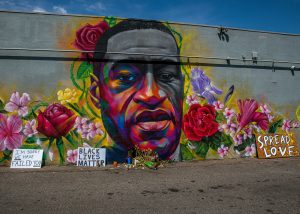
Image Source: mana5280 / Unsplash
Smartphone technology has given the general public the ability to record, document, and share evidence of discrimination or political unrest in an unparalleled way. The reawakening of the Black Lives Matter movement saw books like How to Be an Anti-Racist by Ibram X. Kendi and So You Want to Talk About Race by Ijeoma Oluo flying off bookshelves. Interest in Black-owned businesses increased by over 7000% on Yelp, and black screens flooded Instagram feeds for #BlackoutTuesday (when music industry executives ceased operations on June 2, 2020, to protest racial injustice).
Social media platforms favour shorter news cycles to encourage users to refresh their algorithms, despite their often-cyclical nature and the tendency for trending topics to rekindle. This short-lived, continuous cycle inadvertently breeds what can be described as “slacktivism”—activism that doesn’t actually shift the needle and lacks the commitment and long-term dedication required to truly fight for a social cause. The harm in perceiving civil rights issues as social media fads is that it frames them as “one and done” problems rather than systemic, deep-rooted afflictions that necessitate radical change.
A recent example of this phenomenon made headlines during a press junket for Luca Guadagnino’s new film After the Hunt, when journalist Federica Polidoro skipped over actress Ayo Edebiri to ask co-stars Julia Roberts and Andrew Garfield, “now that the #MeToo era and the Black Lives Matter [movement] are done, what do we have to expect in Hollywood?” and “what was lost . . . with the politically correct era?” The implication that the #MeToo or Black Lives Matter movements could be described as “over” is a dangerous sentiment, especially in light of recent events such as Sean “Diddy” Combs’ recent conviction for transportation to engage in prostitution, or two Toronto police officers pleading guilty to unlawfully arresting and tasing a Black university student in “a case of mistaken identity.”
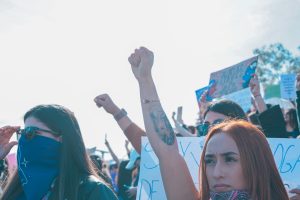
Image Source: Barbara Zandoval / Unsplash
These are just two among countless examples in 2025 alone that demonstrate the dire, unfaltering need for civil rights movements to protect the freedoms of all marginalized communities. Polidoro’s questions reflect a concerning trend of attributing the relevance or importance of a given social issue to its popularity on social media. The Black Lives Matter movement referenced the After the Hunt interview in an Instagram post on September 8th, praising Edebiri for her eloquence and stating, “the mainstream is burnt out and racist; it could never define us.”
Modern civil rights activists and social movements deserve to be remembered holistically for their efforts to fight injustice, not just in moments of buzz or times of crisis, but unwaveringly throughout history. Movements do not die, and Western media is not synonymous with worldwide media coverage. The “politically correct era” is, truthfully, a long-overdue reckoning—an overhaul of the discrimination and oppression baked into so many societal norms and structures.

Image Source: Gilles Lambert on Unsplash
Although social media has proven to be a very effective tool when met with staunch activism, it risks fostering a false sense of complacency and satisfaction with a “job well done” once a hashtag ceases trending. Instead, media platforms should continue to cultivate natural, human curiosity and compassion for others—an urge that drives us to be informed and committed to ending injustice, rather than becoming apathetic once our screens go black.