I have been asked the question, “What do you want to be when you grow up?” multiple times over the course of my life. The first time I was asked, it was for my kindergarten graduation. I got up on stage and told a room full of parents that I wanted to be a singer. This pipe dream didn’t last long, as it was clear by the time I hit elementary school that I couldn’t hold a tune to save my life. After that, I started to answer that I wanted to be a pediatrician or a veterinarian. Really, anything that involved playing with cute animals or kids my own age. It wasn’t until I was in the seventh grade that I realized I wanted to be a journalist. I always loved to read and make up stories. While I eventually wanted to write a novel, I thought that starting in an industry like journalism was a safer bet. When 12th grade rolled around, and it was time to start applying to universities, Toronto Metropolitan University (TMU) and Carleton University’s journalism programs were no-brainers. I got accepted into both, but chose to attend TMU since it was closer to home. I was excited to start the next chapter of my life, but in March 2020, when I was in the second semester of my senior year of high school, a global pandemic was announced. Instead of partying on the weekends and skipping 8 a.m classes, I spent the majority of my university experience being told to wear a mask and that I’d probably never have a stable job.
Danielle Owusu, a 2025 graduate from the University of Toronto (UofT), knew what field she wanted to pursue when she was 17. Owusu was set; her dorm room at the university’s Mississauga campus had been secured, and her offer into their Bachelor of Science program had been accepted. Instead of frosh week activities and late-night bonding sessions with her roommate, Owusu was left with an empty dorm room and more Zoom links than she could handle. “I felt like that aspect of university life was wasted on me,” she said.
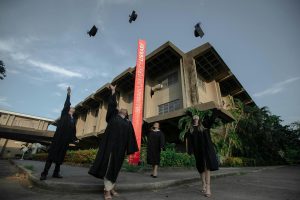
Denniz Futalan via Pexels
As soon as the ink dried on her diploma, Owusu said she began applying for internships. She hadn’t been able to secure one during her undergrad due to “lack of experience,” but was hopeful that with her degree under her belt, she’d have an easier time. “There were no job prospects regarding what I studied,” Owusu recalled. Her only options were to get a master’s degree or look for a PhD program outside of Canada. However, with graduation came student loan payments, and Owusu couldn’t afford to go back to school just yet. So she took a job at the Canada Border Service Agency (CBSA). She said that although they paid well and the hours were good, she didn’t spend five years earning a degree to work at the airport.
According to the Government of Canada, unemployment rates for young Canadians aged 15–24 was 14.5% in August 2024, the highest since the pandemic. Although unemployment numbers are lower for post-graduates (aged 25–29), the numbers have been steadily increasing since 2019. Even postings for business, marketing and human resources jobs—majors that used to mean a job offer right after graduation—fell by almost 40% in the first quarter of 2025. There are many reasons for the drop in hiring, like artificial intelligence (AI) and the pandemic, causing major businesses to lay off several employees. 20 years ago, a bachelor’s degree almost guaranteed you a well-paying job. Nowadays, it seems as though it’s the bare minimum. I remember the sympathetic looks I’d get from family members when I’d tell them I wanted to be a journalist. They would wince, as if I’d said I was going to join the circus or become a TikToker. My father, who had been running his own business for 30 years, never said he agreed with them, but rather, I should’ve chosen a different major, or learn about AI. But I didn’t want to learn more about AI, even if it meant full-time work. Why would I want to partner with technology that stifles creativity?
So, I did what most post-graduates, including Owusu, did. I applied for internships that paid next to nothing while reluctantly working at the same part-time job I’ve had since I was 17. I sometimes wondered, as I folded clothes and cut the pads of my fingers on receipts, if maybe this lack of a career-focused job was my fault. Owusu said that while her professors tried their best to prepare them for the working world, their efforts didn’t always hit the mark. “I wish they’d facilitated more ways to secure an internship and allow undergrads to get those positions,” she said. Most professors, both in journalism and in Owusu’s program, also work in their respective fields, making them great mentors and possible networking connections. But Owusu felt like her professors focused more on theory and the idea of life after graduation than on the reality. Owusu would’ve liked them to delve into what post-graduates can expect when it’s time to work in the industry and what the field is actually like. She said she often turned to Reddit during her time at UofT because “Most of the time people have the same questions as you, and alumni and upper-years are on there answering questions.”
Despite everything, I don’t regret journalism school, and Owusu tells me she doesn’t regret her time at UofT either. She’s now pursuing a Forensic Identification certificate from Humber College in hopes that the extra hands-on experience will help her in the job search. When asked what advice she’d give to students anxious about life after school, she said not to be afraid to talk to people who are working in the industry you’re trying to break into. “Professors remember you, and there could be a time in post-graduate school, or at your internship, where someone knew your professor, and that small connection can give you an edge.” It isn’t just professors that students should make connections with, but classmates too, as they might be your future colleagues. As cheesy as it may sound, I do believe hard work pays off and even on nights when I’m doomscrolling through Indeed, applying for jobs that I’m either under- or overqualified for. I still feel a sense of hope blooming at the idea that one day I’ll be doing what I’ve spent my whole life working towards, and that fear of rejection that’s been following me since I walked across the graduation stage will no longer have power over me.

Pavel Danilyuk via Pexels