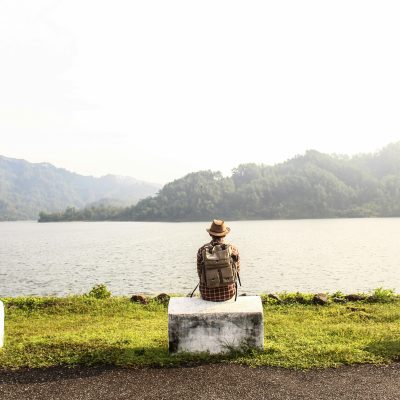
Taryn Zeger, a Canadian registered psychotherapist and certified counsellor, describes reclaiming one’s life from anxiety as accepting not being able to control the unknown, while also encouraging one to set goals and take gradual steps towards them.
“We can’t dictate exactly what the future will bring, so it’s important to recognize what kind of contributions we want to make today to ensure we have as much control over the future as possible,” Zeger said. “If you can accept that you don’t know what the future will bring, but you’re comfortable embracing today so that you can shape the future as much as possible, that’s a great step,” she said.
“Our obsession with control and productivity is a huge contributor to stress and anxiety these days. Humans naturally make comparisons and are easily impressionable. We want to emulate what we see others doing or how others are living if it looks appealing. I think that we forget that what’s shown online isn’t always an accurate reflection of real life,” Zeger said.
The National Library of Medicine, the world’s largest biomedical library and a national resource for health professionals, scientists and the public, reported that 38 relevant studies found there was clear evidence that poor mental health (mostly measured as depression and/or anxiety) was associated with lost productivity.
Zeger said people display the best versions of themselves in their attempt to be liked and/or perceived positively by others, creating unrealistic standards. This is because what is seen online is accurate for only a small/portion of someone’s life and trying to recreate that as one’s day-to-day standard is highly unrealistic. From there, one’s level of anxiety increases when these high standards aren’t met.

When anxiety becomes overwhelming, the individual’s ability to cope with stress can be significantly affected, potentially resulting in an emotional or even a nervous breakdown. (Image Source: Unsplash/Nora Hutton)
She said anxiety is a universal experience that varies in intensity and context. Many of her clients struggle with interpersonal anxiety, fueled by fears tied to past or upcoming interactions in romantic or platonic relationships. She has also seen a rise in existential anxiety, fueled by fears of the future and the unknown, often worsened by constant exposure to global issues through easily accessible information.
“I recall being 18 and getting accepted to Queen’s University for my undergraduate studies. I lived in the GTA at the time and I had never lived away from home before. I was excited and horrified by the prospect of leaving my family, friends and pets behind to go start school and what felt like life on my own,” Zeger said. “Fortunately, with the right support, I took the plunge and moved out into residence in my first year. I am so grateful I took this opportunity because it was really one of the best experiences of my life and a crucial aspect in forming my identity,” she said.
Zeger also emphasized the importance of having a trusted support group of family, friends, or peers that can be an outlet for expressing one’s anxieties, as that can help reduce the power anxiety has when it keeps replaying in one’s head.
“If you find yourself scared of uncertainty and unsure whether or not to push past it, that’s very normal. I would encourage anyone struggling with this to seek support and speak with someone you trust. You might be surprised at how the act of sharing your anxiety about uncertainty can actually relieve its power over you,” she said.
In addition to seeking support, when it comes to managing anxiety, Zeger suggests starting with validation, accepting that it’s okay to not know what the future holds, expressing worry about it, and recognizing that there is only so much that can be done about it. She suggests asking yourself, “If I did have control of my destiny, what kind of person would I want to be?” If the answer involves a specific career or character trait, try to incorporate those values and aspects into your life to provide some sense of control over the uncertainty.

Instead of thinking about the past or overanalyzing situations, it can be helpful to take a step back and focus on the present moment and what is in your control. (Image Source: Unsplash/Do Nhu P)
Valery Brosseau, CEO and Head Facilitator of Validate Mental Health Consultants and a registered social worker, views certainty as the ability to trust herself and hold on to hope and resilience rather than fearing failure, which is what makes uncertainty so daunting.
“We are already uneasy about uncertain outcomes, we then magnify the facts that support a negative outlook and then we assume the worst and interpret things negatively. I definitely do this often and have to catch those thoughts and consciously work against them,” Brosseau said.
“A strategy I like to use is to look at the facts of the situation, not interpretations, assumptions, or emotions, but facts, data, and evidence. For example, if you feel someone is mad at you, do you have evidence to support this?” Brosseau said.
She said reclaiming your life means learning to trust yourself, stepping back and making choices that align with your values and purpose. It involves recognizing anxious thoughts and replacing them with more helpful ones. It’s not easy; instead, it takes time and effort. Anxiety may never fully disappear but the goal is for it to stop leading your life.
After two rejections and years of struggling with undiagnosed mental illness during undergrad, Brosseau finally got into a Master of Social Work (MSW) program by leveraging almost a decade of experience in this field she had acquired since getting her bachelor’s degree. Accepting both the possibility of success and failure allowed her to face uncertainty with resilience, knowing she would overcome whatever came her way.
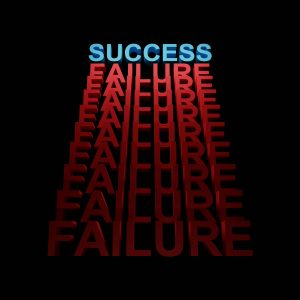
Accepting the potential for both success and failure allows for a more resilient approach to uncertainty. (Image Source: Unsplash/MJH Shikder)
Registered psychotherapist (qualifying), Kaylee Robinson, said everyone tends to have cognitive distortions which are like mind traps, imagining the worst case scenario, where mistakes become fixations at the expense of success, which people tend to blame on external factors, such as luck.
“Someone might say I feel like I’m inadequate, so therefore I must be bad at my job or I must be bad at school. We also assume we know what others are thinking about us without having any actual evidence to support it. Even just noticing you’re catastrophizing again, that’s kind of a mindful way of distancing yourself from the emotional anxious impact of your thinking bias,” Robinson said.
For Robinson, growing up meant continuously dealing with the ups-and-downs of anxiety, which continued to follow her as she entered her career. She eventually decided to take a step back from her job at the time, to prioritize her mental health and find better coping mechanisms, such as mindfulness and yoga. This time away helped her get a more realistic perspective on herself and her capabilities, rather than solely focusing on things from a deficit point of view. However, despite her own growth in her mental health journey, Robinson understands that anxiety is a normal part of life that is difficult to be fully free of.
“Anxiety is a natural, functional emotion and it’s not going to go anywhere. Oftentimes, I hear people so badly wanting to not experience it. They wish they could just flip a switch and then never have to deal with anxiety again, and that’s not possible. You can’t just get rid of anxiety like you can’t get rid of experiencing happiness or sadness of course,” Robinson said.
Instead, Robinson encourages individuals to shift their focus away from eliminating anxiety to co-existing with it, without having it take over one’s well-being.

When we can understand that anxiety is just as valid and present as any other emotion and is what makes us human, we too can accept it, ourselves and truly live. (Image Source: Pexels/ShotPot)
The Anxiety and Depression Association of America states that people need to allow themselves to be anxious and not necessarily know why they are anxious.
This foundation said when you actually move toward your anxiety and just allow yourself to experience it, without trying to flee the situation or reason your way out of it, you can live with anxiety, treating it like any other emotion and reclaiming your life from it.
Robinson ultimately highlights that uncertainty can be viewed as a threat, the fear of the unknown and negative outcomes, but when looking at the function uncertainty plays, it’s like a catalyst for curiosity and progress.
“So much of science and personal growth is driven by exploring the unknown, where the goal is more so clarity and not always certainty. I think that’s a really important piece of how we change our relationship to anxiety, but also uncertainty and what it’s like to not be in control,” she said.
“Anxiety is here to stay. But we can also manage it. In a lot of my work, I approach it from let’s work on changing our relationship to anxiety, versus trying to get rid of it, like accepting and understanding it is a part of being human,” she said.