People experience many periods of social isolation throughout their lives. This may come in waves, like a life transition, or suddenly like the COVID-19 pandemic. Though the decline in social interaction evidently showed, there are also other forms of social isolation that get overlooked and/or taken for granted.
Learning How to Interact After COVID-19
The negative social impacts of the COVID-19 pandemic have been well-documented by researchers and appear in many personal anecdotes. Gen Z, many of whom were experiencing elementary school, middle school, and/or high school throughout the pandemic, have been especially hindered in the social development area. A Globe and Mail article published in June highlighted a study that further proved Gen Z’s difficulties with social interaction.
According to the data, Gen Z faced the greatest negative impact to their socialization compared to other generations. Technology dependency increased during the COVID-19 pandemic, with some researchers showcasing a distinction between smartphone addiction and “nomophobia” (No Mobile Phone Phobia), the fear of detachment from “mobile phone connectivity.” Concerns regarding the negative effects of smartphone addiction to young children’s social skills already existed pre-pandemic. Even without a global pandemic, however, sometimes friendships naturally fade as life goes on.

Image Source: Pexels
Another aspect of life that could turn into social isolation happens when people graduate from high school. This may mean going to a high level academic institution, getting a full-time job, or even travelling the world. Regardless of that choice, graduating from high school removes teenagers from a social dynamic they came accustomed to. If this Vogue op-ed is any indication, people often lose friends as they age into their twenties.
After leaving high school, social dynamics shift because people need to seek out those interactions themselves. People no longer see each other on a daily basis for a third of the day. People’s lives no longer revolve around a central learning institution with a constant stream of interaction. As people fill up their new, individual schedules, the challenge to keep in contact gets tougher. Even a workplace, where you see coworkers all the time, carries a different social dynamic for making friends than in high school.
The Dynamics of Making Workplace Friends
While moving into the workforce does provide a constant stream of interaction, experts say that often is not enough. Dr. Marisa Franco, a psychologist and assistant clinical professor at the University of Maryland, said people need both “continuous unplanned interaction and shared vulnerability.”
According to the NY Post, Gen Z entering the workforce may find themselves in a tougher spot when trying to make work friends. Gen Z had less social networking opportunities during the pandemic yet those skills prove critical in work environments. A 2022 study found that workplace friends decreased by generation: 40 percent of American baby boomers made most of their friends at work, while only 24 percent of Gen Z workers did.

Image Source: Pexels
“There’s often professionalism norms where people aren’t actually sharing a lot about themselves,” Dr. Franco said on the American Psychological Association’s podcast, Speaking of Psychology. “so that really impedes connection.”
Franco went on to say that adult environments no longer provide the “right conditions for friendship” unless individuals actively and purposely search for it themselves. However, she also said that growing apart isn’t inherently a bad thing: according to socio-emotional selectivity hypothesis, people prioritize quality of friendships rather than quantity.
Reaching Out to Old Friends Proves as Challenging as Making New Ones
A study released by researchers at Simon Fraser University and the University of Sussex found that reaching out to old friends is as scary as making new ones. The study, which was released in April, said that though people welcome reconnecting with old friends, reaching out is one of the hardest things.
Researchers Lara Aknin and Gillian Sandstrom actually experienced this themselves, being old friends from graduate school. According to Aknin, they were “pretty good at keeping in touch for the first couple of years.” However, factors like geographic location and less opportunities to work together meant the contact waned. After Aknin sent an email to Sandstrom on one faithful New Year’s Day, something she admitted was an “excuse to reach out,” the two set out to conduct this project.
“My curiosity was to look at what situations encourage people to reach out to new friends.” Aknin, a psychology professor at Simon Fraser University, told INKspire.
However, this focus evolved when Aknin and Sandstrom found that people strayed away from reaching out regardless of knowing its benefits and legitimate reasons to do so. While people overwhelmingly expressed wanting someone to reach out to them, they felt adverse to taking initiative themselves.
In Study 5 of the research, Aknin and Sandrom asked participants to rank how willing they were to complete everyday tasks. Reaching out ranked the “equivalent of talking to a stranger and picking up garbage.” She theorized that people perceive old friends on the same level as strangers because they feel less familiarity as time passes. People feel less willing to reach out if they feel out of touch with what’s going on in someone’s life.
“I think seeing it no different than picking up garbage is kind of an interesting benchmark.”
Tips for Maintaining Friendships
As shown in Aknin and Sandstrom’s work, it takes hundreds of contact on average for strangers to become close friends. Sean Lauer, a sociology professor at the University of British Columbia said that consistent, face-to-face structured interaction helps nourish relationships.
“In order for [a relationship] to really flourish, you have to spend time together regularly,” Lauer told INKspire. “And have opportunities to share personal things and also just to have fun together.”
His research focuses on social infrastructure, physical places that offer a variety of ways for people to interact. This includes public spaces like parks and sidewalks, and community hubs like community centres and libraries. Lauer said though the internet exists as an accessible means of communication, the in-person, focused connection works much better to create a relationship.

Image Source: Pexels
That in-person bonding time allows for better “multi-stranded” connections, something deeper. “I think there’s real value in the actual face-to-face meeting.” He said.
His advice? Do a scheduled activity together. He uses hobby classes as an example: by attending a weekly class, the class helps maintain friendships without the individuals having to do much manual work themselves. The times are set, the environments are set, all that’s left to do is spend time together.
People can also use a mixture of methods when interacting. Aknin said that social media provides a great tool for reaching out, and those interactions can transition into in-person activities.
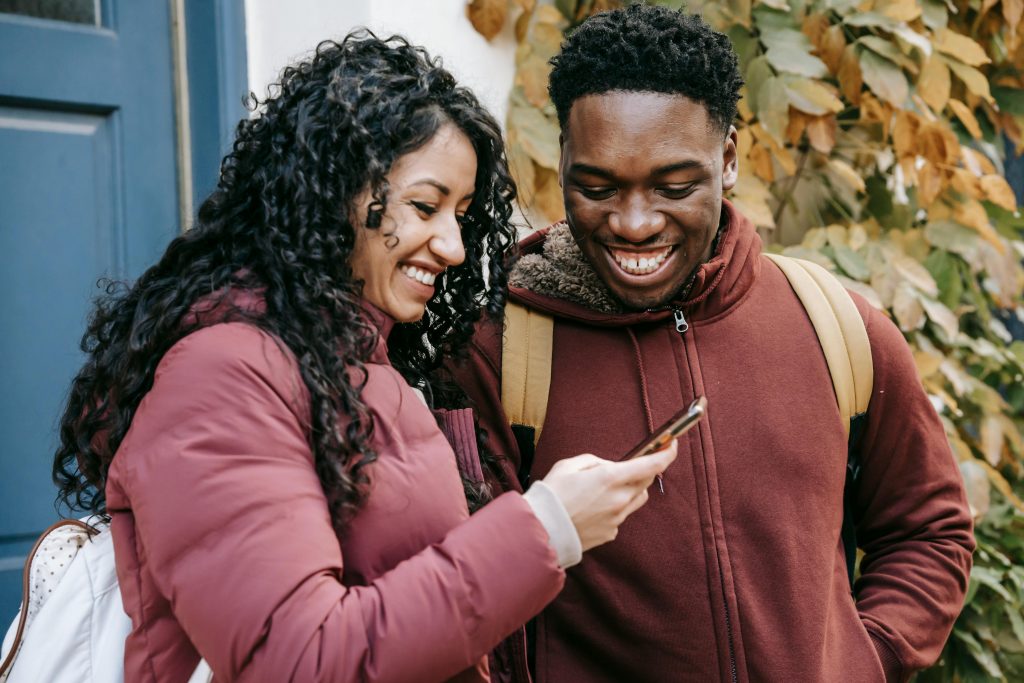
Image Source: Pexels
“Just because you reconnected by phone, by social media, [or] by email, [that] doesn’t mean it needs to stick in that medium.”
Though her research does not tell how to maintain relationships, she said that taking a mutual interest in other’s lives goes a long way.
“Being engaged with other people and what they share with you is helpful for relationships,” she said. “as is sharing some of the updates that are new with you.”
A Possible Fast Way to Friendship
As for whether or not individuals can speed through these long hours of contact to magically become best friends, Aknin said that might vary by individuals. She wondered if some people might be naturally better at making friends faster than others. Such research is an “open question” possibly explored at a later date. However, she said that the “Fast Friends” procedure might be a way get close quick.
Aknin pointed to the “Fast Friends” procedure created by American researchers Arthur Aron, Edward Melinat, Elaine N. Aron, Robert Darrin Vallone, and Renee J. Bator in 1997. They designed this 36-question list to help build closeness between individuals. The questions range from the usual “what did you do this summer?” to the much more personal “what roles do love and affection play in your life?”

Image Source: Pexels
“By the end of this, you’re getting to some very deep insight about another person,” Aknin said. “that kind of level of intimacy and self disclosure is pretty quick at building friendships.”
Whether people skip to the point with the “Fast Friend” procedure or gradually build friendship through a weekly activity, any time together proves valuable.