The right to education is a basic human right.
Denying education limits a person’s future.
Educating girls is the first step to not only empowering women but uplifting communities.
Yet, for nearly 129 million girls around the world, economic, cultural, social, political, and financial barriers often prevent them from continuing or even beginning their education. According to a World Bank report, “limited opportunities for girls and barriers to completing 12 years of education cost countries between $15 trillion [USD] and $30 trillion [USD] in lost lifetime productivity and earnings.” By failing to educate girls on the same level that they educate boys, countries undermine their potential to reduce poverty across multiple communities and households.
In addition, uneducated girls are at greater risk for exploitation and early marriage because they are denied the tools they need to construct the future they envision for themselves. As a result, when they grow up, they are less likely to advance their income or break intergenerational traumas such as poverty or gender-based oppression.
What are some factors that prevent girls from obtaining their education?
Poverty/Child Labour

Image Source: Unsplash
Systemic poverty in underdeveloped countries prevents children from obtaining their education. Poverty affects nearly 1.1 billion people. Nearly 90% of poverty-stricken children are living in sub-Saharan Africa or South Asia. Families in poverty are more likely to not prioritize the education of their children because of financial reasons. Their families may find more value in sending their children to laborious work in order to earn money to ensure the family’s basic needs such as food, clean water, shelter, and clothing are met.
Cultural Norms/Gender Bias
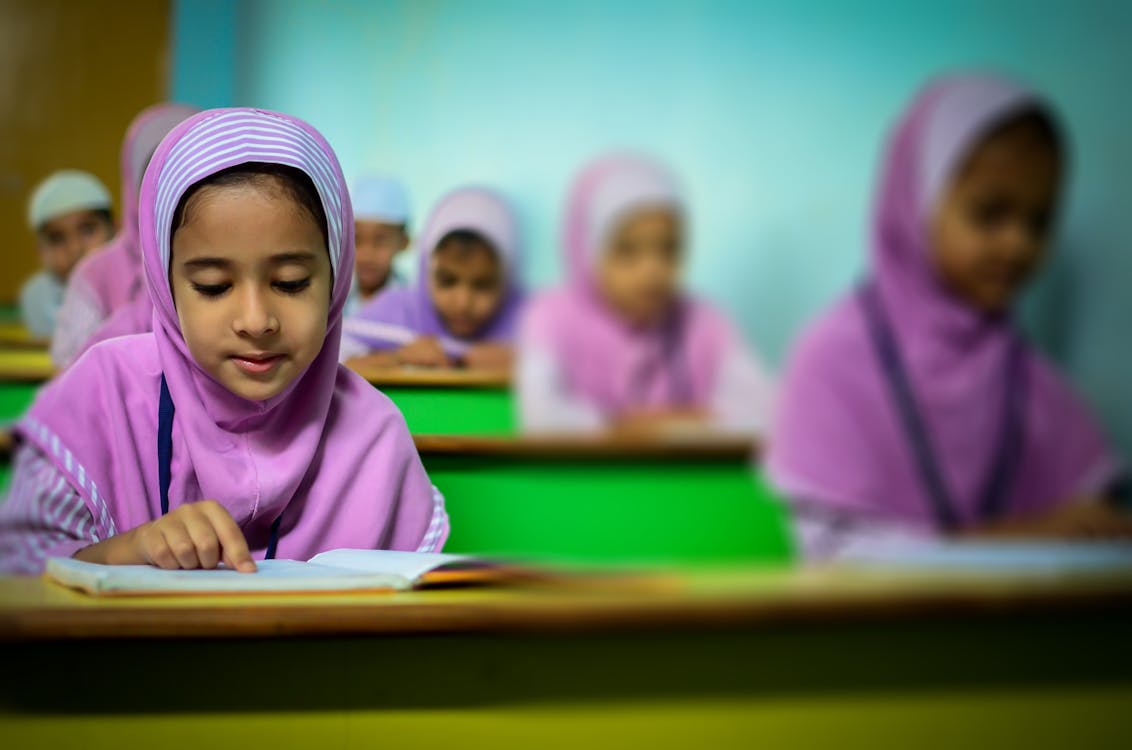
Image Source: Pexels
For developing countries such as Afghanistan, Pakistan, Sudan, etc., the education of boys is often prioritized over the education of girls because of generational, societal, and institutional beliefs favouring males. When families have limited resources, they are more likely to spend their resources to further their sons’ education because men are traditionally seen as providers of the household.
Gender bias and harmful cultural practices that largely value a girl’s worth by her ability to perform domestic labour, create difficult barriers for women to overcome as they learn to become overly reliant on their families and husbands to provide. As a result, they are not given opportunities to exercise their agency or become more than domestic labourers.
Violence
Education is more than having access to school. It is also about girls feeling safe in their classrooms, communities, and feeling supported in their academic accomplishments. In fragile and conflict-affected countries, girls are 2.5 times more likely to be out of school than boys. When schools and environments are not safe, families are more likely to keep their daughters at home.
(Image source: Unsplash)
Education allows individuals to make more informed and autonomous decisions when they are exposed to different worldviews. It is a woman’s prerogative to want a career but it is also her prerogative to dedicate her life to her family, if she chooses. But she must be allowed to make that decision as an informed, autonomous individual.
Investing in women’s education benefits not only the individual but communities, countries, and the world. By allowing girls to stay in school, they are more likely to advocate for themselves, earn higher incomes to improve their quality of life, be informed on their health and their rights. In addition, they can more effectively educate their own children and improve the perception of women within cultural biases, uplifting entire generations.