Introduction: Understanding Cancer
Inside the hidden chambers of a tumour, cells adjust and evolve, rewriting their own biology to slip past the treatments we create. This is a continual process of adaptation — both by the disease and by the science that seeks to better understand and manage it.
Our first recorded identification of cancer occurred in ancient Egypt. The Ancient Greeks also identified tumours as fatal collections of tissue. Rudolf Virchow’s cellular theory of disease in the 19th century then provided us with more evidence that cancer defines multiple conditions, all of which result from the “uncontrolled proliferation” of mutated cells. Mutations are alterations to a cell’s genes. These alterations are either inherited, mistakenly occurred during cell division, or a result of environmental stressors. The mutated cells can then metastasize, or spread, and steal nutrients from functioning cells in other parts of the body.
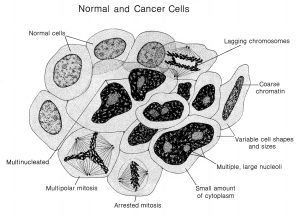
Cancer cells have different characteristics compared to normal cells. Their DNA and other nucleic material is usually enlarged and warped. (Image Source: National Cancer Institute)
In 2023, the Canadian Cancer Society estimated that around 45% of Canadians will be diagnosed with cancer at some point in their lives. Therefore, cancer research has historically been, and continues to be, a top scientific concern. However, cancers are difficult to treat because cancer cells avoid being destroyed. They can hide from or manipulate the immune system, our body’s natural defense against disease. Other cancer cell strategies include creating ideal cellular environments that help them survive and changing how their genes work. Finally, cancer cells can adapt to conventional cancer treatments and sometimes evade them.
Though scientists now better understand where cancer comes from, their focus has also shifted to how cancer cells behave, react and resist. The ability to disrupt the adaptiveness of cancer cells is vital to preventing their spread. With this knowledge, scientists can develop more effective cancer therapies and treatments.
How Does the Body Interact with Cancer Cells?
Cells follow a cell cycle; at specific checkpoints in their lifespan, they are assessed for how intact their DNA is and how ready they are to divide. Cells that fail to pass these checkpoints are repaired or intentionally destroyed to prevent harm to the body, but cancer cells are known to slip past these regulatory processes. When these checkpoints fail to suppress a tumour, the immune system steps in and begins a multi-stage process known as immunoediting.
Since cancer cells originate from the body, the immune system will initially recognize them as normal cells. As cancer cells mutate, they may produce new substances or alter their own protein structures, and the immune system recognizes these changes as neo-antigens — new, foreign material — that allow the cancer cells to be targeted. This is the elimination phase of immunoediting. Various immune cells will release toxic substances that kill the cancer cells. In the next phase, equilibrium, the immune system aggressively targets cancer cells with these visible mutations. Tumour growth slows or stops, and the cancer may be able to be treated. Sometimes, however, cancer cells that are not as easy for the immune system to detect will survive. Their mutations make them less immunogenic: in other words, harder for the immune system to recognize. These cells initiate an escape phase of immunoediting where they resume tumour growth.
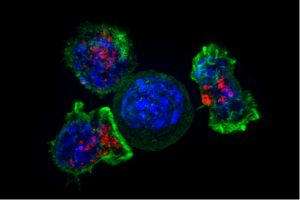
Killer T cells (green and red) surround a cancer cell (blue) and use special chemicals to attach to and destroy it. (Image Source: National Cancer Institute)
One of the main goals of cancer cells is to reduce the activity of the immune cells responsible for destroying them, such as killer T cells. Most cells have a molecule on their surface called MHC Class I. This molecule helps killer T cells recognize foreign material like neo-antigens. Cancer cells lower their amount of surface MHC molecules to avoid killer T cells. Cancer cells might also produce special surface molecules PD-L1 and CTLA-4, which tell the immune system to stop alerting killer T cells to danger. In these ways, cancer cells can manipulate the body’s natural defenses to ensure their resistance.
How Do Cancers Evade Treatment?
Conventional cancer therapies target the uncontrolled growth of cancer cells. Chemotherapy uses drugs that inhibit cancer cells from copying their DNA and multiplying. Radiation therapy uses high-energy beams, such as X-rays, to damage the DNA of cancer cells. The main issue with these treatments is their lack of precision, and both therapies can also damage healthy cells. Further, cancer cells have now developed ways to lessen the effects of chemotherapeutic drugs.

Cisplatin, a platinum-based compound, is one of many chemotherapy drugs. (Image Source: National Cancer Institute)
Many cancer drugs are designed to stop enzymes from carrying out reactions that help cancers grow. Enzymes are specialized proteins that speed up chemical reactions in cells. Each one has a unique active site where other molecules can attach to trigger or block its function. Many cancer drugs are designed to fit into this active site, like a lock fitting a key, and disable the enzyme’s functions. But when an incidental mutation on a cancer cell changes the shape of the active site, the enzyme’s “lock” no longer matches the drug’s “key.” The cancer will then increase its production of these adapted cells. This often happens in patients with chronic myeloid leukemia who are treated with the drug imatinib. Imatinib works by blocking a cancer-causing enzyme, but if mutations in the BCR-ABL gene change the enzyme’s shape, the drug can no longer fit, stopping it from working.
Cancer cells can also physically remove the drugs before they can cause them harm. Some cancer cells develop special proteins called drug efflux pumps, with one of the most well-known being P-glycoprotein. These pumps are embedded in the cell’s outer membrane, and they grab chemotherapy molecules that have entered the cell and push them back out. This way, the drug cannot build up to a level that would damage or kill the cancer cell. High levels of P-glycoprotein have been found in certain drug-resistant cancers, such as breast and ovarian tumours, and are linked to poorer treatment outcomes.
Some tumours strengthen their DNA repair mechanisms, reversing the damage caused by treatments and helping them survive. Chemotherapy often works by breaking DNA strands or creating harmful mutations that overwhelm the cell’s repair systems, leading to cell death. But certain cancers, such as glioblastoma and ovarian cancer, produce unusually high amounts of DNA repair enzymes like MGMT or PARP. These enzymes act like molecular repair workers, quickly finding and fixing the DNA damage before it can trigger the cell to self-destruct.
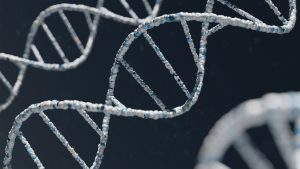
DNA, the cell’s genetic blueprint, can be repaired by specialized enzymes that help cancer cells survive against treatment. (Image Source: Unsplash – Warren Umoh)
How Science Disrupts Cancer Resistance
Just as cancer adapts, so does science. Researchers are developing new ways to address the mechanisms that make tumours so difficult to treat. One approach is using CRISPR gene editing, a technology that works like scissors to cut out parts of the cell’s DNA. Gene editing could disable the genes that allow cancer cells to resist treatment, such as those that code for drug efflux pumps or DNA repair enzymes. Studies have shown that knocking out these genes can make cancer cells vulnerable again to chemotherapy or targeted drugs.
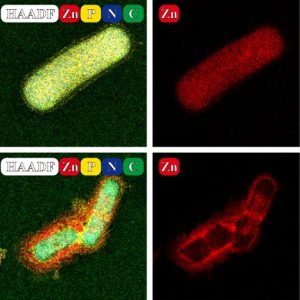
Lactobacillus bacteria deliver CRISPR-Cas9, which cuts DNA to turn off a gene and cause cancer cells to die. (Image Source: National Cancer Institute)
Another approach is targeted nanomedicine, which packages anti-cancer drugs inside tiny particles. These nanoparticles can be coated with molecules that specifically recognize and bind to cancer cells, delivering the drug directly where it’s needed while avoiding healthy cells. By targeting drugs so precisely, nanomedicine can bypass some resistance mechanisms, such as drug efflux pumps. Research in breast cancer has shown that certain nanoparticle-based drugs can reach tumours more effectively than standard drug formulations.
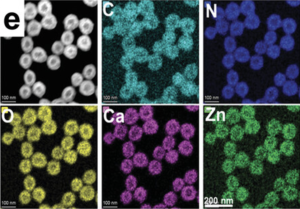
Nanoparticles carrying calcium carbonate and organic polymers are used to improve radiotherapy by remodelling the tumor environment for better cancer treatment. (Image Source: National Cancer Institute)
A variety of strategies also focus on boosting the immune system, such as artificial antibodies that recognize neo-antigens and tell the body to eliminate cancer cells. Cancer vaccines containing neo-antigens allow the immune system to identify tumour markers in advance. There are also medicines called immune checkpoint inhibitors that counteract the tricks cancer cells use to hide, like when they send fake “stop” signals, and thus help to maintain an active T cell response. Finally, another common treatment is CAR-T cells, where a sample of a patient’s own T cells are taken, modified in the lab to better recognize tumors and then put back into the body to fight cancer more effectively.
Scientists are even investigating how to predict a cancer’s survival strategies using artificial intelligence (AI). AI-driven mathematical models can analyze huge amounts of genetic and clinical data to predict which resistance pathways a tumour is likely to develop. The DARWIN model at Memorial Sloan Kettering Cancer Center is currently being developed as a system that can take a patient’s clinical data and recommend them research studies testing new treatments that may be effective for them. This is part of a growing field called precision oncology, where treatments are customized to the biology of each patient’s tumour.
Conclusion: Science Has to Be Proactive
The history of cancer research is complexity and persistence. Resistance is part of cancer’s nature — but disruption is our answer. From augmenting the immune system to developing AI models that think several moves ahead, scientists are developing multiple strategies in response to the adaptations of cancers. While the road ahead is challenging and often deeply personal for patients, families and caregivers, each advance brings us closer to fully characterizing cancer and delivering comprehensive, effective treatments.