In her 2019 documentary, Miss Americana, within the context of how difficult it is to be a female artist, Taylor Swift said that “Female artists have reinvented themselves 20 times more than male artists. […] Constantly having to reinvent, constantly finding new facets of [oneself] that people find to be shiny.” She cites that her male counterparts often have not felt the pressure to constantly go through cycles of reinvention, and that female artists, such as herself, can’t just be reborn, but must be reborn in a certain way. “Be new to us, be young to us, but only in a new way and only in the way we want. And reinvent yourself, but only in a way that we find to be equally comforting, but also a challenge for you. Live out a narrative that we find to be interesting enough to entertain us, but not so crazy that it makes us uncomfortable.”
The Taylor Swift story is one of constant rebirth. From a lovesick, country singer-songwriter teen to a bright-eyed New York City transplant, to a cottagecore faerie, Swift has seemingly been reborn over and over in the public eye. Analyzing her cycle of rebirth as an artist can help us not only understand her success, but also the stories about herself that she wants to share with the public.
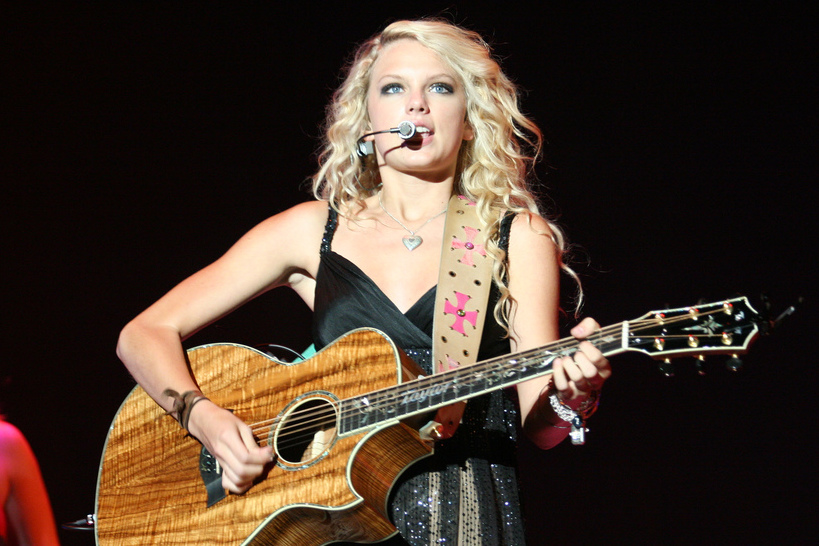
Taylor Swift, 2007. (Image Source: Wikimedia Commons)
In her 2006 self-titled debut album, Swift sings with country charm, her lyrics filled to the brim with her teenage woes: finding her place in this world, navigating young love and heartbreak and dreaming about the future. In this album, she’s candid, angsty and a touch petty, which is to say that she’s unapologetically a teenage girl. In this album, we can see glimpses of things that will become trademarks of Swift’s musical career: vivid imagery, a knack for storytelling and a brutal honesty. These elements, though still budding and developing, begin to blossom in her next album: Fearless.
Associated with the colour yellow, Fearless includes hits like “Love Story” and “You Belong With Me.” It seemed as though Swift was growing into herself with this album, finding her niche as a girl who wrote songs for girls like her, which translated into huge success: winning the Album of the Year Grammy, taking the number one spot on the chart in multiple countries, and turning her into a household name. In the original album’s liner notes, she confidently states that believing in love after heartbreak and having hope after adversity is what she considers fearless.
She would soon have to put that thinking into practice, as this newfound fame opened the floodgates of criticism, including a moment that would continue to follow Swift around for the rest of her career: Kanye West’s interruption of her acceptance speech for Best Female Video at the 2009 Video Music Awards. The crowd booed West, but as Swift later reflected in her 2019 documentary, Miss Americana, “At the time, I didn’t know they were booing him for doing that. I thought they were booing me.”
She explains that it was a formative experience, hearing boos after mostly being cheered on for her entire life, especially because she’d “built [her] whole belief system on people clapping for [her].” But still, she soldiered on right into her next era, the Speak Now era. Speak Now has the honour of being Swift’s only 100% self-written album, and it was branded as her “open letters”, a sort of catharsis to everything she’d gone through as a budding star who’d now been humiliated on the public stage. When releasing Speak Now (Taylor’s Version), Swift reflected on the album, saying that it “symbolized a chance to respond to the chatter and commentary around my own life.”
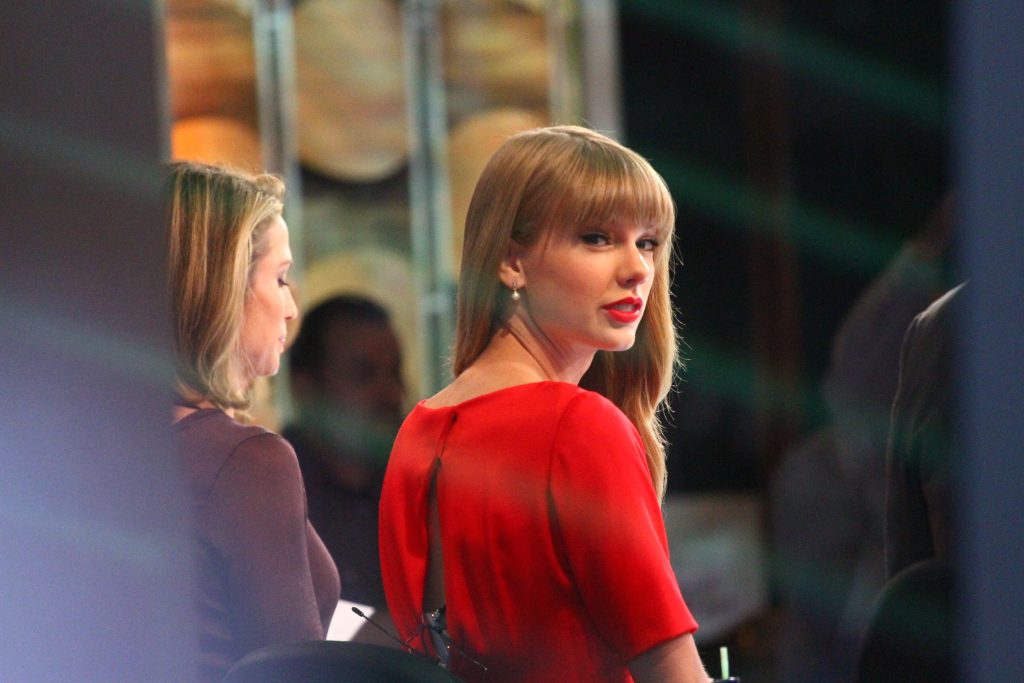
Taylor Swift on Good Morning America, launching Red. (Image Source: Wikimedia Commons)
At its release, Red was the largest departure from Swift’s signature style yet. With this album, she shed the country-girl tweenybopper aesthetic in favour of straightened hair, bangs, and vintage-inspired clothing and photography styles. Though she had been writing about her love life for years, Red was also Swift’s definitive breakup album, with songs like “All Too Well” and “Sad Beautiful Tragic,” which reflected upon the rollercoaster of emotions that came with a breakup. And while Red was still categorized as a country album, Swift experimented with pop with songs like “We Are Never Ever Getting Back Together” and “22”. But while we saw shades of a change in genre during the Red era, Swift’s true rebirth into a pop icon would happen with her next album: 1989.
Nothing screams “Taylor Swift’s rebirth” more than her shift from country to pop music. While Red dipped its toes in pop, 1989 was unabashedly a pop album, taking influences from ‘80s synths and fully leaning into the city-girl aesthetic. Gone were the sundresses of her earlier years and vintage style of Red; they were replaced with crop tops, a sleek bob, and bright, neon lights to accompany her new sound. It was an intentional choice, as Swift told Rolling Stone in 2014 and reflected in the prologue to 1989 (Taylor’s Version) in 2023: “When I was 24, I decided to completely reinvent mysеlf. […] The risks I took when I toyed with pop sounds and sensibilities on Red? I wanted to push it further. The sense of freedom I felt when travelling to big bustling cities? I wanted to live in one.”
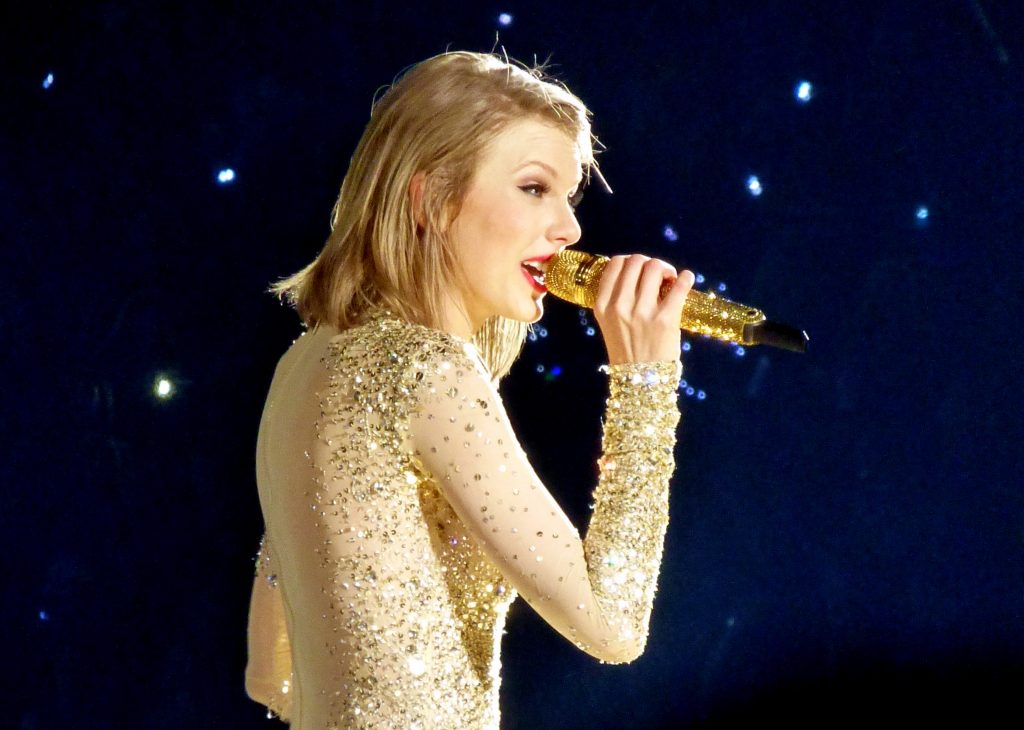
Taylor Swift during the 1989 World Tour. (Image Source: Wikimedia Commons)
It seemed as though she was living the life as the “It Girl” of the mid-2010s. She was everywhere all the time, whether that be “Shake It Off” at the grocery store or on everyone’s Twitter feed, and while Swifties rejoiced, the general public began to feel the effects of Swift Fatigue. Tabloids and think pieces surrounded her — whether they be about her love life, her body, her Girl Squad, her allegedly inauthentic personality, or just disliking her in general, before finally being given the perfect fodder to drive her away: the infamous “Famous” phone call with Kanye West and Kim Kardashian.
“The Old Taylor can’t come to the phone right now. Why? ‘Cause she’s dead!” Swift declared in her first single of reputation, “Look What You Made Me Do.” After disappearing from the public eye for a year, this brash declaration signified another rebirth into someone who was much more defiant and much less optimistic than her predecessors. As Swift herself put it in her 2023 Time Person of the Year interview, reputation was a moment of “female rage at being gaslit by an entire social structure.” Though reviews were skeptical and criticisms kept coming, they felt like they were adding to the narrative of Swift being a scorned, angry woman, giving her more of a reason to be defiant and spiteful.
But how does one reinvent themselves after a full-of-rage, edgy Era? By shattering the snake into a million butterflies, of course! Lover was a celebration of Taylor’s confidence in herself as much as reputation was a middle finger to the haters. Though both albums explore themes of love and fame, the aesthetics and marketing around them could not have been more different, with Lover being pink and rainbow-coloured and bright to reputation’s darker, angrier tone.
The bright, bubblegum-pop era didn’t last long, though, when the world fell into hard times due to the COVID-19 pandemic in 2020. As lockdowns and social distancing caused feelings of isolation to soar, alternative, melancholy music became the soundtrack to the moment. Taylor rose to the occasion, being reborn again as a “somber woodland fairy” with her dual releases of folklore and evermore, having written both albums during her time in lockdown. She posted photos from forests and cottages, wearing cardigans and lace, appearing more homely and toned down — a fitting aesthetic for isolation. Her lyrics shed catchy hooks for poetry-like verbiage and wistful themes. While she had been lauded as a pop star in the past, it was with folklore and evermore that people began to see Swift as a true artist.
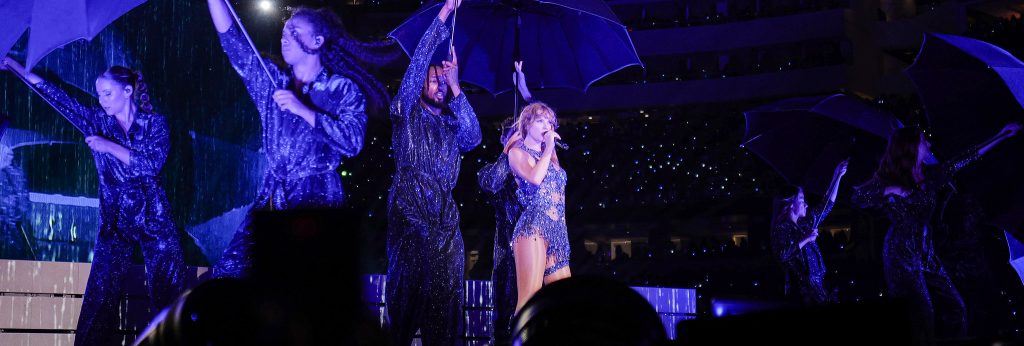
Taylor Swift on The Eras Tour. (Image Source: Flickr)
But Swift couldn’t stay in the ivy-covered cottage for long. She re-emerged in 2022 with another pop album, Midnights. The catchy hooks were back, and so were the sparkles and high-production music videos. The album was shortly followed by the Eras Tour, a celebration of all her eras and a cultural phenomenon of its own right, bringing her the kind of success she had only dreamed of as a teenager. Throughout the Eras Tour, Swift relives her past selves over a three-hour concert, playing out each narrative she’s told about herself onstage.
But the tour, by being such a pop culture phenomenon, also put a strain on Swift’s personal life, as evidenced by her next reinvention: that of a tortured, suffering artist who’s had to put on a smile and dance on stage despite the turbulence of her personal life. An emotional album that combines the lyricism of the folklore/evermore era with the strong production of her pop albums, in 2024’s The Tortured Poets Department (TTPD), Swift almost brags about this skill, saying that she “can do it with a broken heart,” directly referencing her “show must go on” mentality. When she added TTPD as an act on the Eras Tour, she even performed a pantomime of being upset but being forced to go onstage anyway. It’s played for laughs, but the heartbroken ballads and candid musings about what musician might replace her leaves the ever-present audience with yet another version of Swift, one who is acutely aware that her off-the-charts success will not last forever. Will she have to reinvent herself again to catch the public’s attention after the Eras Tour fades into a distant, magical memory?
Going into this article, I expected to conclude that the Eras Tour was the perfect culmination of Taylor Swift’s narrative, that it was a perfect, digestible summation of every version of herself thus far, hence its success. And perhaps that is still true in its own way; I will always look back on Swift’s Toronto night five concert as one of the best nights of my life. But as I was writing this article, as I sifted through all the times Swift has changed herself to keep us interested, I couldn’t help but feel that it’s a shame that she thinks she has to. So many people have been affected by Swift’s music throughout every single one of her eras, and no matter how many times she’s changed her hair and clothes, we’ve always seen her and her music as home. Whether the next era is a return to something she’s explored before or something completely new, I, for one, will always be along for the ride.
Featured Image Source: Wikimedia Commons