
“If you don’t behave, Dhegdheer will eat you!”
This was a typical story told to me and my siblings to behave. Dhegdheer was the equivalent of the boogeyman to us. The story of Dhegdheer is about a cannibal in Somalia that eats children. Growing up I didn’t realize how important my own cultural folklore would be to me. As a person of mixed ancestry, Somali father and European mother, being born in Canada, I always felt connected to Canadian culture for the most part; even as a person of colour. I never learned how to speak Somali and in my younger adolescent days, I could never understand why my father was so adamant about being more in touch with my roots. I figured I was born in Canada and spoke English just fine, so what was the importance of being connected to a culture that was something I viewed as the past?
In the year 2017, when I was 18, I got to visit Somalia for the first time with my whole family. I was freshly out of high school and decided to take time to “find myself.” It was an odd experience. In Canada, especially in Toronto, no one batted an eye that I was mixed race, but in Somalia it was a completely different story. The locals were surprised that we were half white and thought we were Middle Eastern. They used to call us “dhaqan celis,” which roughly translates to regaining culture. In the Somali Western diaspora community, it is common for children who did badly in school to be sent home to appreciate the luxuries of living in a developed nation and understand their culture. Don’t worry, I did well in school, my parents just wanted me to do the latter.
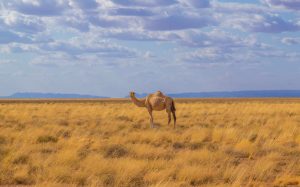
Image Source: Pexels
When I was in Somalia there was a library there that was quite small. Considering the country is still recovering from a brutal civil war, it was quite hopeful to see institutions like a library being used. One thing that struck me as odd about this library was that there weren’t many books written by Somali authors. Most of the books were written by Middle Eastern, Sudanese and even British writers. Wonderful works nonetheless, but not many written by Somali authors. This is when I learned that Somali culture has a very oral history. Our nomadic ancestors would probably sit by a campfire under the stars and tell stories passed to them by older generations. When the civil war happened and the Somali diaspora expanded all over the world. It made sense for the generations born outside of Somalia to feel a disconnect from the culture.
When the civil war happened and life was disrupted for the Somali people, a part of their culture died. You will find a Somali person in most countries of the world. As people move from one nation to another, they begin to make their own culture and adapt and change. For example, there are the Japanese in Brazil and Spanish people in the United States. A beautiful subculture forms. Somalis always had a rich history of art. From the Laas Geel caves that are thousands of years old to Mogadisco (Mogadishu used to have a disco scene before the civil war) and the strong emphasis of poetry. It was unfortunate that a lot of the Somali arts were not written down.
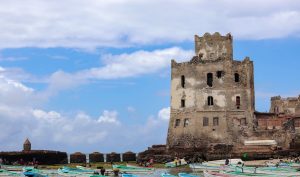
Image Source: Pexels
Many Somalis in the diaspora have made it to the global stage as supermodels, athletes, entertainers and writers. As the world begins to modernize and cultures continue to grow, change, adapt, die, constitutionalize and evolve, it is up to us to research and appreciate our culture no matter where we live. It connects us to our ancestors and keeps a piece of us in this global mosaic. One thing that I find beautiful about the Somali diaspora is that most of us still expand on those oral traditions to our children. For example, there is Nadifa Mohamed, a Somali-British author who writes about Somali stories in a contemporary way. Despite Somali culture being more of an oral history, many more Somali storytellers are writing down our stories to keep them alive for generations to come.
A part of me became a writer for that reason. To keep my voice and my ancestors alive. I may be laid to rest one day, but, hopefully, a descendant of mine reads this and realizes the importance of their lineage and culture for generations to come.
Featured Image Source: Unsplash