The Age-Old Question: Is Time a Construct?
I’ve always been fascinated with time, whether it exists and how we quantify it. I wondered how philosophers and scientists conceptualize time and space. Metaphysics is a branch of philosophy that deals with the first principles of things and abstract ideas. One of those abstract ideas is time.
The study of the metaphysics of time is expansive, so I took an introductory course on the theories. I learned about the A-theory, the B-theory and McTaggart’s theory. From an outsider’s perspective, I analyzed which theory was most plausible.
The A Theory
According to Introduction: The Metaphysics of Time by Simon Prosser, “in an A-series, one time is present, and all other times are either past to some degree or future to some degree… there is just one time that is really present; this is a primitive, objective fact, independent of us.”
Some other theories that fall under the A-theory are the moving spotlight theory, the growing block theory, and presentism.
The moving spotlight theory details that objects and events occur at one time regardless of their location concerning time—all future events already exist and are fixed. The growing block theory is that events/objects arise in the past or present; there is no conception of the future as the past and present constantly expand. Lastly, a popular A-theory, presentism, is that there is only the present, neither the past nor the future.
The B Theory
Another metaphysical theory of time is the B-theory. “According to the B-theory, by contrast, there are no A-properties, and nothing has an objective A-series position. Every time has an equal status. When someone says that a time is present this may be true, but only because the time said to be present is the time at which the speaker is located, just as ‘here’ denotes the place at which the speaker is located” (Prosser 2016).
The B-theory is considered an eternalist theory. The past and future exist simultaneously with the present. There is no temporal fixture dictating the present and the movement of a timeline. An example:
You’re sitting at a bar, say you sit at a particular point along the bar’s length just as an event, say the assassination of Julius Caesar, sits at a particular location along the extent of time. In the B-theory, the whole extent of time is considered to be existing, not just the present moment. So the event of Caesar’s death exists, it just isn’t now. Conversely, the putative future assassination of Mecha-Caesar also exists.
McTaggart’s Theory
McTaggart argued that there is, in fact, no such thing as time and that the appearance of a temporal order to the world is a mere appearance.
“The properties past, present, and future are incompatible; no event can have more than one of them” (Prosser 2016).
My Thoughts on Time

Image Source: Pexels
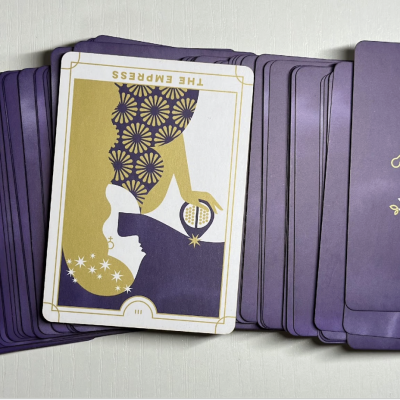
These are some metaphysical theories about time. The metaphysical theory of time I most agree with is the A-theory’s presentism. I also agree with the eternalist viewpoint of B-theory regarding the possibility of time moving simultaneously. In my worldly experience, the past, present and future are intrinsically intertwined. I believe in divination. To an extent, I also believe in precognition and deja vu, and those ideologies coincide with the B theory’s definition.
However, in contrast, I can’t entirely agree with the moving spotlight theory regarding how objects and events in the future are fixed. I believe that the past and the present are fixed, but the future is ever-changing based on the decisions we make, much like the growing block theory. A fixed future is rather depressing. It means that we don’t have autonomy to change and that our whole lives are predestined. Free will is null and void.
The further I looked into these theories, the more I realized that those studying the metaphysics of time are still figuring out theories of time. There is a lot of talk about the A-theory and objections to the passage of time. At what rate does time pass? It is said that time passes one second per second. When these rates cancel out one another, they leave a rate of one, but without a unit. Therefore, one cannot be a rate. Therefore, does time really pass?
Featured Image Source: Pexels