They say there’s nothing new under the sun. No new concepts, no new ideas, no new art. In the words of philosopher, artist, and prolific musician Selena Gomez: “It’s been said and done.” Exactly, Selena. But if we accept this gospel as the truth, where do we go from there? If everything has indeed been said and done, then what are we to say? What are we to do?
In recent years, there has been an influx of films being remade, rebooted, or otherwise franchised. According to Box Office Mojo, the top worldwide 2024 films consisted of Inside Out 2, Moana 2, Despicable Me 4, Mufasa: The Lion King, and Dune: Part Two. In many ways, this makes sense. You see a movie, you like the movie, you want to see more of the movie. Studios know this, and so they create more of the movie for you to watch. Everyone wins, right?
(Image Source: Wikimedia Commons)
Well, not exactly. The problem we are currently facing in the mainstream film industry is a lack of originality. Rather than coming up with new ideas and IP (intellectual property), studios are increasingly more likely to create sequels, prequels, reboots, or remakes of existing successful films. They do this, not out of fan service, to revive an old classic or for a sense of nostalgia — they do it purely for money. They do it because it is easier to guarantee a film will be a commercial hit if a previous film in that franchise was already successful. Because these remakes are not first and foremost driven by creative intent, they often end up being underwhelming, derivative, and ultimately unnecessary.
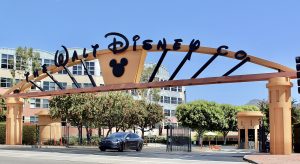
Disney is the main culprit of this, with its ceaseless, almost fetishistic need to shove mediocre live-action remakes of beloved animated classics down everyone’s throats. Beauty and the Beast (2017), Dumbo (2019), Aladdin (2019), Cinderella (2015), The Little Mermaid (2023) — these were all bad films, okay? I’m sorry to break it to you, but they were. In an effort to shamelessly capitalize off the success of previously successful films, Disney ended up creating colourless, largely soulless remakes that retain very little of the magic of the originals. Much of this can be accredited to general laziness, an over-reliance on the source material and a lack of effort to create anything new or exciting. Often, these films are so concerned with appearing like serious, realistic movies that they lose any of the whimsy and bright colours that made the originals so alluring in the first place.
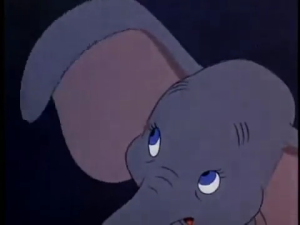
Disney is so obsessed with peacocking its shiny new computer-generated imagery that it forgets what made the 2D animated medium valuable in the first place. Animations are entertaining because of their surrealism, not despite it. When the animated Disney classics were released, they were magical, specifically because they portrayed things that we couldn’t see in the real world. A lion COULD talk! An elephant COULD fly! A little blue thing COULD come down from space! These films didn’t need our reality — they invented their own. And the films’ creators believed so earnestly in the realities they were making that we had absolutely no choice but to believe in them as well.
 (Image Source: Wikimedia Commons)
But all this is lost with the live-action remakes. These remakes are never the masterpieces Disney wants them to be. At best, they are innocuous multi-million-dollar disappointments that no one on earth prefers to the originals. At worst, they are Lilo and Stitch (2025), a film that not only looks so visually bland it’s like they specifically hired a colourist with a rare form of colourblindness called “Stitch Blue,” but it also completely misses (or intentionally changes) the entire thesis of the original film.
(Image Source: Wikimedia Commons)
In the original Lilo and Stitch (2002), the government is threatening to take Lilo away from her sister Nani, who has been raising her since their parents’ death. While Nani is struggling to raise Lilo and make ends meet, the film makes it clear that they want to remain together, that Lilo belongs with her family. This stance is summarized in the film’s most famous line: “Ohana means family, and family means no one gets left behind.”
(Image Source: Wikimedia Commons)
The 2025 version of Lilo and Stitch takes a different approach. Bizarrely, Nani ends up giving over custody of Lilo to the government, so that Lilo and Stitch remain in Hawaii while Nani goes to study in San Diego. This new ending fundamentally contradicts many of the film’s original themes, while also feeling overtly colonial. The original film was lauded for its representation of native Hawaiian culture; in contrast, the 2025 version has a total disregard for any meaningful cultural commentary or historical acknowledgment. Disney managed to dull this bright, beautiful, poignant treasure of a film into something bland, tone deaf, and unsatisfactory to even the biggest Lilo and Stitch fan. Despite all of this, Lilo and Stitch (2025) did remarkably well at the box office, further reinforcing Disney’s assumption that families will see any remake in theatres, regardless of quality or loyalty to the source material. I do get it, though. People are curious about these remakes. It’s like seeing an old friend when they’re in town — of course you’re going to go meet up with them, even if it becomes almost immediately clear that you two don’t really have that much in common anymore.
This animated film-to-live-action remake pattern is not unique. Audiences are increasingly disappointed in these movies. Snow White (2025) absolutely bombed, a failure which Disney posthumously tried to pin on actor Rachel Zegler and her political beliefs. The Lion King (2019) suffered massive criticism for appearing bland and monotonous, especially in comparison to the brightly coloured 1994 classic. Disney is very obsessed with making animals appear like they really can talk. And is there something kinda novel about seeing Blue Ivy Carter voice a hyper-realistic lion cub? Sure, I guess. But is it entertaining for two hours? Spoiler alert: No! It’s not!
The motive behind art matters. I think humans are capable of sniffing out inauthenticity very easily, the way a horse can smell fear. I think we can tell almost instinctively when something is created for the wrong reasons — like money or a political agenda. What we’re seeing now is a surplus of companies creating films and television shows not for love of the game, but because they want to make bank. The artistic intent is not pure — it’s disingenuous, and people can tell.
Take for example another wholly unnecessary remake: the upcoming HBO Harry Potter television series. With not even 15 years since the last film’s release, most fans fail to see how a series could meaningfully improve the franchise. There’s been speculation over author J.K. Rowling’s involvement with the new series. In recent years, Rowling has been increasingly vocal about her controversial opinions on transgender people. Notably, she has had public arguments with almost every single main cast member of the original Harry Potter films who express their personal support for the trans community. With Rowling at odds with both her previous collaborators and a large portion of her once die-hard fans, it would make sense that she would want to rewrite her Harry Potter legacy. Critics speculate that her involvement with the series is a way of ensuring that the people she works closely with have personal and political views more aligned with her own.

(Image Source: Wikimedia Commons)
Don’t get me wrong: it’s also about money. Like everything in this godforsaken capitalist hellscape, it’s also very much about money. Rowling is an executive producer on the show, a title which grants her both large amounts of power and money — funds that she will likely use to donate to transphobic organizations and finance her very explicitly anti-trans non-profit. HBO also understands that the profitability of Harry Potter is on the decline, and they probably want to try and catch the last of the OG Harry Potter fans before they grow too old or realize there’s other media out there to fixate on. Either way, I don’t believe that the intentions behind the new Harry Potter series are pure. I don’t think Rowling is pushing for this because she genuinely believes anything new and valuable can be added to the story. I think the series is being made out of spite and out of greed. In the end, it will probably be lackluster and underwhelming and even the most dedicated fans will be disappointed with the result, perhaps without fully understanding why.
And look, I’m not saying that all remakes, reboots, and franchises are bound to be bad. If they come from the heart, they can be incredible. The US Office is one of my all-time favourite shows, which is itself a reboot of the original British series. I’m a firm believer that sometimes the second movie in a series is even better than the first (see: The Princess Diaries 2, Shrek 2. Don’t come for me). And am I going to go see the new Princess Diaries movie when it comes out? Yes, of course I am. Am I expecting it to be good? Not really. But it’s a risk I’m willing to take for Anne Hathaway.
 (Image Source: Wikimedia Commons)
I’m not immune to nostalgia. None of us are. Nostalgia promises us comfort in an increasingly alarming world. But we have to be aware of when companies are exploiting our nostalgia and pretending like they’re doing us a favour. We get to decide for ourselves what movies are good and bad, which ones fizzle out and which ones stand the test of time. We get to decide – no one else.
I know why remakes, reboots, and franchises are becoming more and more popular. Largely, it’s about capitalism. But it’s also about fear. We are all so terrified that we’ve already peaked. We are all so scared that we’ve already made all the best music, movies, books, and TV shows we’re ever gonna make, and it’s all downhill from here. So might as well milk these classics for all they’re worth, right?
Disney worries they’re never gonna be able to recreate the spontaneous success of something like Lilo and Stitch (2002) that they’re settling for pumping out oatmeal-coloured CGI remakes and green-screen Marvel movies. (Sidenote: you may have noticed I’ve not once mentioned Marvel movies in this article about lazy, derivative, uninspired franchise films. This is because Marvel movies do not hit the threshold for what constitutes a “movie” for me. Also, referencing them would have made my point too easily. Low hanging fruit, you know?)
My point is, it’s a very human fear, to think that we’ve already peaked artistically. Hell, I’m twenty-four and I worry consistently that I’ll never make anything as good as the Monkey’s Paw fanfiction I wrote in 6th grade. But we can’t let this fear stop us from creating something new. This is how creativity will die. This is how we will become complacent in our acceptance of the mediocre art fed to us by greedy companies that don’t give a single shit about our genuine enjoyment.
We can take example from the plethora of new, original films that have come out in recent years that are sure to stand the test of time — films like The Shape of Water (2017), Everything Everywhere All at Once (2022), Sinners (2025). These films prove that we can create beautiful, new, exciting stories that make audiences feel things. We don’t have to rely on the past.
We have to imagine that there is the possibility for something better. We can’t simply revert to what worked in the past in the hopes that it will work now. Things change; cultures change; people’s artistic appetite changes. We can’t allow film, or the creation of any art, to be a primarily capitalist venture. It will only ever generate business masked as creativity and leave people wondering why they feel unsatisfied with modern art. Even if we believe Selena when she tells us it’s been said and done, we have to keep saying new things. We have to keep doing new things. It is, quite literally, all we can do.
Featured Image Source: Pexels