Introduction
In 1996, Dr. Jill Bolte Taylor, a 37-year-old neuroscientist, suffered a severe stroke in the left hemisphere of her brain. Within moments, she was unable to walk, talk and recall significant moments of her life. Most assumed recovery would be impossible — but Taylor defied all expectations. After eight years of rewiring her brain through movement, music and visualization, she regained full function. Taylor’s incredible journey is a testament to neuroplasticity: the brain’s ability to “rewire” itself.
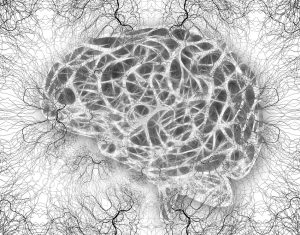
Image Source: Pixabay
This article explores how neuroplasticity reshapes our understanding of recovery and reinvention through three lenses: trauma healing, adult learning and stroke recovery. At the core of each story is not just a rewired brain, but more profoundly, a reminder that hope is biologically possible.
What is Neuroplasticity?
Neuroplasticity is the process of the brain changing in response to environment, experience, and injury. There are two major forms: Structural plasticity refers to the brain’s ability to physically change in response to learning and experience. This happens through the growth of new connections between brain cells, called neurons, which send and receive information. In contrast, functional plasticity typically occurs after brain injury, when damage to certain regions disrupts normal functions. To compensate for the damage, the brain shifts the functions to undamaged areas, effectively “rewiring” its pathways. As neuroscientist, Michael Merzenich, demonstrated in his groundbreaking work with sensory maps, the brain is not “hardwired,” but capable of remarkable reorganization in response to stimuli and behaviour.
For a long time, scientists assumed that the brain lost its ability to rewire after early childhood. Under this assumption, adults were believed to have limited capacity for learning, and damage from injury or trauma was considered irreversible. However, neuroplasticity paints a radically different picture: the brain consists of an ever-evolving network. New pathways can form, old patterns can weaken, and lost functions can return.
I. Trauma Healing: Hope Beyond the Past
Trauma, especially when chronic or experienced early in life, can alter key brain structures such as the amygdala, hippocampus and prefrontal cortex. These areas are involved in processing fear, memory and learning, and reasoning, respectively. Bessel van der Kolk explains in his book, The Body Keeps the Score, that traumatized brains can become “stuck” in hypervigilant, fear-based loops. Yet even modern therapies such as trauma-focused mindfulness and Eye Movement Desensitization and Reprocessing (EMDR) have been shown to change the brain functions.
EMDR uses bilateral stimulation — alternating sounds, tapping or eye movements that stimulate the left and right sides of the body alternately, activating both brain hemispheres — at the same time the individual is recalling a traumatic memory. This dual activation is thought to help integrate both emotional and logical processing, allowing the brain to reprocess the memory in a more balanced and less distressing way. Brain imaging studies show that successful EMDR treatment reduces amygdala activity and increases communication with the prefrontal cortex, improving emotional regulation and reducing flashbacks.
Trauma-focused mindfulness approaches provide similarly hopeful outcomes. In a study by Hölzel et al., 16 healthy participants completed an eight-week Mindfulness-Based Stress Reduction (MBSR) program, which included daily mindfulness exercises such as meditation and mindful movement. Although the participants were not specifically selected for early-life trauma, they were compared to a control group of 17 individuals. MRI scans taken before and after the intervention found increased gray matter concentration in several brain regions, including the hippocampus and cerebellum. This increased gray matter concentration indicates a growth in the brain tissue responsible for processing information and managing emotions, suggesting reduced stress and anxiety. These findings imply the possibility of “reshaping” emotional responses with sustained practice.
Neuroplasticity shows us that healing is not simply about erasing traumatic memories, but about forging new, resilient pathways through it. Trauma survivors are not broken; their brains, like muscles, can regain strength with the right kind of training.
II. Adult Learning: Hope at Every Age
Aging is often associated with decline, but neuroplasticity overturns this rigid perspective, associating aging as a different phase of growth for the brain. Studies reveal that learning something new during adulthood — whether it’s a language, an instrument or a profession — boosts brain function, sharpens memory and strengthens emotional well-being.

Image Source: Unsplash
The London taxi drivers are a famous example. To become a driver, they must pass a rigorous test that requires memorizing the city’s complex street layout. A study by Maguire et al. found that drivers who had passed the test had significantly larger posterior hippocampi than the general population. This region of the hippocampus is crucial for spatial memory and navigation, meaning that a larger size suggests an enhanced ability to process and recall detailed spatial information, which is a key skill for taxi drivers navigating complex routes. This demonstrated that intensive learning can physically reshape the adult brain. Similarly, research by Bak et al. revealed that older adults who began learning a second language experienced cognitive improvements and a delayed onset of dementia. Even when learning a new skill later in life, their findings suggest that adult learners can gain the same neural benefits as younger learners.
Such results are deeply hopeful. They challenge the pervasive narrative that aging is synonymous with decline, affirming that our brains have the capacity to grow throughout life.
III. Stroke Recovery: Hope After Loss
A stroke can shatter a life within moments, interrupting blood flow to the brain and killing cells in vital regions responsible for movement, speech or memory. However, because of neuroplasticity, stroke patients have a better chance at recovering lost abilities through therapies that stimulate the brain to rewire itself.
Take Jill Bolte Taylor’s case again: after her stroke, her brain did not remain in its impaired state, but rather rebuilt connections as a result of repetitive physical and cognitive exercises. Taylor’s recovery aligns with a widely studied technique known as Constraint-Induced Movement Therapy (CIMT), pioneered by Dr. Edward Taub. This approach involves restricting the use of a patient’s unaffected limb, forcing the brain to engage and retrain the impaired side. Taub’s research revealed that over time, undamaged brain regions begin to assume control of lost motor functions, essentially rewiring the brain’s control system.
Even with damage to major neural networks, the brain has the remarkable ability to adapt through persistence and targeted effort. For stroke survivors, neuroplasticity offers the possibility of recovery and, with it, a restored sense of hope.
A Note on Limitations
While neuroplasticity offers profound possibilities for healing and growth, it is important to acknowledge its limits. The brain cannot rewire itself infinitely, and outcomes can vary widely based on factors including age, type and severity of trauma and injury, access to therapy and individual biological differences. For example, Merzenich states that although adults can still form new connections in their brain while learning a new skill, their rate of neuroplastic change tends to be slower compared to that of a young child. Similarly, a brain injury may cause some irreversible neural damage, resulting in an incomplete restoration of previous abilities after recovery.
These limitations do not undermine the value of neuroplasticity. They simply serve as a reminder that even though the brain is capable of significant change, it operates within certain boundaries, and these boundaries are different for every individual.
Conclusion: A Brain Built for Hope
The human brain is capable of remarkable change. From trauma victims finding peace, and older adults learning new skills to stroke survivors relearning to speak, neuroplasticity reminds us that we are not defined by what has happened to us. We are defined by what we do next. Neuroplasticity embodies a profound truth: we can start over.

Image Source: Unsplash
Dr. Jill Bolte Taylor stated, “We have the power to choose, moment by moment, who and how we want to be in the world.” While healing may not always be easy, its possibility can arise through time, effort and courage. Hope, as it turns out, is not a fantasy — it is a biological function of the brain, sustained by its ability to adapt, grow, and begin again.