I was around 11 when I first realized how special thrifting could be. Despite Macklemore and Ryan Lewis’ hit single Thrift Shop, taking over the radio by storm, the idea of entering a Value Village or Salvation Army and trying on someone else’s clothes seemed like a risk no one actually wanted to take, except for me. My family was no stranger to a thrift shop, as my mother donated our old clothes all the time. She’d buy my father work pants, along with appliances like old-school popcorn machines and blooming onion kits, and in a rare case, an Artizia sweater.
TNA, a brand created by Artizia, is a women’s clothing store selling everything from mittens to workout clothes, and even matching winter jackets for your dog. But in the early 2010s, they were known for black leggings and colourful sweatshirts. Every girl had them, and those who didn’t wished on every star and every birthday candle that they did, including me. But they weren’t cheap, and my parents weren’t about to fork over $70 for a sweatshirt with a random logo. So, imagine my surprise when my mom came home one night with a dark pink sweatshirt with a blue and red TNA logo embroidered in the middle. I was ecstatic, to say the least. I remember how she put it against my small frame and smiled, glad it fit. She told me she got it from Value Village, an unbelievable find. I wanted to wear it right then, but before I could reach for it, she tossed it into the washing machine along with the rest of the clothes she had bought that day. “Just don’t tell anyone where you got it,” she said, words that hardly anyone ever says now.
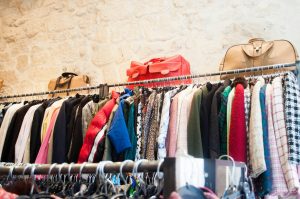
Image Source: Unsplash
These days, you can’t go on TikTok without scrolling through at least five videos of people unveiling their “hidden thrift store gems” or hauls of vintage Coach purses and Levi jeans. Being able to tell your friends that the cute new purse, or the worn-in kitten heels you found, were thrifted, comes with just as many cool points as if you were to buy them at a luxury store. But for kids in University, where textbooks for the semester sometimes cost half their rent, it’s so much more than that. It’s an accessible way to shop without breaking the bank. TikTokers like @lillyybearr and @treysthrifts have dedicated their accounts to showing their followers that the perfect outfit might have already belonged to someone else. Not only can kids on campus brag about their rare finds, they can also gloat about their contribution to saving the planet.
In Canada, about 37 kilograms of textile waste per person end up in landfills yearly. It takes hundreds of years for those fibres to break down; when they do, they release carbon dioxide and methane into the air. Fast fashion companies like Shein, Fashion Nova, and TEMU are some of the main contributors to the issue, as their clothes often don’t stand the test of time. That’s what makes thrifting so special. A sweater that somebody bought 10 years ago and donated without giving it a second thought might just be the perfect extra layer someone needs to get through the winter. Or, the dress that hasn’t fit since high school might be the same dress someone wears when they get engaged. There’s no telling where the clothes end up, but one thing’s for sure: they’ll always go to someone who needs them more.
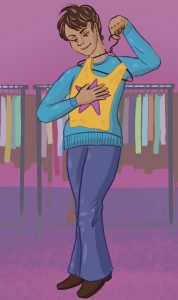
Image Source: Chloe Hand
According to a survey from the 2024 Thrift Report, more than 40% of Gen Z are thrifters, proving that secondhand shopping is here to stay. Along with those numbers, researchers also found that shoppers spend 6.8 times more at thrift stores than online resellers and other stores. Mark Walsh, CEO of Value Village, said that thrifting is having its cultural moment. People are embracing the secondhand economy, which will change our global culture. The demand to “shop old” has pushed the company to open about 25 new stores from 2025 to 2027.
Twice a year, my mother would give my siblings and I black garbage bags and encourage us to “purge” our old belongings to make space for the spring and the new year. As a kid, it wasn’t something I enjoyed, as I had trouble parting with old toys and clothes I’d outgrown. But the older I got, the more I looked forward to it. There was always a sense of relief that washed over me after seeing the bags full and my room clean. After, she’d drive us to Value Village, drop the bags off and walk inside to look around. It might seem redundant, donating clothes just to go and buy more, but thrifting always felt different than going to Yorkdale or the shops on Orfus road. There weren’t photos of perfectly airbrushed models showing customers how the clothes should be worn, or racks of the same shirt in different colours. Thrifting felt more personal, like looking at years of love and appreciation on hangers and shelves. There are picture frames with photos people have forgotten to take out before donating, sweaters with stretched cuffs, purses with gum wrappers, and jeans with tiny ink stains that someone might be able to get out if they soak them in hot water and laundry detergent for long enough.
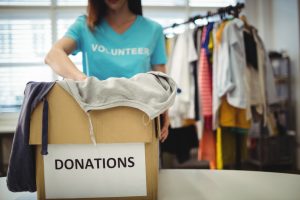
Image Source: FreePik
To this day, I still donate my clothes twice a year. Last year, on a hot day in May, my sister and I sat in our mother’s closet and donated the clothes she had left behind when she died almost three years ago. What was supposed to be a sad ending to a chapter neither of us wanted to finish turned out to be the beginning of something entirely different. We sorted through her belongings, mostly covered in black hair dye and oil stains, having Kleenexes shoved into the pockets of jackets and pants. As we filled countless trash bags, only keeping a handful of sweatshirts and a pair of army green capris, there was an unexpected feeling of peace in the air. The woman who would take our old winter jackets and give them to her students who came to school without one, would offer our high school uniforms to parents whose kids were just starting high school, was now donating her entire wardrobe. While there will always be a twinge of sadness every time I pass by the empty closet, there’s also a glimmer of hope knowing that one day I might walk down the street and see someone wearing something that once belonged to her, and that thought is enough to make me want to thrift forever.
Featured Image Source: Chloe Hand