It’s undeniable that Taylor Swift has managed to build a legacy that, in her own words, “you can’t undo.” Through singing about topics like young love, heartbreak and loss, Swift has managed to capture an empire of people who find solace in her songs. But what is it about her music that makes it so universally loved?
The answer lies in her albums Folklore and Evermore, both released in 2020, which have largely been praised for their deeply complex songwriting. While most of Swift’s previous albums focused on her personal experiences, Folklore and evermore were her first major ventures into writing songs from the perspective of other people. Most notably, Folklore features three songs: “Cardigan,” “August” and “Betty,” all telling different sides of a high school love triangle. Without ever explicitly mentioning in the album that these three songs are connected, fans were able to piece together the breadcrumbs left in the song and form an entire narrative.
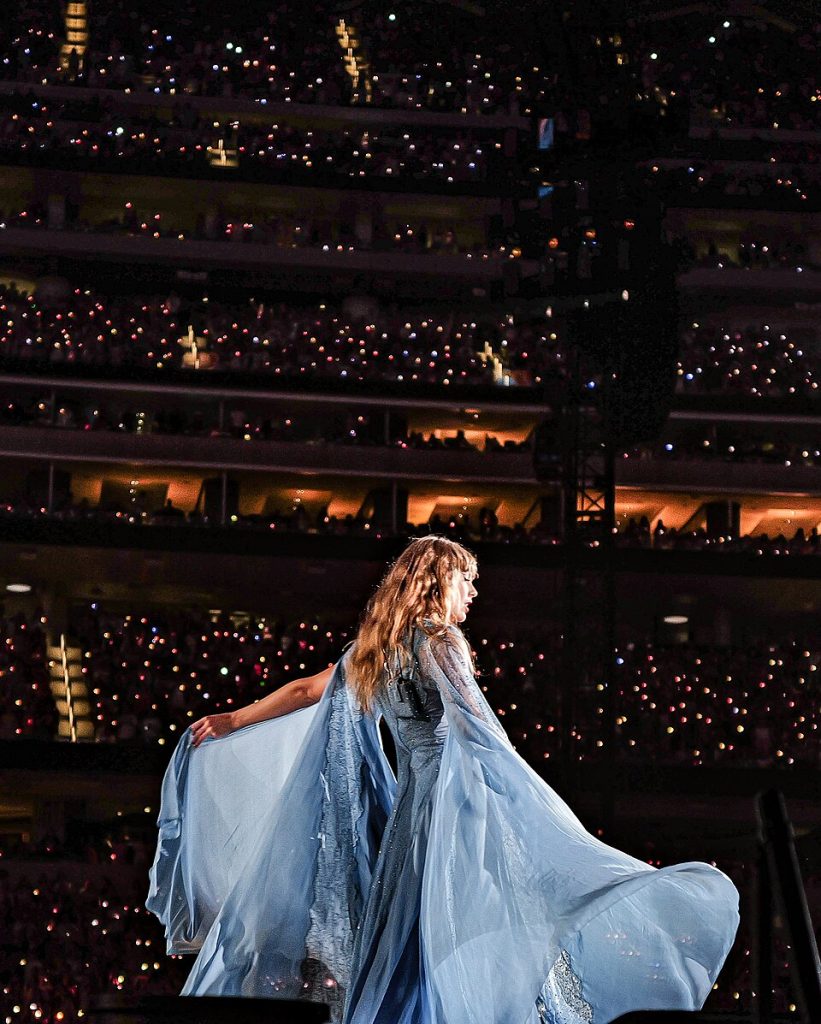
Image Source: Wikimedia Commons
“Cowboy Like Me” on Evermore, is another song that tells a deep, intimate story. Delving into the lyrics of this song, it becomes clear that Swift’s masterful ability to craft a narrative is the key to what makes her writing so universally resonant.
Writing a good story can be divided into the who, when, what, where, and why. The “who” refers to the people involved in the story. The “when” and “where” refer to time and location. The “what” refers to a general description of the situation. Finally, the “why” refers to why the situation happened in the first place. In “Cowboy Like Me,” Swift manages to answer all of these questions with ease, all in the span of five minutes.
Swift starts by setting the scene for the listener: “and the tennis court was covered up with some tent-like thing / and you asked me to dance but I said dancing is a dangerous game.” The mention of a “tennis court” with the description of “covered up with some tent like thing” answers the “where” question because it creates a clear mental image of the location of the song, even without explicitly naming a place. The “you asked me to dance” line implies a party setting or perhaps an event. Somewhere where it would be normal to dance. Swift also combines the lyrics with slow instrumentals that lean heavily towards folk/country. The instrumental, combined with the song’s title “Cowboy Like Me” implies a western setting.
Swift then shifts to the present moment, writing “oh I thought this is gonna be one of those things / now I know I’m never gonna love again.” This present tense answers the “when” question. “I’m never gonna love again” also answers the “what” question since it fills the listener in on the situation being written about: the narrator finds themselves unable to “love again.” With these three questions answered, it’s time to delve into the “who” and “why.” These are the most interesting questions and arguably, where Swift’s writing really shines.
The “who” and “why” are a little harder to pin down as there isn’t any specific point where Swift reveals the information to the reader. Rather, the information is slowly built up over the course of the entire song. Since the story of “Cowboy Like Me” is heavily character driven, knowing the personality and the story of the characters (the “who”) also effectively answers “why” the narrator finds themselves unable to love. The flaws of these characters ultimately become their downfall.
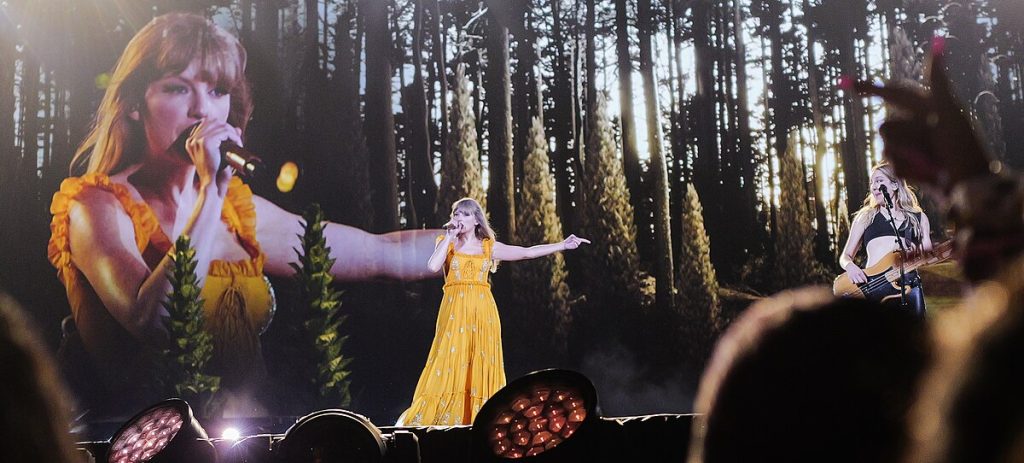
Image Source: Wikimedia Commons
The line “you asked me to dance but I said dancing is a dangerous game” reveals a lot about these characters right off the bat. The “you” of the song is a character who is bold enough to ask another character to dance. Meanwhile, the use of the words “dangerous game” paints the narrator as someone who sees romance as a game which can be won. This is further solidified with the line “I’ve got some tricks up my sleeves,” which implies an inherent sense of deception. Swift then writes “takes one to know one / you’re a cowboy like me / never wanted love just a fancy car” followed by “you had some tricks up your sleeve / takes one to know one.” These lines reveal that the two characters are very similar in nature; that the narrator can see a lot of themselves and their habits reflected in the “you” of the song.
“You’re a cowboy like me / perched in the dark / telling all the rich folks anything they want to hear like it could be love / I could be the way forward only if they pay for it,” Swift writes. Painting the narrator’s past relationships with, as she describes, “rich folks,” instead of offering a name or any traits implies a sense of unimportance. Almost like the narrator doesn’t think highly of these people, perhaps only ever seeing them as tools to get what she wants. The use of “everything they want to hear” further reinforces this, implying that the narrator was never quite herself around these people. Instead, she was molding herself to fit what these “rich folks” wanted in an attempt to get the upper hand in the relationship.
The song continues with: “you’re a bandit like me / eyes full of the stars / hustling for the good life / never thought I’d meet you here.” The focus shifts from “I” to “you,” with the description of “bandit like me” once again reinforcing how similar these two characters are. The use of “hustling for the good life” has the same energy as “telling all the rich folks everything they want to hear.” Just like how the narrator thinks of love as a game, the “you” in the song thinks of life as a game, something that can be “hustled” for. Hustle is also a very specific word choice because in slang, it means earning a living through dishonest methods. The chorus then ends with “it could be love / we could be the way forward and I know I’ll pay for it.” While before “it could be love / I could be the way forward only if they pay for it” implies a power imbalance in the narrator’s favor, the switch to “I know I’ll pay for it” implies a sense of real risk. This, combined with the shift from “I” to “we” in the line “we could be the way forward” implies that the narrator is perhaps genuinely starting to fall for the person that this song is about.
Image Source: Wikimedia Commons)
The bridge of the song reads “and the skeletons in both our closets plotted hard to fuck this up.” This line points out the imperfections, the skeletons-in-the-closets, of both of the characters. The line “plotted hard to fuck this up” hints to the reader that it’s these imperfections that ultimately made these two characters incompatible, perhaps both too emotionally immature to make a real relationship work. “And the old men that I swindled really did believe I was the one” is the next line of the bridge. The use of “swindle” only further reinforces that the narrator is someone who uses other people in love. The line is also not said or written in a way that implies remorse, telling us that the narrator is good at disconnecting from feelings of guilt when it comes to past relationships.
However, the use of “old men” is especially interesting here because it adds a deeper layer. Assuming that the narrator is quite young, an age gap can introduce an inherent power imbalance to the relationship, making it hard for a relationship with two people in very different life stages to work out in the long run. It’s almost as if the narrator is intentionally going after relationships which are unsustainable. Maybe this way, it’s easier for her not to get attached. Easier for her to “swindle” them.
The bridge then concludes with “and the ladies lunching have their stories about when you passed through town / but that was all before I locked it down.” The use of “when you passed through town” paints the “you” as a player, someone who “passes through” relationships quickly. The fact that the narrator was the first person to “lock it down” then means that this mysterious “you” really did love the narrator in a way that he has never loved any of his partners in the past.
The song then shifts one more time back to the present, saying “now you hand from my lips like the gardens of Babylon / with your boots beneath my bed, forever is the sweetest con.” The use of “your boots” helps to further enforce the western setting, and the use of “con” makes one last attempt at painting these characters as dishonest and flawed. For two less flawed people, the idea of a healthy “forever” could be in the realm of possibility. But for these two, forever remains just a con.
Image Source: Wikimedia Commons
With just five minutes and so few words, Swift managed to tell a deeply complex and intimate story of two conniving people, always vying for the upper hand in a relationship. However, despite this, these two people did have a genuine love for each other. Swift managed to portray how their flaws made their relationship inherently unsustainable, ultimately leading the narrator to feel that she can never love again. It’s also worth noting that Swift never makes an attempt to cast any sort of moral judgment on these characters. Rather, she just tells the story as it is, allowing the reader to make their own interpretations and judgements.
At her core, Swift is a storyteller, and that’s really evident in the lyrics of “Cowboy Like Me.” This ability to tell such real stories, to paint such clear images, is what makes her writing so vivid and, in turn, what makes her music resonate so deeply with so many.
Featured Image Source: Vivian Van