Our “youthful years” are considered some of the best times of our lives. Everywhere we look, we are constantly fed this idea, from the media to our dearest loved ones. “Take care of your skin to keep it looking young” or “Use your time and energy before it’s too late…”, we have heard it all.
But what happens when those years start to fade away? What if you are no longer a teenager, or your appearance has changed drastically? What if you no longer have the same energy for that after-school sport you trained for five years ago?
It is a shame that women’s value is linked to their appearance, as opposed to men whose value seems to only increase as they age. For example, men are often referred to as wiser as they age and seen as an authority in their career. Their appearance of gray hair is not seen as a negative, but rather as an attractive “silver fox”, while for women they are quickly told to dye their hair. We have reached a point where women in their early 20s have started to pursue cosmetic procedures much earlier than previous generations, in hopes of curbing the “consequences” of aging early.
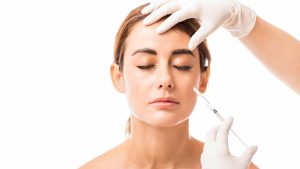
Botox treatment (Image source: The Esthetic Clinics)
Small comments in our day-to-day lives such as “You don’t look your age” or “Watch out for those smile lines!” seem trivial, yet they slowly remain in the back of our minds, making us fixate on our appearance every time we look in the mirror.
According to the “ISAPS International Study on Aesthetic/Cosmetic Procedures Performed”, in 2024, the large majority of surgical cosmetic procedures worldwide were undertaken by women, with nearly 83.9 percent of surgeries. Yet, the question remains, why is this trend mostly among women? Let’s take a step back and remember the last time you were on social media, and saw someone with perfect skin? Do you recall seeing anyone with a “flawless” appearance? Baby botox, lip fillers, and facelifts have become so mainstream that many people can no longer tell the difference between natural and cosmetic, just as filters on social media have set an unattainable beauty standard everyone seems to strive for. Youthfulness and unachievable beauty standards have created undeniable pressure on women, where society has reaffirmed that all their value is lost when they are no longer deemed beautiful.
Additionally, this obsession with youthfulness is not simply about looking young but also feeling young. Society praises youthfulness. You are seen as faster, stronger, and more contributing to society. There are countless movies where characters are told to enjoy their last summer as students before it’s too late. Disney movies, such as “Tangled” emphasize the value of staying young— the villain is portrayed as an older woman who seeks a special flower to remain forever youthful. In “The Substance”, an aging celebrity turns to a black-market drug to regain her youthfulness, as she’s dismissed from her job due to her age. Even songs from popular musicians, such as Lana del Rey, address this fear of aging in lyrics such as “Will you still love me when I’m no longer young and beautiful?” and the 2012 pop-hit “We are young” by fun which idolizes our teen and college years as the best ones of our lives.
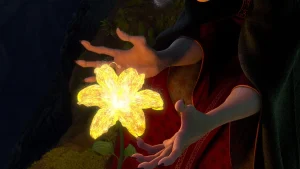
Tangled Disney Sun drop flower (Image source: Disney Wiki)
How do these ideas of youthfulness and aging affect our self-esteem and worth? Societal pressures can lead to enormous insecurities in one’s body and identity. In my own life, I have seen friends who, as soon as they hit their mid-20s, felt as if they were old. They imagine pain in their joints, panic over one grey hair, or even worry about their youthfulness fading away.
Does this mean that we are only valuable and capable of a happy life when we are young? As a society, we are failing to acknowledge the advantages and benefits of aging. The more we live, the more our identity grows and evolves. We become wiser, no longer making the same mistakes that once haunted us, and become a better version of ourselves. The lines on our faces should not be frowned upon, but admired as they hold countless memories of happy smiles and uncontrollable laughter. Clinging on to a younger version of ourselves that no longer exists, only holds us back from accepting the new and potential possibilities of self-evolution. Growing older is a natural phase of life. It is not something we should be fighting against, but rather embracing.
It is necessary to recognize that our ideal self has been influenced by unrealistic beauty standards and ideals set by the world we live in. If we are aware of this fact, then we can take matters into our own hands, regain the control of our self-worth, and welcome the new beginnings that come as we age with open arms.