It’s 2025, and friendship is a full-time job with zero benefits. Last week, my friend spent forty-seven minutes adjusting the lighting for a TikTok “candid” friendship moment — the kind that looks effortless but requires military-level strategic planning. Meanwhile, her group chat resembles an operative spreadsheet, tracking who owes whom eight dollars and sixty-three cents for last month’s shared DoorDash order.
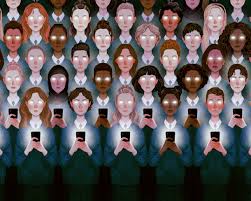
Eyes wide shut: A generation lost in the glow of their screens (Image Source: The Irish Times)
A 2021 poll from the American Survey Center, a leading research organization studying shifts in American social behavior, revealed a brutal truth: nearly four-tenths of Americans have friends they interact with solely via the internet. While technology has expanded our ability to connect across geographical boundaries, these connections often remain superficial and driven more by appearance than authenticity. Translation?— People calculate your worth in likes, shares, and the ability to provide the perfect Instagram backdrop material.
Social media has transformed the younger generation’s female friendships into a bizarre economic ecosystem. On Instagram, support manifests as mandatory story reshares and performative comment chains, which are means of strategically engaging with content to boost its algorithmic visibility. Yes, we can now maintain friendships across continents — but at what cost? Our relationships have become exercises in mutual profile management rather than genuine emotional support.
While Instagram turned photos of brunch into social currency and Snapchat made daily life into a twenty-four-hour reality show; TikTok has now entered the scene, turning friendship into literal choreography. Remember when supporting a friend meant listening? TikTok has transformed friendship into a hashtag, where even emotional moments are forged and exploited to appeal to the audience’s pity. What used to be a time for genuine support is now at risk of becoming another opportunity to create content for views and likes. Even the meaning of our language has changed — “girls support girls” has transformed from genuine solidarity into a marketing slogan.
The commodification of female friendship extends beyond social media into consumer culture, whereby brands exploit the connection between women’s relationships and their purchasing habits. Companies such as tampon brands push female empowerment in ad campaigns while charging premium prices for basic hygiene needs. These brands market themselves through “friendship” messaging — think period sisterhood and empowerment communities — creating artificial bonds through shared consumption.
TikTok influencers flood feeds with exaggerated praise for products like the Dior blush or Huda Beauty’s new setting powder — items that rarely live up to the hype. Still, the cycle continues as influencers, eager for sponsorships, fuel the media with lies to ensure maximum profit. In turn, “girlhood” becomes a marketing tool, and our personal lives morph into unpaid advertising campaigns.
A 2024 study by DataReportal, a trusted source for global digital insights, has settled the debate on gender and social media usage. While men make up a slight majority of users (53.7% compared to 46.3% women), the study reveals a key distinction: regardless of age, women spend more time on social media daily than their male counterparts. But is this greater online presence empowerment — or exploitation?
Capitalism doesn’t just infiltrate friendship — capitalism colonizes friendship. Brands like Zara and Lululemon charge absurd markups, enticing young girls to buy into a fabricated sense of exclusivity. The Stanley water bottle trend reflects the societal pressure to conform when owning a fifty-dollar water bottle signals status rather than utility.
We’ve reduced human connection to line-item transactions. The ten-dollar coffee run has become a metaphorical press conference of passive-aggressive financial tracking of who owes whom. Did you include tax? I got last time’s tip, right? Venmo isn’t just a payment app — it’s a relationship ledger where friendships are balanced to the decimal point.
Of course, defenders of our digital age make compelling points. I concede to the argument that social media has democratized friendship in unprecedented ways: a teenager in rural Kansas can find an anime-loving community, artists with disabilities can collaborate with peers worldwide, and an immigrant student can maintain daily contact with family across oceans. These platforms have created lifelines for the socially anxious, the geographically isolated, and others who have felt like an outsider in their physical community. Even the more spiteful, performative aspects serve a purpose —we’re celebrating our friends’ achievements more publicly, documenting our shared histories more thoroughly. Indeed, those carefully choreographed TikTok dances do create moments of genuine joy and connection; however, these moments of authenticity are increasingly rare gems surrounded by manufactured content, in which even spontaneous joy must be perfectly lit, filtered, and hashtagged before it can be considered real.
The ultimate irony is that we’re so busy making friendships “picture-perfect” that we’ve forgotten how to be friends. But what if we opted out? What if friendship became more about genuine human connection instead of content creation? What if we valued human imperfection over uncanny perfection?
Welcome to friendship in late-stage capitalism. Where it is always a performance, never present beyond the pixels on the screen. Aren’t we ready to go off-script?